
F1’s location problem: Six Grands Prix that weren’t where they claimed to be


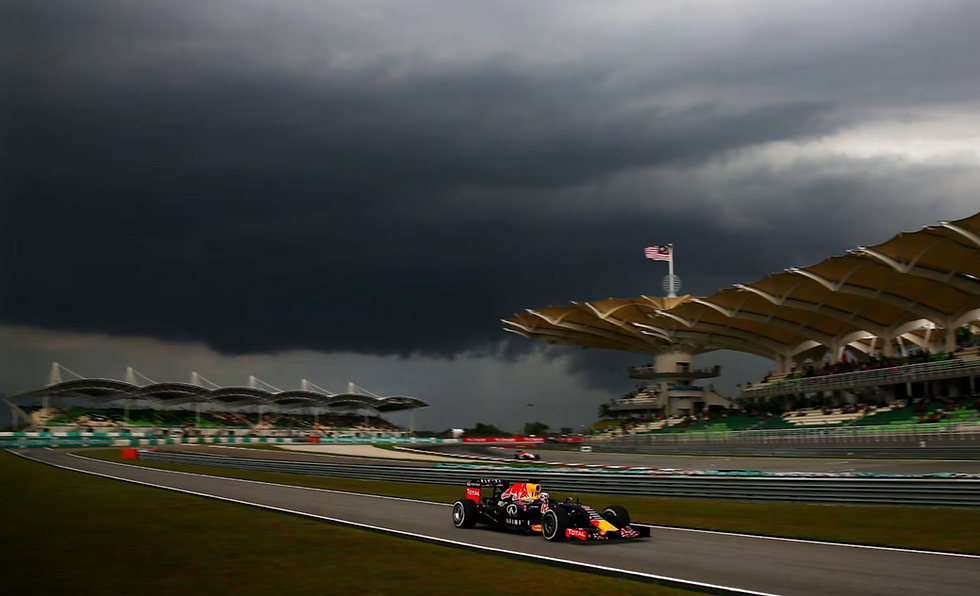
A handful of times over the past four decades, Formula One has treated a Grand Prix’s name as more of a suggestion than a location. Even by that standard, 2026 has raised the bar: this October, the Bahrain Grand Prix is being held at Sepang International Circuit – in Malaysia.
With the Bahrain International Circuit unable to host in April due to regional conflict, the race and the following weekend’s Saudi Arabian Grand Prix were pulled from the calendar entirely. Rather than lose the date outright, F1, the FIA and the governments of Bahrain and Malaysia spent months negotiating an agreement to run the event at Sepang International Circuit instead.
This race is slotted in between Baku and Singapore from 2nd to 4th October. It will officially be titled the Gulf Air Bahrain Grand Prix in Malaysia, a race name that now needs its own subtitle just to make sense.
Bahrain is funding it. Malaysia is hosting it, marking Sepang’s return to the calendar for the first time since 2017. Neither circuit involved is anywhere near the other, and the closest thing to a shared border is the Strait of Malacca.
It is an unusual arrangement, and it isn’t even the strangest thing to happen to the Bahrain Grand Prix’s naming. Back in the pandemic-shuffled 2020 season, the sport ran two races at the same Bahrain International Circuit two weeks apart: one on the full Grand Prix layout called, sensibly, the Bahrain Grand Prix, and a second on the shorter Outer Circuit called the Sakhir Grand Prix, after the town the track sits in.
Same country, same facility, two different names in the same fortnight. F1 fans with long memories will know this general instinct isn’t new. The sport has a long and slightly chaotic history of naming races after places they had nothing to do with.
San Marino Grand Prix, Imola, Italy

The gold standard of the genre. From 1981 to 2006, the calendar carried a San Marino Grand Prix every single year. Every edition of that was run at Imola, a town roughly forty kilometers inside Italy, in the region of Emilia-Romagna.
San Marino itself, a microstate of just over 60 square kilometers perched in the Apennines, never had the facilities to host an F1 car, and still doesn’t. The name was a workaround: Italy already had the Italian Grand Prix at Monza, so when Imola wanted a championship race of its own after a one-off substitution in 1980, organisers borrowed the identity of the nearby microstate to get around the FIA’s one-country-one-race convention.
For a quarter of a century, San Marino’s name carried some of the sport’s heaviest history, including the 1994 weekend that claimed Roland Ratzenberger and Aryton Senna, without the country itself ever being anything more than a passenger.
Swiss Grand Prix, Dijon-Prenois, France
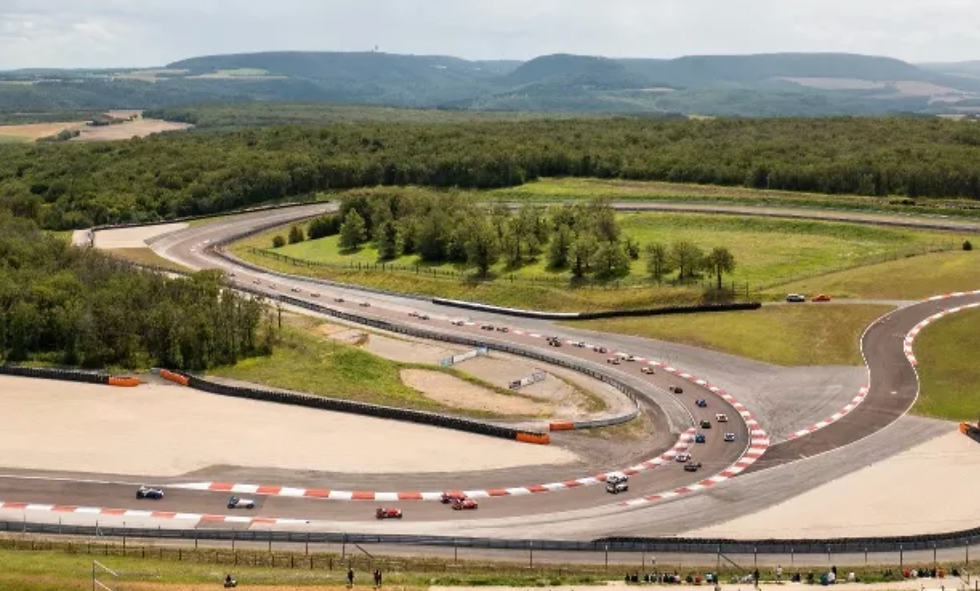
Switzerland banned circuit racing outright after the 1955 Le Mans disaster, which killed more than 80 spectators and remains the deadliest accident in motorsport history. The ban technically still applies to anything other than electric machinery today, seventy years on.
By rights, that should have killed the Swiss Grand Prix for good. Instead, the Swiss Automobile Club took the race across the border to Dijon-Prenois in France, running it as a non-championship event in 1975 and then as a full world championship round in 1982, four weeks after Ferrari’s Didier Pironi suffered the career-ending crash that effectively decided that year’s title.
Keke Rosberg took his first F1 win at Dijon that weekend, on his way to the championship himself, at a circuit that was, on every map anyone consulted, comfortably inside France.
Luxembourg Grand Prix, Nürburgring, Germany
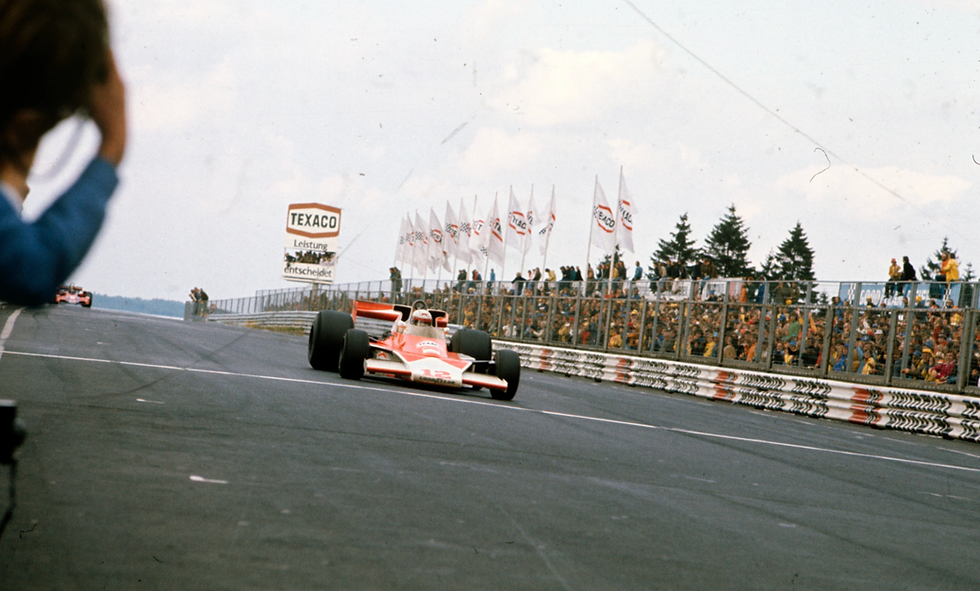
By 1997, F1 already had a European Grand Prix and a German Grand Prix. Both could plausibly have been run at either the Nürburgring or Hockenheim. When Hockenheim locked down its contract to host the German Grand Prix that year, the Nürburgring needed a new identity to keep its own date on the calendar.
It became the Luxembourg Grand Prix for both 1997 and 1998, despite sitting around 80 kilometers from the actual Luxembourg border, comfortably inside German territory the whole time. The stakes were real even if the geography wasn’t.
Jacques Villeneuve won the 1997 edition after Michael Schumacher was eliminated at the first corner, a result that handed Villeneuve the championship lead he’d carry to Jerez weeks later.
Mika Häkkinen took the rematch in 1998, resisting Schumacher for the full race distance. Luxembourg itself never saw a wheel turn either year.
Pacific Grand Prix, Aida, Japan
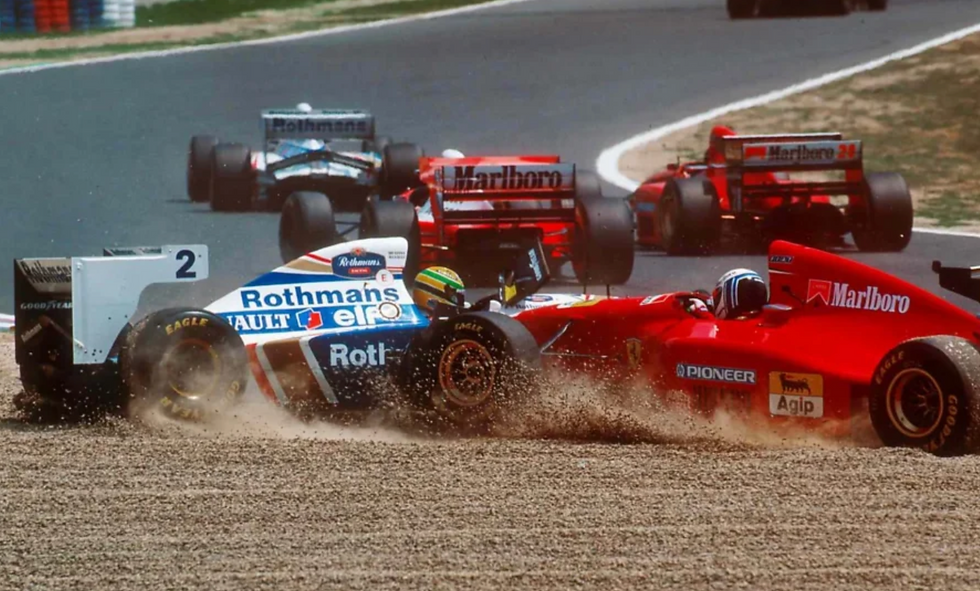
Run in 1994 and 1995 at the TI Circuit in Aida, a tight and remote track in Okayama Prefecture, the Pacific Grand Prix was pitched by its founder as a way to give the region a broader, more international identity, reportedly aiming for something closer to a Californian feel than a strictly Japanese one.
It sat a few hundred kilometers from Suzuka, which was hosting the Japanese Grand Prix in the exact same seasons, making Japan one of only a handful of countries ever to host two world championship rounds in one year.
Michael Schumacher won both editions, the second of which secured his second drivers’ title in October 1995.
For two years running, one country hosted two Grands Prix under two different names, and the one that most needed to mention Japan was the one that didn’t. The race was dropped after 1995, partly because of the circuit’s remote location.
European Grand Prix, Baku, Azerbaijan

Most misnomers on this list at least commit to being wrong in one specific place. The European Grand prix never bothered picking a lie and sticking to it. Since its 1983 revival, the title has been staged at Brands Hatch and Donington Park in Britain, the Nurburgring in Germany on several separate occasions, and Jerez and Valencia in Spain.
In 2016, it landed in Baku, Azerbaijan, a country on the edge of the Caucasus that most geographers would place in Asia before Europe. Nico Rosberg won that inaugural running from pole, in front of Sebastian Vettel and Sergio Pérez, on a street circuit that Valtteri Bottas would later use to set an unofficial F1 top-speed record.
The following year the race was renamed the Azerbaijan Grand Prix, which is presumably what it should have been called all along.
Six races, four decades, one recurring joke: a Grand Prix’s name in F1 has never been a reliable promise about where you’ll actually find it. Bahrain in Malaysia isn’t breaking the pattern the sport has been running since Imola first borrowed San Marino’s name in 1981.
It’s just the most literal-minded entry the sport has produced yet, and a reminder that when F1 needs to keep a date on the calendar, geography has always been the first thing it’s willing to negotiate away.
Edited by Benjamin Crundwell




Comments