
Five Takeaways: Spanish Grand Prix

If you want a for-sure shake-up in the Formula One championship, throwing 22 drivers onto a new circuit is certain to do the trick. Last weekend in Madrid, the drivers stretched their legs on a brand new circuit, where they tested the limits of precious overtakes, tyre strategies and confining track limits.
Here are DIVEBOMB’s five key takeaways from F1’s debut weekend in Madrid for the Spanish Grand Prix.
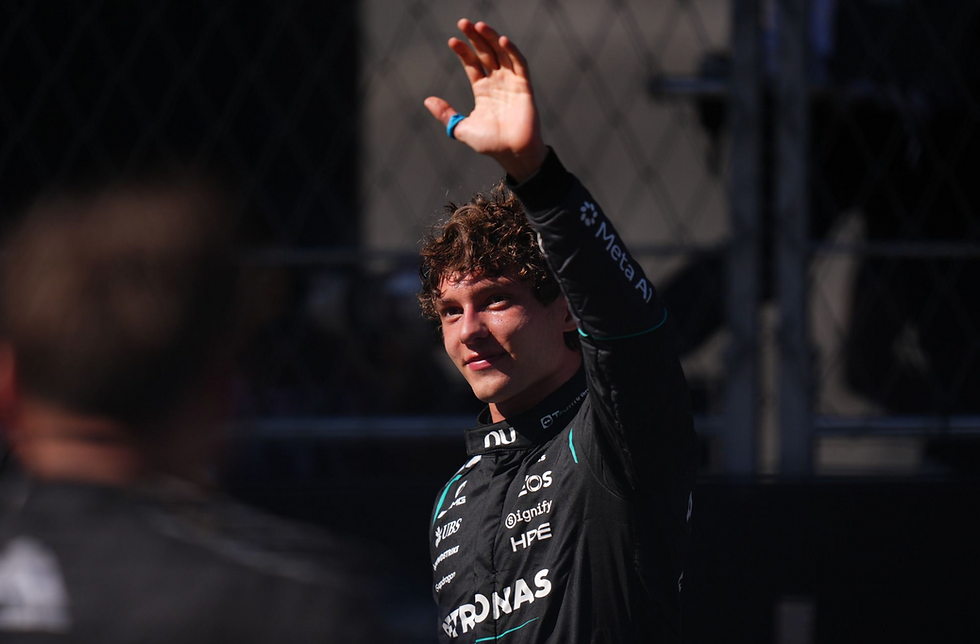
Antonelli brings win count to 8, extends championship lead to 81 points
Coming off his home race-winning recovery drive last weekend in Monza, Kimi Antonelli made it back-to-back victories at the Madring, bringing his race win total to eight victories.
For the most part, Antonelli enjoyed a drama-free weekend. While the Italian displayed strong pace throughout, he initially trailed Lando Norris, who narrowly snatched pole position by just 0.011 seconds in Saturday’s qualifying session.
During Sunday’s Grand Prix, Antonelli opened up with some pretty aggressive manoeuvres early in an attempt to pass the McLaren ahead; however, Norris proved to be simply too quick as he pulled away from Antonelli in the opening laps.

After a Virtual Safety Car (VSC) was triggered due to Lance Stroll’s parked Aston Martin on track, Antonelli was able to benefit from the free pit stop as Norris, who was on the same strategy, missed his golden opportunity due to unfortunate positioning on the track.
As a result, Antonelli pulled out ahead of Norris, and ultimately went on to pass the Ferrari of Charles Leclerc as the Monégasque was forced to pit late. Antonelli crossed the line in first, cementing his eighth win in F1, and extending his championship lead by 81 points.
“It’s good to win, but it doesn’t feel as good because I think Lando [Norris] today deserved to win," said Antonelli after the race.
“But overall, you know, we’ll take it.”
Norris, quickest man of the weekend, undone by VSC
Once again, the reigning world champion proved why he holds that specific title, as he willed his McLaren to a shock pole position during Saturday’s qualifying in Madrid. Despite a seemingly costly mistake late on his second effort of the session, Norris was still able to post a time ahead of Antonelli and his Mercedes.
Heading into Sunday, Norris kicked things off with a bang, keeping an antsy Antonelli at bay and building a large gap in the opening laps of the Grand Prix. With overtaking opportunities slim around the Madring circuit, it seemed that Norris was going to run away with his third win of the season.

Unfortunately, that dream was short-lived, as an early VSC rattled the order. Norris, in the process of banking in another fast lap, just so happened to pass the pit lane right as the VSC was deployed. As a result, the Briton missed the free pit stop that others on the same strategy were able to benefit from.
Assuming that there would be time before the VSC was withdrawn, McLaren opted to pit Norris towards the later stages of the VSC, and yet again misfortune struck as the intervention ended as Norris entered the pits.
You may be thinking: surely it can’t get any more unlucky than that, right? Wrong. With the combination of the extended pit lane and a seven-second pit stop, Norris was doomed to come out of the pits in fifth place as his main rivals roared by ahead.
Norris was able to recover up to third place for the podium finish; however, he was clearly frustrated with the race’s misfortunes.

"Of course, I believe I deserved it today. We did a very good job; I feel like I did everything right this weekend, so for it to be lost like today is just pretty crappy,” said a deflated Norris after the race.
"Today was just a rule that just benefits some people a lot more than other people. I know that's racing, so I can't be too against it.
"If it was the other way round, of course it would suit me, but when I feel like I've driven a perfect weekend and I did such a good job yesterday, and I feel like I did a great job today, it hurts. Nothing I can do."
Hamilton faces first retirement of the season
For Lewis Hamilton, a possible Grand Prix-winning weekend unfolded quickly in the early stages of Sunday’s race.
Ferrari looked strong during both the practice sessions and qualifying, with Hamilton even snagging provisional pole despite a session-ending crash during Free Practice 3. Although his efforts were thwarted by the quicker cars ahead, Hamilton was still confident heading into the Grand Prix. At the start, he surged ahead of Max Verstappen, even at one point challenging Norris and Antonelli for the race lead. Unfortunately, Hamilton and Verstappen made contact, and even after Verstappen was forced to give the positions back, Hamilton began to fall back due to internal issues.

Brake problems: one of many factors that can completely undo a driver’s race. Hamilton quickly tumbled down the order as a result and was ultimately forced to retire from the Grand Prix.
"Braking for Turn 5, I hit the brake, the car started stopping, and then the pedal took a step and all of a sudden the car didn't decelerate as fast as normal,” said Hamilton following his retirement.
"I ended up carrying a lot of speed in and just brushed the barrier. After that, the pedal came back, and then a few corners later, the pedal went long. I don't really know where that's come from."
Hamilton’s retirement from the Spanish Grand Prix marked his first and only DNF of the season so far, and ended his impressive streak of points-scoring finishes in every race since the opening round in Melbourne.
Verstappen rounds out “best of the front runners”, shows signs of improvement at Red Bull
After a tricky few weekends, four-time champion Verstappen was able to finally tease what Red Bull has been working on.
The Dutchman looked decent in the earlier sessions of the weekend, posting multiple blazing times and doing a solid job of keeping up with the other top teams. Although Verstappen qualified third and was forced to drop back a few places following an incident with Hamilton in the Grand Prix, he was still able to recover for a second-place finish.

Unlike Norris, Verstappen was able to benefit from the early VSC deployment during the race, and due to the lack of overtaking opportunities, he had little to worry about in terms of being passed on track. Norris came close to making the pass on multiple occasions, keeping his McLaren right on the back of Verstappen; however, the overtake chance never quite became available.
After the race, Verstappen conceded that despite finishing second, his pace was inferior to that of Norris and Antonelli.
“Looking at the race pace, I think it’s a great result,” he said. “Of course, we know that Lando got unlucky with that VSC, so for us I think second is an incredible result because you could see how much Lando was catching me,” he said.
“I think it was quite clear that Lando and Kimi [Antonelli] were a lot faster. Once everyone was a little bit clear, it was again the same thing where Kimi was a bit faster than me, Lando was faster than all of us, but I could keep him quite easily behind me.”
Mad overtakes in the Madring..or lack thereof
In the Madring’s debut, a Grand Prix that was projected to force chaos and uncertainty delivered what is now being labelled as a relatively uneventful Sunday session. One of the main critiques was the nature of the track, and the note that under these current regulations, overtake opportunities are few and far between.
Many of the drivers struggled to make a pass on-track, with the main changes in order coming from the start of the Grand Prix and pit stop rearrangements. One of the prime examples of this was the late battle between McLaren’s Norris and Red Bull’s Verstappen, who remained tied at the hip during the closing laps of the Grand Prix.

Although Verstappen described Norris as “faster than all of us”, he was able to keep the papaya car behind, seeing as there were no true places for Norris to make a move. Towards the beginning of Sunday’s race, a similar situation happened with Antonelli and Ferrari’s Leclerc, as Antonelli struggled to pass Leclerc even with a much fresher tyre advantage.
“It definitely doesn’t create overtaking opportunities, and it doesn’t push you to try and make a move,” said Antonelli.
After the race, Audi driver Gabriel Bortoleto even commented that he “almost fell asleep” during the exchange.
The verdict? Madring’s debut taught us a lot about what we can expect from the circuit in the coming years. What has started being referred to as “Monaco 2.0” will remain on the F1 calendar until 2035.
Looking Ahead
Coming off a gruelling double header featuring a new circuit, the drivers head into a week-long hiatus as they prepare for Azerbaijan.
As the number of races continues to tick down, we may see the Drivers’ Championship begin to close down as the Constructors’ Championship opens up. Maximising points is the aim of the game here, and that will certainly remain a factor as we head into the late half of the 2026 F1 season.
Edited by Meghana Sree






Comments