
I went to the Madring before it was built: Here’s how it’s changed

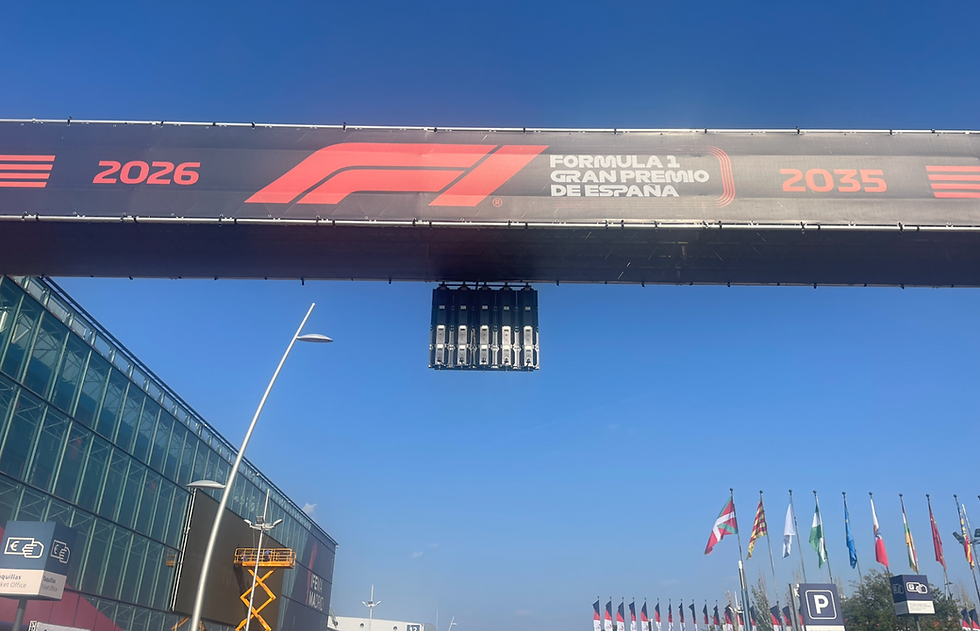
In January 2024, Formula One announced that the Spanish Grand Prix would be moving from Barcelona to a brand-new circuit on the outskirts of Madrid.
Naturally, I jumped on a plane and went to have a look at our soon-to-be race track. By September 2024, and less than two years before the first race, I was surprised to see no evidence of F1’s impending arrival apart from a ceremonial start and finish line.
You can see a full video of what I found here, but keep reading to see how it compares to what the track has become today.
My first impression of the site when I visited just under two years ago was one of disappointment. At first, I did not envision how an entire FIA Grade 1 circuit could be built from scratch in less than two years, although, as we will see, I had no reason to fear.
My other concern regarded the location, which seemed rather drab and soulless. The northeastern corner of Madrid, just one stop from the city’s international airport, is by no means a spectacle in and of itself.

The IFEMA exhibition centre, which itself is impressive, is just one of several buildings on an industrial estate. Indeed, Sector 3 snakes around a number of these huge, ugly hangars.
The public roads were narrow, twisty, and dotted with central reservations and roundabouts. I could not envisage how an F1 circuit could wind its way through such street furniture.
Having previously visited Monaco during the non-racing season, I noticed that the roundabouts, crossings and other such features were clearly temporary and removable, which was quite clearly not the case in Madrid.
However, the local authority appears to have had a rethink. Any street furniture looks to have been completely flattened, presenting F1 with additional space upon which to create a circuit.
It sounds like they have created a monster. Initial statements from drivers have had one thing in common – the track is difficult to drive. Kimi Antonelli described it as “complicated”, Max Verstappen as “demanding”. Arvid Lindblad said his taste of the track in the simulator was “intense”, while Sergio Pérez said it was “scary”.
Track Walk
With the first photos of the completed Madring released ahead of its debut this weekend, I scrolled back through my camera roll to see how it’s changed.
The image below is a satellite photo from early 2024, before any work on the circuit had begun. The track outline below is the one first announced by F1 in early 2024, but has since been revised to include a chicane before the long right-hander of La Monumental.
As a fun aside, in the bottom right of the image is Real Madrid’s training ground, so expect to see the likes of José Mourinho and Kylian Mbappé around and about this weekend.

The new circuit snakes around the IFEMA exhibition centre – and accompanying industrial estate – with the main building forming half of the paddock, which unusually will be indoors.
Let’s begin with the 200-metre run down to Turn 1. With the main IFEMA building on the right-hand side, the track heads down towards a tight opening chicane. From the before and after images below, you can see a freshly tarmaced surface, a brand new paddock building and a not-so-subtle Spanish flag in the distance.
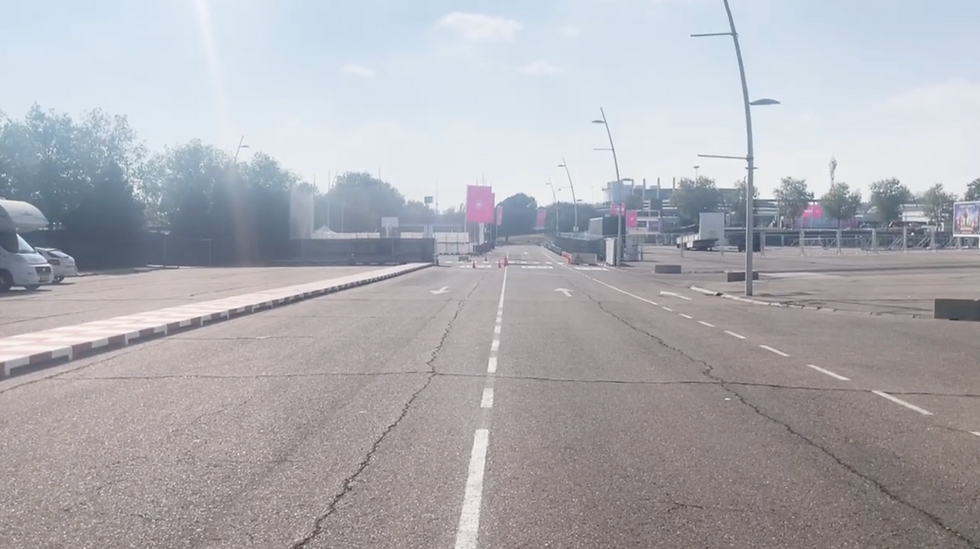
Turn 1 has had one of the biggest glow-ups – of which there are many – on the circuit. Two years ago, a 3v3 basketball court occupied the first braking zone, but it’s fair to say that’s now long gone.

The right-hander of Turn 2 (just the other side of the basketball court) was nothing more than a car park full of bins.
Two years on, and there are no basketballs or bins in sight. Instead, a stunning complex encompassing the first three turns and a packed grandstand has popped up.
Once the drivers power through the sweeper of Turn 3, they will find themselves on the circuit’s long back straight. Ok, it’s not completely straight, with the flat-out right-hander of Turn 4 in the distance, but it does look as though it will provide the best overtaking opportunity on the circuit.
The run from Turn 3 to Turn 6 is also the section of track that runs along public roads. The above photo from 2024 shows a rather hefty central reservation on the run to the future Turn 4, but it looks from early images and simulations of the finished track that it has been removed to make the circuit wider.
The image below, a still from F1’s official track guide video, incidentally also reveals the location of the pit exit partway down the back straight. This is noteworthy for the fact that the Madring’s pitlane clocks in at an astonishing 562 metres, bypassing the first three corners on the circuit.
Official estimates place the time loss for a pit stop at a mammoth 25 seconds, which makes a one-stopper the likely optimum strategy if true.
Next up is the chicane of Turn 5, which even just from still images looks to be an absolute handful. The complex resembles the “Singapore Sling” which appeared in F1’s first few trips to Marina Bay.
In order to make room for the chicane, an entire roundabout has been removed. Drivers will enter the corner from the right-hand side of the image below, navigate the heaviest braking zone on the circuit, perhaps even try an overtake, and exit the chicane via the road in the foreground.
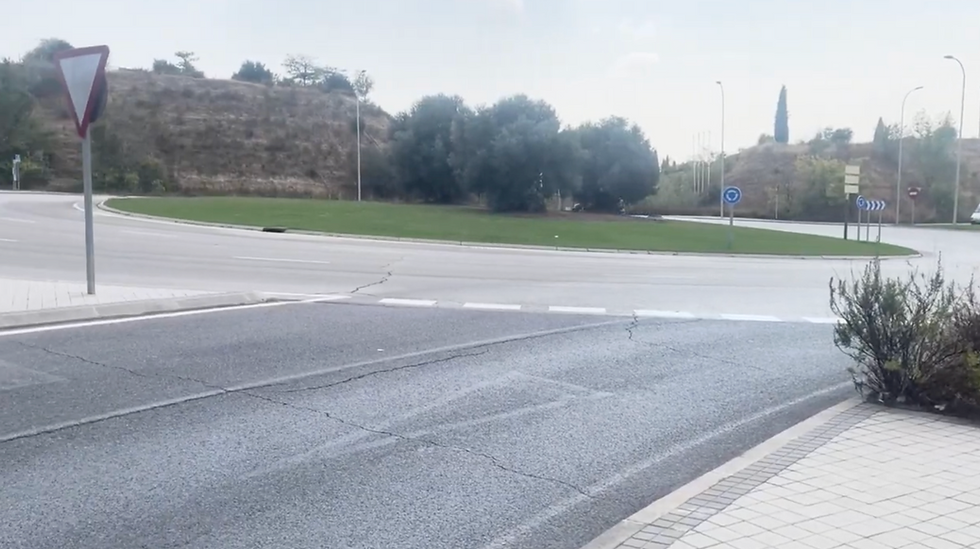
The simulation provided by F1 demonstrates the scale of the transformation, and also shows the M-11 motorway in the background, which the circuit cuts under on two occasions.

The drivers next face a quick dash up this hill, past a Shell garage and into a residential community, from which Turn 7 “Subida de las Carcavas” takes its name.

At this point in the lap, the drivers hang a right and enter the purpose-built section of the track, highlighted in yellow.

This whole part of the circuit is built around “La Monumental”, with an extra chicane added to the original track layout prior to that corner to allow battery recharge and make the corner possible at top speed.
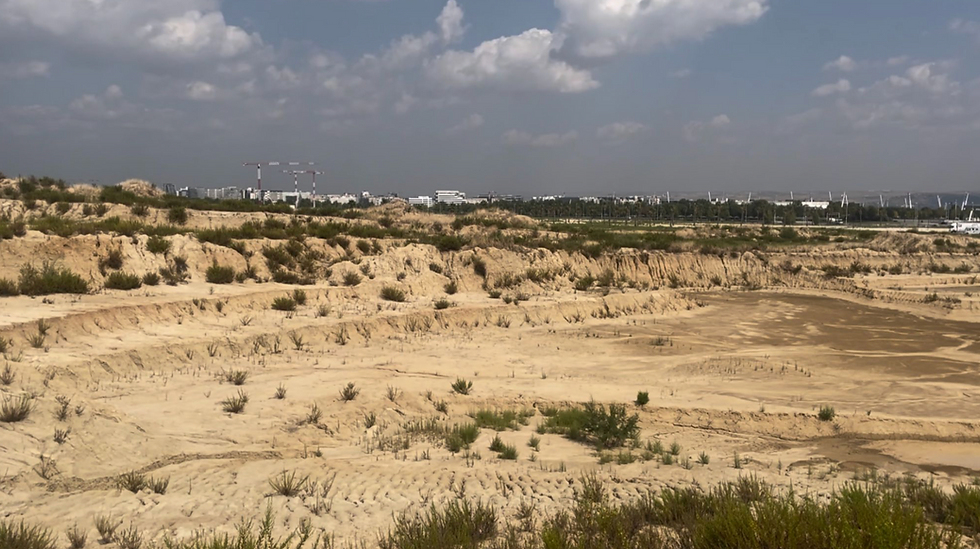
What is truly remarkable, and what the event organisers deserve huge credit for, is that less than two years ago – in late September 2024 – this entire section of the race track was a barren wasteland.
“La Monumental” et al. were but a twinkle in F1’s eye, but following phenomenal construction efforts sit proud and ready for this weekend’s race.
The initial shots of F1’s longest corner, 550 metres and 270 degrees in length, look spectacular, with the 45,000 seats lining the track challenging Mexico City’s stadium section as the sport's finest arena.

So steep is the gradient, at around 24%, that engineers reportedly had difficulty laying the tarmac without it sliding off.
A key feature of the purpose-built section is the elevation changes, demonstrated in the shot below on the exit of La Monumental.

Again, it is fair to say that the landscape upon which the circuit is built was nothing special, but we can see from the below that the track follows the land’s natural elevation.
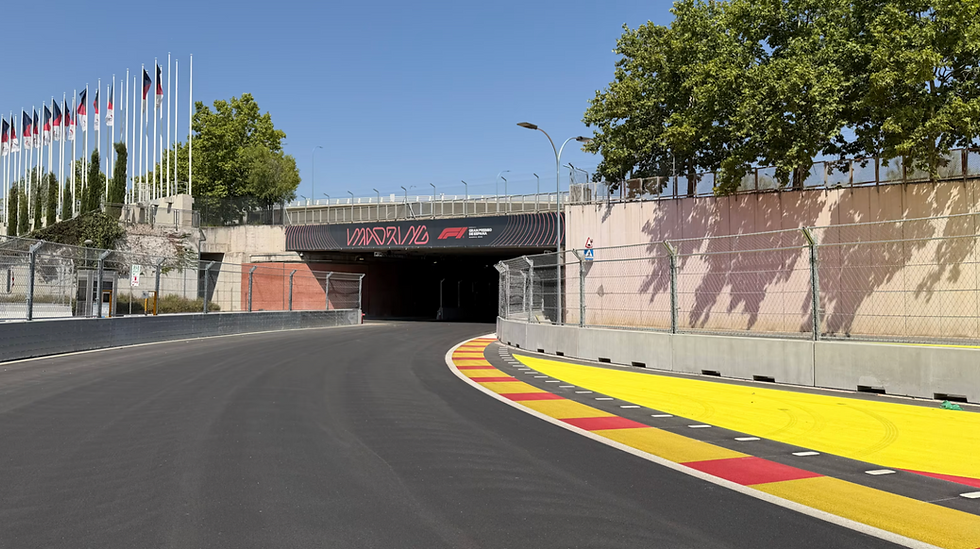
The purpose-built section of track sends the cars back under the motorway with a sweeping right hander that has been very well integrated into the natural landscape.
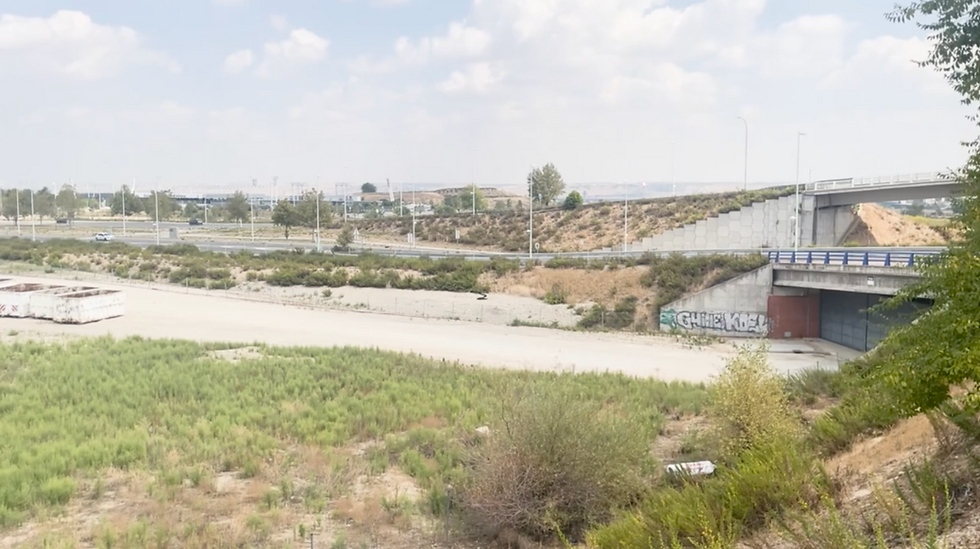
The above image shows the tunnel from the angle at which the drivers will approach it, while the below shows how it has been transformed into a state-of-the-art race circuit.
There is no real way of glamourising the final part of the lap, which snakes its way through a series of industrial units.
Unlike the first sector, for which several central reservations and roundabouts were removed, and the second sector, which was built completely from scratch, the final sector does not have the same luxury with regard to space.
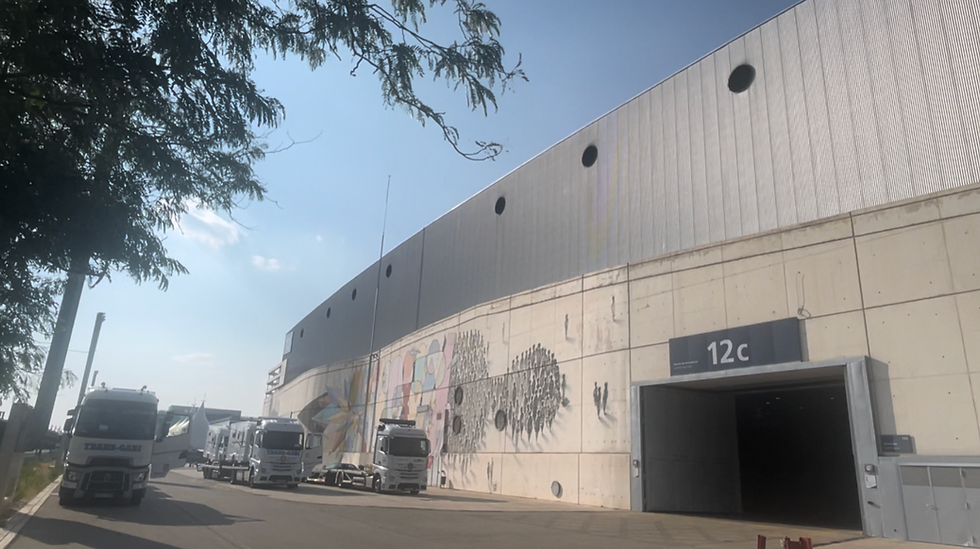
It features a series of short, punchy straights punctuated by fiddly chicanes that are reminiscent of the fiddly overpass section in Miami, as the track winds through a series of immovable buildings. This part of the lap is unlikely to generate any particularly interesting racing, but will at least help drivers to recharge their batteries.
However, the track photos released by F1 show a beautifully manicured and repaved surface, which looks far better kept than its surroundings.
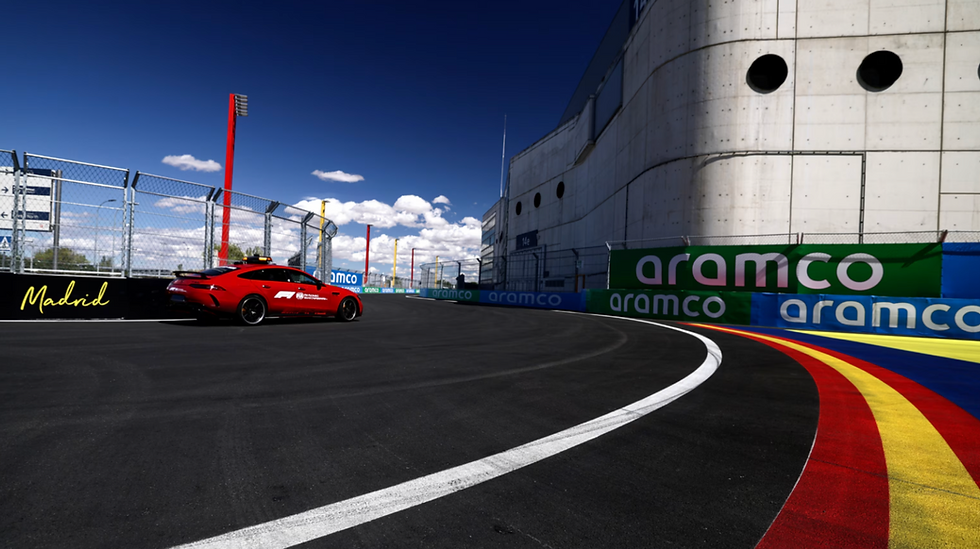
The photo below shows the approach to the final corner, with the entrance to the pitlane located under the “12d” sign. The cars will power towards the shot and hold a right, before blasting down the main straight to complete a lap.

Takeaways
I am pleased to see that the Madring is fit and ready for racing, despite there being nothing more than a ceremonial start and finish line less than two years ago.
The track itself looks very well put together, especially given the space available, with the Turn 5 chicane and La Monumental looking like the two biggest challenges around the lap.
I do, however, worry about the track’s identity. Unlike most street circuits on the calendar – see Monaco, Baku, Singapore or Vegas – there is no stunning backdrop to marvel at. Both Monaco and Singapore suffer from a dearth of racing action, but are saved by their stunning settings and their own unique qualities.
Baku and even Vegas (despite numerous reservations) both look spectacular and deliver brilliant racing.
I fear the Madring may suffer the same issues as those faced by Miami today and the Valencia Street Circuit over a decade ago, both of which are also a hybrid of streets and purpose-built race circuit.
Miami produces a poor spectacle both on the track and around it, as did Valencia, and the Madring is banking heavily on producing good racing because it similarly lacks the beautiful setting you would usually expect from a street circuit.
I do think the Madring has the potential to produce interesting racing, particularly in the first half of the lap. The long straights and heavy braking zones that open the lap are a proven formula for entertaining racing.
Also, bearing in mind it has forced Spa and Barcelona into rotation, the on-track action needs to deliver in order to justify the circuit’s place on the calendar.
In any event, we will be visiting the Madring every year until at least 2035.
I always enjoy seeing a new addition to the F1 calendar and wish it well, as it is in the interest of teams, drivers, organisers and, most crucially, fans, for it to succeed.
Edited by Vyas Ponnuri

!["One of the best laps [...] in my career": Norris celebrates pole position in Madrid](https://static.wixstatic.com/media/01a3c0_244080e6a8dc4228a91e988e5fe3859a~mv2.jpg/v1/fill/w_980,h_653,al_c,q_85,usm_0.66_1.00_0.01,enc_avif,quality_auto/01a3c0_244080e6a8dc4228a91e988e5fe3859a~mv2.jpg)





Comments