
India’s F1 return: What’s at stake

Written by Kavi Khandelwal, Edited by Vyas Ponnuri

The prospect of the Indian Grand Prix’s impending return sits at the crossroads, one of immense market potential and historic regulatory friction that has yet to be fully resolved. The fanbase has exploded over the years, despite the ghost of the 2014 cancellation by the local government haunt the project’s long-term feasibility and commercial viability.
Rumours of the pinnacle of motorsport returning to India in 2027 have intensified following strategic acquisitions and high-level interest from the Adani Group. The whispers suggest a “2.0” attempt at the race, aiming to align the government’s sporting vision with the global commercial reach of Formula One.
The race was crippled when the then Uttar Pradesh government refused to classify F1 as a sport, stubbornly labelling the entire event as “entertainment.” The then-Chief Minister Akhilesh Yadav justified this stance by citing a “perceived lack of impact on the development of sports in the country.”
This classification stripped the organisers of essential tax exemptions usually granted to international sporting events of this magnitude.
In the 2017 ruling, the Supreme Court held that Formula One World Championship Limited (FOWC) had a fixed place permanent establishment in India under the India-UK Double Taxation Avoidance Agreement. This made all business income earned from the Indian Grand Prix taxable in India.
Pro: Large untapped fanbase
F1 estimates its Indian fanbase at 79 million, up from fewer than 60 million when FanCode launched its broadcast partnership in 2024, making it one of the sport’s fastest-growing markets globally.
Thus, having the Grand Prix in India would allow this large number of potential spectators to see everything firsthand, rather than just following the race on their screens.

Even in the age of a tech-savvy generation, it’s this face-to-face presence that will bring about the biggest transformation. This transition offers a colossal stage for domestic automotive and technology giants to finally enter the paddock as primary technical parts or title sponsors.
It should be noted that according to the 2011 data, about 95,000 people came to watch the first Indian Grand Prix, demonstrating the huge potential of this market. In case of its revival, one should not be afraid of saturating the 110,00 places provided by the Greater Noida facility.
This is due to the incredible excitement created by a race happening on home turf, motivating and encouraging a whole new generation of fans who would otherwise have to watch the races on a small screen.
Con: Fan conduct and perception
The sudden explosion in F1’s popularity has surfaced specific social hurdles. Quite often, the loud and rowdy nature of certain fan segments can skew the event’s atmosphere. It especially carries extra weight due to the deep-seated external biases and local stereotypes.
It is important to note that not every fan in the country validates the negative perceptions created, but the crowd that does are louder than the machines on track and stays in the spotlight.
Individuals often show a lack of civil sense or dismiss those they view as “lesser” in status, especially in differences in opinions of drivers, teams or the sport overall.
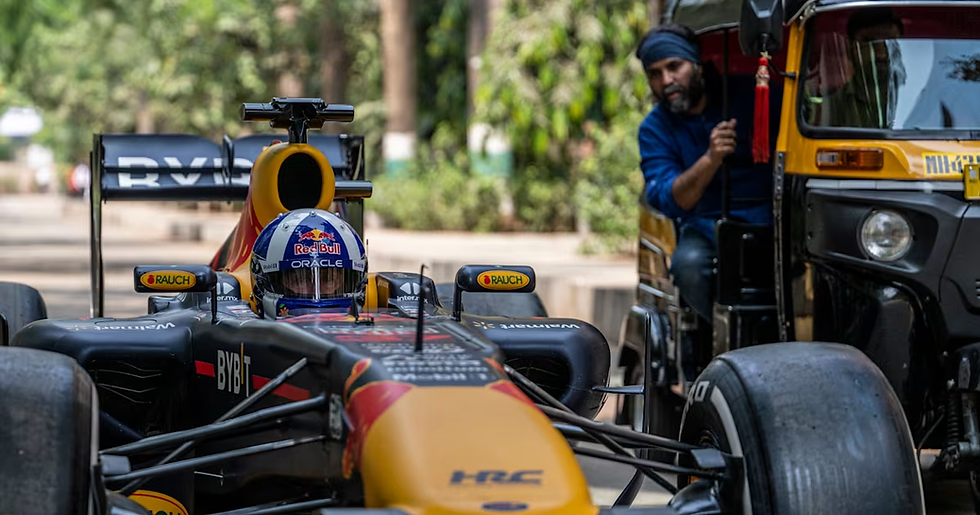
At the same time, such behaviour may create an impression that the atmosphere surrounding the event is uninviting or even intimidating for those who seek inclusion in it.
The primary challenge for organisers here lies in providing an opportunity for participants to use all their energy without hindering their passion. It is essential to cultivate an inclusive atmosphere to dispel biases about the Indian audience’s enthusiasm.
Pro: Expansion and growth of motorsport in India
India is currently one of the most vital growth engines for F1, providing access to one of the largest young populations on the planet. This commercial exposure is a key pillar for the sport’s long-term goal of diversifying revenue streams across the Asia-Pacific region.

Beyond the corporate balance sheets, a regular home race would forge tangible career paths for aspiring Indian athletes currently climbing the global karting ladder.
At the very top of such a ladder sits young talent such as 11-year-old Atiqa Mir, who recently became the first Indian girl racing in the WSK junior category. At the moment, she is actively competing for the title of the world champions Moodena Kart Racing Team for the 2026 season.
In terms of junior talents, one cannot fail to mention nine-year-old Aarav Sureka, already hunting the podium at the FMSCI National Karting Championship for Rayo Racing under the guidance of the eight-time national champion Rayomand Banajee.
The grid already includes figures with strong ties to the country, such as Arvid Lindblad, whose mother is of Indian descent. Furthermore, a local race empowers domestic journalists, photographers and engineers, turning motorsport from a niche luxury into a full-scale industry supporting high-skilled jobs.
Con: Expensive tickets
Even with such a vast audience, the economic reality on the ground remains a major hurdle for the event’s long-term commercial health. Price remains the deciding factor, as always, when it comes to major sporting events in India, and this will determine the success of the event
If the sport maintains its current “premium” pricing strategy, where weekend passes frequently cross the $300 mark, the race risks becoming an exclusive enclave once again. This would effectively push away the middle-class fans who drive the sport’s growth, leaving empty seats in a massive venue.

Promoters face the difficult task of setting prices that cover F1’s steep hosting fees while keeping the gates open for the average enthusiast. Without a massive subsidy or a complete overhaul of the commercial contract, high ticket prices will likely remain the biggest barrier to a sold-out event.
Additionally, the “hidden costs” of a race weekend, including travel, local lodging and venue concessions, can easily double the total expense. Indeed, in many ways, the Grand Prix became an exotic luxury that may happen every now and then, and not the annual entertainment for a core fanbase.
Pro: Existing track can be used again
The existing infrastructure is enough to revive such competition in India. The Buddh International Circuit (BIC), a venue which hosted the Indian Grand Prix back in 2011, was constructed with a $400 million budget, and represented what was India’s only FIA Grade 1 facility.
The track features a 1.06km straight, among the longest in the sport, where cars have previously clocked speeds of 324.2km/h. This plug-and-play capability allows for world-class racing without the heavy carbon footprint and massive costs associated with building modern street circuits.

Karan Adani, Managing Director of Adani Ports & SEZ, has voiced his personal commitment: “I’m very personally engaged in terms of bringing F1 back into India. I think India has a lot of potential. There’s a lot of following in F1 from India.”
Adani further noted his vision for the venue: “I do believe that India can really showcase F1… and can be a benchmark for a global event. It’s not just about doing one race but basically how to showcase the heritage of India.”
Utilising a permanent track like the BIC is far more eco-friendly than the logistical nightmare of temporary city tracks. It matches F1’s Net Zero ambitions by using existing structures and significantly lowering the environmental impact of the race’s preparation phase.
Even as the Adani Group completed its acquisition of the Buddh circuit in March 2026, F1 has already ruled out a 2027 return, making it clear that owning the venue is only one piece of a far more complex puzzle.
Con: Extreme weather conditions
The climate in Greater Noida is a brutal technical test for both drivers and the sophisticated 2026-spec machinery. Holding a race before November would mean facing intense heat, which wrecks tyre life and forces drivers to endure extreme physical exhaustion just to stay competitive.
While November brings a high of 28 degrees Celsius, track temperatures often spike much higher, putting the cooling systems and power units under immense pressure. This heat leads to rapid tyre degradation, which frequently forces teams into cautious, “fuel-saving” strategies that can result in less exciting on-track action.
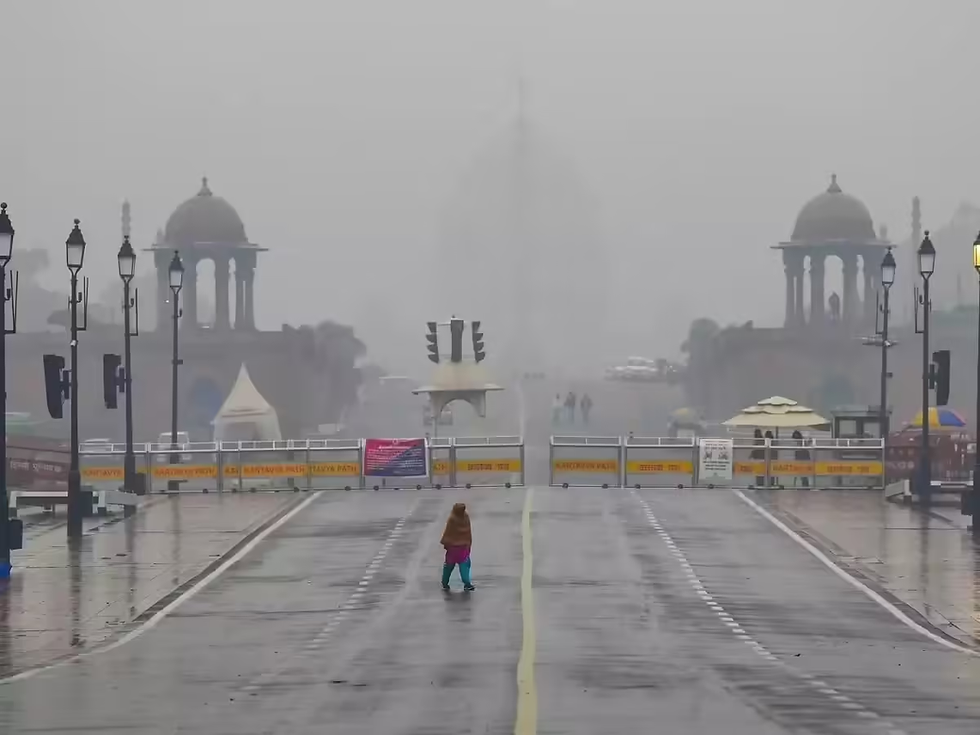
However, hosting the race later in the year brings a different set of problems entirely. While the air cools down, the National Capital Region is plagued by a drastic temperature drop and dense winter fog, which has slashed visibility to under 100 metres in the past.
This fog can cause massive delays and dangerous track conditions, making it nearly impossible for marshals to maintain safety. The sheer unpredictability of the New Delhi winter adds a layer of logistical risk that could potentially derail an entire race weekend.
The evidence shows that while the audience is ready and the track is waiting, the administrative side of the project is still in a delicate phase. Success depends on the Adani Group successfully navigating the gap between their corporate goals and the government’s historical tax views to ensure a stable future.
Ultimately, reviving the Indian Grand Prix is a high-reward play for a sport chasing global saturation in the 2026 technical era. With 78.8 million fans standing by, the sport must ensure that local policy and technical reality finally align to give the Buddh International Circuit a sustainable second life.
The chance for India to become a permanent pillar on the F1 calendar is real, provided the harsh lessons of the previous decade are learned. Only by balancing the clinical technical needs with the local social and economic reality can the sport truly succeed in such a complex market.


Comments