
Red Bull have F1’s best engine, and that is exactly their limitation


In Milton Keynes this year, Red Bull built the best combustion engine on the 2026 grid. Twice now, the FIA has confirmed it in black and white. And twice now, that finding has cost Red Bull the one privilege every other power unit manufacturer on the grid gets to keep this season: permission to make their engine better.
This situation Red Bull finds themselves in is the literal outcome of the FIA’s Additional Development and Upgrade Opportunities (AUDO) system. After the second review period, closed with Red Bull still on top, the maths is now unavoidable.
Being good at the one job nobody expected Red Bull-Ford to nail on the first attempt has become the reason they cannot touch it again until 2027.
What the FIA actually ruled
ADUO was written into the 2026 technical regulations as a levelling mechanism, built specifically to stop a repeat of 2014, when Mercedes built such a dominant power unit that the rest of the field spent the best part of a decade trying to close the gap.
Every power unit manufacturer’s internal combustion engine performance is measured against the best on the grid across defined windows. Fall more than 2% behind the benchmark, and a manufacturer earns one extra homologation upgrade this year and another in 2027, plus a cost cap boost.
Fall more than 4% behind, and that doubles to two upgrades in each of the next two years.
The first assessment window ran from the season-opening Australian Grand Prix through to the Canadian Grand Prix, after which Red Bull-Ford came out on top. Mercedes sat in the 2-4% band and banked a token for this year and the next. Ferrari, Audi and Honda were judged more than 4% adrift and picked up two tokens apiece.
Red Bull, as the benchmark, got nothing.
The second window ran from Monaco to the Hungarian Grand Prix. When the FIA published its findings in the last week of August, the order had not moved an inch. Red Bull-Ford remained the reference point, Mercedes remained 2-4% behind and Ferrari, Audi and Honda remained beyond 4%.
No new tokens were handed out to anyone, which sounds neutral until we consider that only one team on the grid was already sitting with zero. FIA single-seater director Nikolas Tombazis defended the process, saying the measurement, in his opinion, has proven to be very accurate. At the same time, he conceded that the system has weaknesses still worth addressing.
A verdict that is actually a punishment

Red Bull-Ford is a first-year power unit, built in-house after the team ended its Honda supply deal, arriving in the harshest regulatory reset Formula One has staged in a generation.
Getting it broadly competitive was already an achievement. Getting it ranked outright best was not part of the plan, and Team Principal Laurent Mekies has spent the second half of the season trying to get the FIA to look again.
Red Bull requested a factual review of the first period’s data. Mekies has been blunt about why, stating that there was not a single data point behind the finding that his team could see. The review changed nothing.
In July, Red Bull shareholders Mark Mateschitz and Oliver Mintzlaff travelled to the British Grand Prix to raise the matter directly with FIA president Mohammed Ben Sulayem, after Mekies’ own lobbying failed to move the needle.
Mekies put it plainly: there is a large risk there for Red Bull. Since ADUO tokens carry over into next season, a team locked out now stays locked out through 2027 too, which is why Mekies has described the consequences of the ruling standing as disastrous for the programme.
Verstappen, typically, found the dark joke in it. When asked after his Hungarian Grand Prix podium what Red Bull most needed to fix, he ran through the car’s problems. Then, he added, almost as an aside, that he would love some ADUO too.
The engine was never the problem
The ruling stings more than it should when one realises that Red Bull do not need the engine fixed. They need everything around it fixed, and on that front, ADUO offers no relief at all.
12 rounds into 2026, Red Bull are the only team inside the Constructors’ top four yet to win a race. The car, not the power unit, is the reason why.
Red Bull’s own engineers have admitted the RB22 was designed around a low-drag concept that cost it downforce relative to rivals. Reports throughout the year have pointed to a chassis that carries more weight than intended.

Both drivers have said as much in their own words. Isack Hadjar, evaluating the car earlier this season, said flatly that the chassis is terrible. Verstappen has drawn the same distinction from the other side of the garage, conceding there is a little bit from the engine side. However, he framed it as far from the biggest item on Red Bull’s to-do-list.
The season’s arc backs them up. Red Bull’s start was one of the worst in the team’s modern history, with Mekies admitting to significant shortcomings in the car after a torrid Chinese Grand Prix in March. Progress has followed in fits and starts since, chipping away at a race-pace deficit that once ran past a second a lap.
However, it has not produced a win, and it will not be helped by Mekies’ confirmation that Red Bull are now steering the 2026 chassis development budget towards the 2027 car, the first under a fresh set of technical rules. In effect: the one part of the RB22 package that is frozen by regulation is the engine, and the one part the team can still develop is now being deliberately wound down in favour of next year.
An important distinction remains: this ceiling does not only apply to Red Bull Racing. Sister team Racing Bulls run the same Red Bull Powertrains-Ford unit, which means two teams on the 2026 grid are carrying an upgrade freeze that every other manufacturer on the entry list has escaped.
Where that leaves the Constructors’ picture
After the Dutch Grand Prix, round 12 of 23, the Constructors’ table reads Mercedes - 425, Ferrari - 338, McLaren - 263 and Red Bull fourth on 186, with Racing Bulls fifth on 66.
The gap to McLaren in third is 77 points, against 489 still on offer across the remaining 11 rounds. On paper, that is recoverable between two drivers. In practice, it means Red Bull have to consistently outscore a McLaren that is still developing its car freely, while Red Bull’s own chassis updates slow to a trickle and its engine cannot move at all.
The drivers’ picture is tougher again. Verstappen sits sixth on 112 points, some way adrift of Charles Leclerc in fifth on 155 and Lando Norris in fourth on 159, with Oscar Piastri just eight points behind him in seventh. Closing a 43-point gap to Leclerc or 47 to Norris, across 283 remaining points, is not mathematically impossible.
However, it requires two front-running cars with active in-season development to stumble while Verstappen, with no further engine upgrades available and a chassis programme now tilting towards 2027, finds performance from somewhere else entirely.
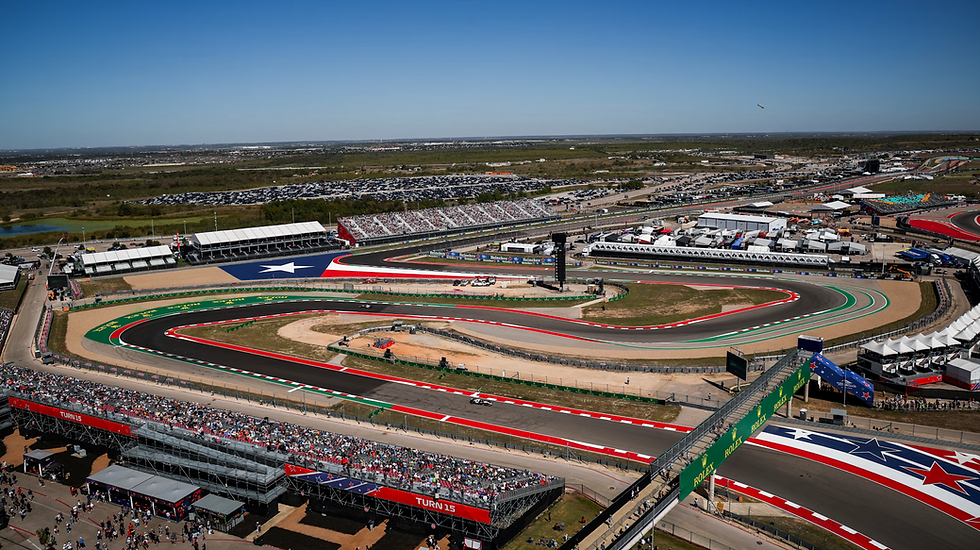
Red Bull’s only remaining lifeline this year is the third and final ADUO window, which closes after the United States Grand Prix in Austin — and even that requires a rival’s engine to fall further behind, not Red Bull’s to pull further ahead.
So, can they get there?
A Constructors’ top three finish is still on the table and, with a strong run of results, plausible. It is the more realistic of Red Bull’s two remaining ambitions this season, and Monza, a power-sensitive circuit where their engine’s benchmark status should count for something, is as good a place as any to start closing that 77-point gap.

A top three-finish in the Drivers’ Championship for Verstappen is a harder sell. It asks for a sustained swing in form that has not shown up once in twelve rounds, from a driver whose engine cannot be touched and whose chassis is being deprioritised in the same month he needs it most.
None of this is really a story about engines. It is a story about a team that built the one component nobody expected them to get right on the first attempt, and then watched the sport’s newest catch-up mechanism decide that competence itself needed inhibiting.
Red Bull can still make the podium in the Constructors’ standings this year. Whether they can do it with their best-in-class engine sitting frozen and their chassis budget walking out the door towards 2027 is the real test of the second half of this season. It is one that has very little to do with how fast the Red Bull-Ford power unit actually is.
Edited by Meghana Sree






Comments