
The primacy of engineering in Formula One
- Kavi Khandelwal

- Apr 6
- 5 min read
Written by Kavi Khandelwal, Edited by Marit Everett

The global perception of Formula One consistently adheres to a curated narrative of individual heroism, casting the 20 drivers on the starting grid as “superhumans” engaged in a warlike battle.
While this portrayal is vital for the sport’s commercial storytelling, an intellectually honest assessment reveals that F1 is, at its base, an engineering competition.
The driver does not create speed from nothing; they are the final, high-fidelity component tasked with actualising the performance potential built into the chassis. The engineering department provides the “base” potential, but it is the driver’s talent, and their specific handling synergy, that completes the product.
The upcoming 2026 regulation reset represents the most significant engineering pivot in the sport’s history, poised to strip away the facade of a purely “driver’s championship” and expose the race between laboratories.
When the new technical era begins, the hierarchical order will be determined by departments of thermodynamics and fluid dynamics long before a driver engages a clutch.
However, as historical and contemporary data shows, the car’s theoretical ceiling is only reached when a driver can successfully ‘gel’ with the machine’s inherent handling DNA.
The foundation: Engineering as the performance ceiling
In F1, a driver’s value is defined as the ability to extract the delta between a vehicle’s theoretical performance ceiling and its actualised lap time.
Every chassis is developed with a physical limit dictated by the laws of physics, specifically thermodynamics, aerodynamics and structural mechanics.
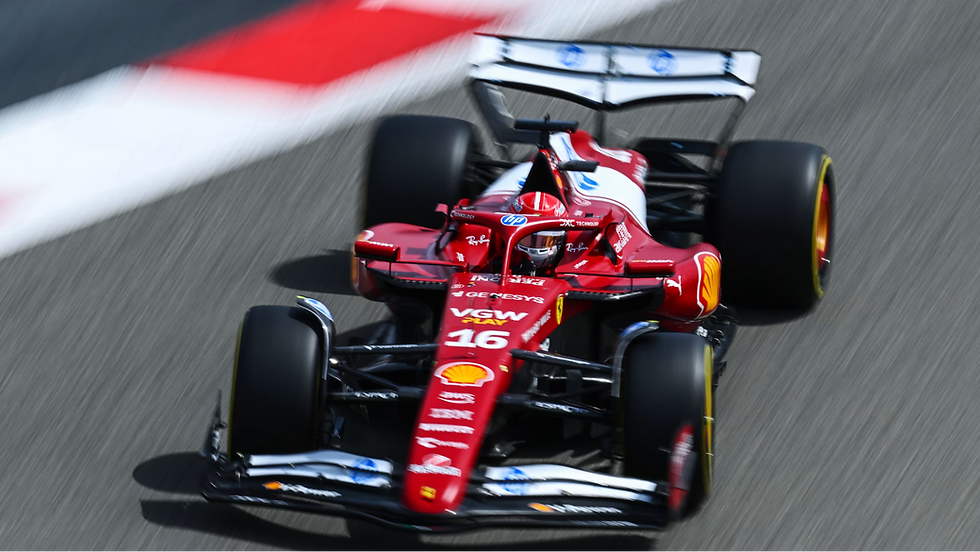
Statistical modeling often suggests that 80% of the winning success comes from the team and car, while the driver skill alone contributes roughly 15% to 20%. However, the most critical factor is the 30% to 40% “interaction” effect: the synergy between the driver and the machine.
While engineering provides the base potential, the driver’s specific “driving style” acts as the key that either unlocks or bottlenecks that potential. A driver who is 0.2 seconds faster than their teammate but is placed in a car that is 1.5 seconds slower than the lead car will remain out of contention, as the machine’s base performance is the primary gatekeeper of results.
The "pointy" car and the second seat curse
A prime example of driver talent “completing” a high-ceiling engineering concept—resulting in a “curse” for those who cannot—is seen in the recent dominance of Red Bull Racing.
The design philosophy of the Red Bull car is led by the pursuit of outright aerodynamic efficiency, typically resulting in a car with an extremely “pointy” front end.
This setup is hyper-responsive and allows the car to turn in faster, enabling the driver to get the car pointed straighter earlier in the cornering phase and accelerate faster out of the apex.
The engineering trade-off for this kind of responsiveness is an unstable rear end that breaks away at a rate that is uncontrollable.
Max Verstappen possesses a unique talent for living with this inability, sensing oversteer long before it becomes a terminal problem. While Red Bull creates a championship-winning base, it only works fully for Verstappen as his driving style completes the package.
This approach has led to the infamous “second seat curse”. Drivers like Pierre Gasly, Alex Albon and Sergio Pérez have all struggled to extract the same potential from the same machinery.

Albon described the experience of driving Verstappen’s setup like playing a video game with sensitivity turned up to the highest possible setting: “If you blew on the wheel, the car would turn.”
While Pérez prefers an understeering car with a planted rear end, the team’s development path naturally prioritises the axle that is the limiting factor for the faster driver.
Consequently, the car evolves to become even “pointier”, widening the gap and leaving the second driver unable to “complete” the lap that the engineering base theoretically allows.
The bottleneck mismatch: Daniel Ricciardo and Kimi Räikkönen
When a driver’s style mismatches the car’s engineering DNA, even world-class talent cannot reach the car’s base potential. Ricciardo’s struggle at McLaren (2021-22) is a modern study in this mismatch.

The Australian’s natural style is to carry high entry speed in a “U-shaped” arc. However, the McLaren MCL35M possessed an aerodynamic weakness that required a “V-shaped” cornering style: braking extremely late, rotating sharply and stamping on the throttle.
Since Ricciardo could not adapt his subconscious habits to this “peculiar” DNA, his talent remained bottled up, unable to complete the package that Lando Norris had mastered through the years of incubation in the McLaren system.
Similarly, Räikkönen’s 2014 return to Ferrari was hampered by the F14 T’s pull-rod front suspension, which inherently produced stubborn understeer.
Räikkönen requires a sharp, responsive front end to “feel” the limit; when the engineering provided a “sloppy” front end, his results collapsed compared to Fernando Alonso, who could better manage the car’s understeering traits.
The engineering base was identical, but the driver-style completion was missing.
2026: The engineering reset
The 2026 regulations bring a clean sheet reset for the teams. These changes center around a massive increase in electrical power and the introduction of active, moveable aerodynamics to manage drag. This will re-introduce massive performance gaps that no amount of driver talent can bridge.
Historically, resets seen in 2009 and 2014 proved that innovative engineering leaps such as the Brawn GP’s double diffuser or Mercedes’ hybrid thermal efficiency create a performance gulf so wide that no amount of driver skill can bridge it.
The power unit revolution and strategic execution
The 2026 power unit shifts the balance from 80% internal combustion to a near 50/50 split between fuel and electricity. The internal combustion engine (ICE) output will drop to 400kW (535hp), while the electric MGU-K output
triples to 350kW (470hp).

In the new season, a driver must strategically manage a battery that can no longer harvest energy from heat since the MGU-H is removed. They must rely entirely on braking for its 8.5MJ per lap limit.
While engineers design the “recharge” maps, it is the driver’s tactical use of the “Manual Override Mode”, which provides 350kW of power up to 337km/h for overtaking while the lead car tapers off at 290km/h.
Active aerodynamics: Managing the software-defined beast
In 2026, active aerodynamics will replace the Drag Reduction System (DRS), with wings adjusting dynamically between “Corner Mode” (maximum downforce) and “Straight Mode” (low drag).
The drivers must manage their car during the transition back to Corner Mode where the center of pressure shifts significantly. The engineering provides the speed, but the driver’s sensitivity to these shifts is what completes the lap.
Sustainable chemistry and the packaging crisis
The 2026 mandate for 100% sustainable fuels turns the championship into a molecular chemistry race between partners like Shell, Petronas and Aramco. These fuels must achieve 65% greenhouse gas savings. If one team’s chemists find a superior molecular arrangement, they provide a horsepower advantage that driver talent cannot negate.
Simultaneously, the 30kg weight reduction mandate forces a materials science race. Since the new batteries are heavier, teams must shave 60 to 70kg off the chassis using advanced additive manufacturing and titanium alloys.

Mass is the enemy of performance, if the engineering department fails to meet weight targets, the driver starts every race with a physical time penalty that skill cannot recoup.
The 2026 World Drivers' Champion was determined in design offices and laboratories in January, but they must be validated on the track until December. F1 is an engineering experiment where the car provides the base potential, but the driver remains the essential factor for its completion.
In the hierarchy of speed, the engineers define the possibility; the driver merely provides the proof.


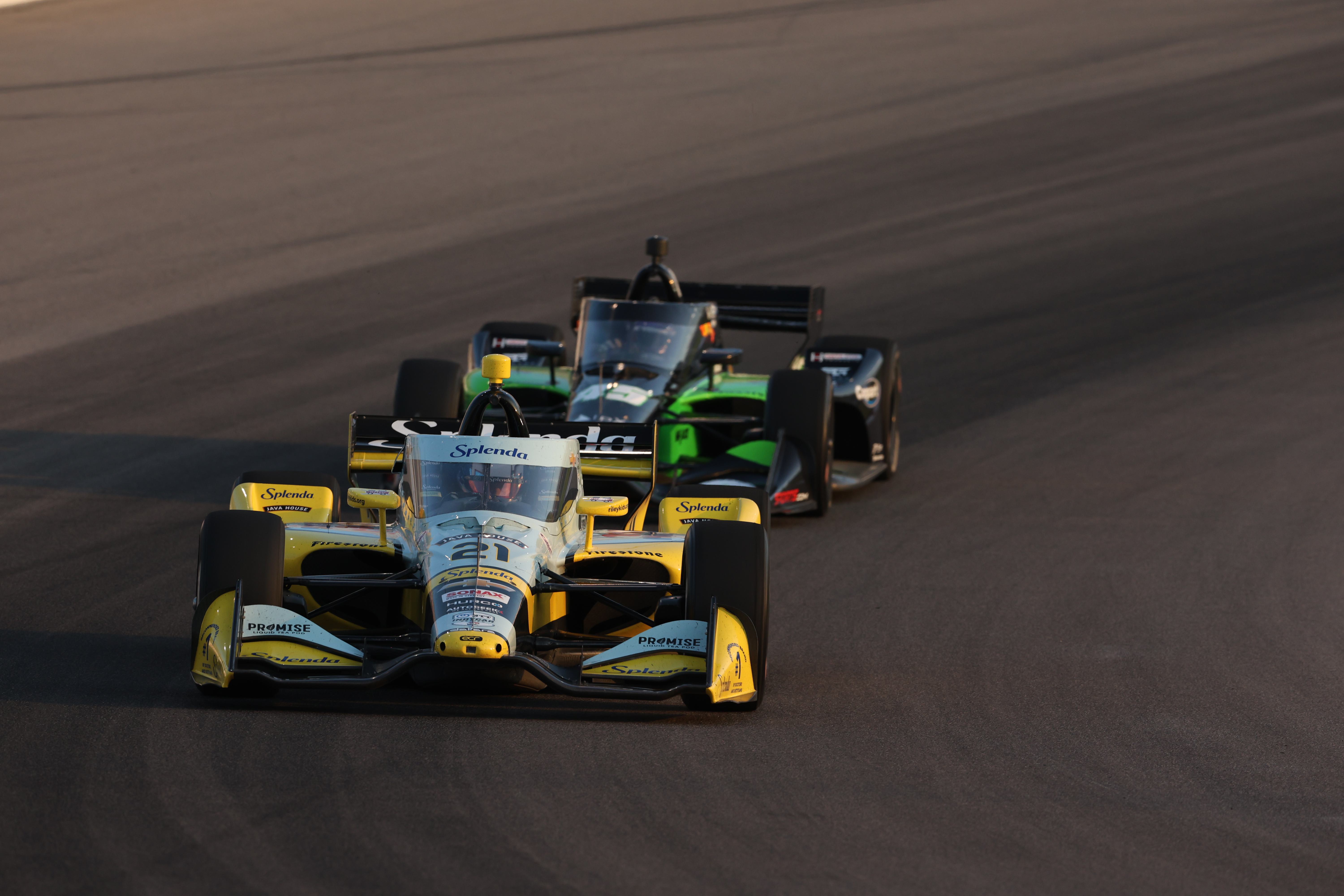




In Formula 1, engineering often matters more than pure driver speed, and this balance between system and result reminds me a lot of how finance works. After my experience with bitcoin, I started treating investing as an “engineering process” where every step needs to be calculated rather than random. While looking for a more structured way to interact with crypto, I came across paybis, where I tried buy Arbitrum token using SWIFT through what I considered the best place to buy via the crypto exchange Paybis. The whole process felt like a well-executed pit stop: precise, controlled, and without chaos at any stage. It made me see investing differently — as system engineering, where execution quality matters just as much…