
Trimming the race, not the miles: Who is F1’s net zero mission for?


On 21st September, the FIA’s Formula One Commission met in London, and approved a fuel flow change for 2027 that trims race distances by two or three laps. It’s a small edit. However, it is also the same reflex the sport keeps reaching for.
Max Verstappen did not hold back at pre-season testing in Bahrain this February. It is a conversation we keep coming back to. Unfortunately, “Formula E on steroids” still stands as the truest representation of the 2026 F1 season.
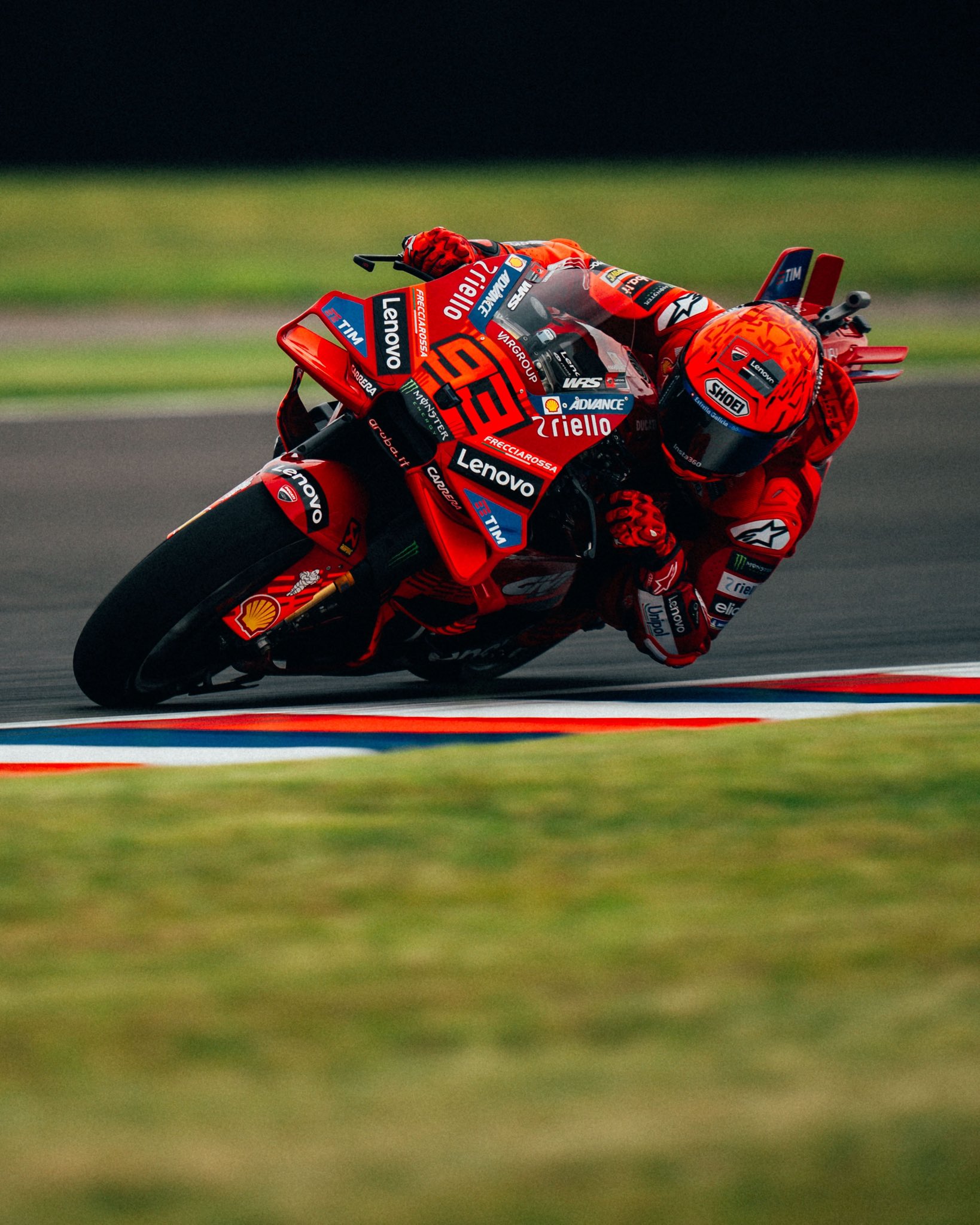
The 2026 regulations split power almost evenly between the combustion engine and the battery, with the electrical side rising from 120kW to 350kW. Drivers now lift, coast and harvest their way around laps that used to be about commitment.
If the fans and the drivers aren’t enjoying this kind of racing, then who is it for?
The unease was loud enough that the FIA and the teams met in April to look at the energy management demands, with tweaks aimed at qualifying and the speed difference between cars. Three races into the new era, the sport was already adjusting the heart of its product mid-flight.
F1 presents all of this as part of its ‘Net Zero by 2030’ story, alongside fuel that is now fully advanced and sustainable. Yet by F1’s own numbers, the cars were never the main problem. The fuel burned on track has made up less than 1% of the sport’s carbon footprint.
The rest sits in the movement of people and equipment. In F1’s 2022 footprint, logistics made up 49% and business travel 29%. Event operations took 12% and factories 10%. Freight and flights alone accounted for more than three-quarters of everything the sport emitted.
Essentially, F1 has aimed its most visible effort at the part of the sport that defines it, and its gentlest effort at the part that drives the totals.
The defence is fair as far as it goes. The fuel is a development race with road-car relevance, and the rules helped bring Audi in and keep Honda around. However, technology transfer and footprint reduction are separate claims, and only one of them shows up in tonnes.
None of this means F1 has been idle. It reports a 35% cut against 2018, close to 80,000 tonnes removed. The question is which levers it keeps handling gently.
Hold fewer races
The calendar has grown from 21 events in 2018 to 24, and F1’s reporting views that growth as the backdrop against which cuts are celebrated.
According to F1’s official reports, attendance climbed from four million to 6.5 million over the same period. Their reports also state that event operations emissions are 6% below 2018 overall but 17% lower per race. The gap between the two figures is the extra races.

Those extra races also bring extra crowds, and the crowds sit outside the official count. Fan travel is not part of F1’s reported footprint. One third-party analysis by sustainability researchers at Balkan Green Energy News put the wider footprint at roughly 1.04 million tonnes, about six times the operational figure, with spectator journeys the largest component. That is an outside estimate rather than an official F1 data point, but it signals the same thing: every added weekend adds people who must also get there.
We have proof that the alternative is survivable. Races have left before and simply been replaced. Imola dropped off after 2025 and Madrid took its place, and Zandvoort hosted its final Dutch Grand Prix this year. In both cases, a gap was filled, not left. Filling every gap is a choice, and it is the choice that keeps the total at 24.
The floor is contractual rather than sporting. The National reported that F1’s various commercial agreements require 21 Grands Prix. Contracts can be renegotiated. A 22-round calendar would still clear that floor, and a slightly shorter season would make each weekend worth more, which is the logic promoters usually love.
Group the races that sit close together
F1 deserves a bit of credit here. The 2026 calendar moved Canada to follow Miami so equipment could travel directly between the two, and it consolidated a European run from Monaco to Madrid. F1 says the full effect of what it calls calendar rationalisation arrives this season.

However, it is still rationalisation rather than reduction. The 2027 calendar, announced on 16 September, is once more packed with 24 races. Its opening stretch sends the paddock from Bahrain and Jeddah to Melbourne, then on through Suzuka and Shanghai. The Middle East returns at the other end of the year for Qatar and Abu Dhabi. That is two separate trips to the same region, nine months apart.
There are understandable constraints as well. Ramadan, summer heat and promoter contracts all push on the schedule. However, the war has accidentally shown what tidy geography looks like. With Bahrain’s date moved to Sepang, Malaysia now sits one week before Singapore. Baku to Istanbul to Singapore in 2027 follows the same instinct. F1 should treat clusters like these as the default and make anything else justify itself.
The Middle East is the obvious test. Bahrain, Saudi Arabia, Qatar and Abu Dhabi are a short flight apart, yet the 2027 order splits them into two separate visits. Bunching them into one leg would remove a long-haul round trip for the price of some awkward scheduling and temperature questions. It would also end the tradition of closing the season under the Yas Marina lights, which is exactly the kind of trade a sustainability plan should be willing to argue about.
Treat the sprint as a reason to race less
No published figure isolates what a sprint weekend costs in carbon, and it would be dishonest to pretend otherwise.
With the 2027 calendar, the number of sprint weekends has risen from six to 10. That is 10 of 24 weekends, with Bahrain, Australia, Japan, Monaco and Abu Dhabi hosting their first.
F1 describes the calendar as supporting its long-term sustainability goals through a more efficient geographical flow. It says so in the same announcement that expands the busiest weekend format it has.

A sprint is 100km, roughly a third of a Grand Prix distance, and about 30 minutes long. Sprint qualifying takes over Friday afternoon and the sprint replaces the final practice session on Saturday morning. The weekend is compressed, but the cars, crews and freight still travel exactly as before.
The sport’s own case for the sprint is that it delivers more per trip. Viewership is 12% higher on sprint weekends, and 82% of the attendees say it adds value to their ticket. Accept that, and it becomes an argument for fewer weekends, not more. If each stop is richer, F1 can afford fewer stops.
Send fewer people
Travel emissions are down 27% since 2018. Much of that is remote broadcasting, which keeps around 140 personnel at F1’s Media and Technology Centre in the UK on race weekends rather than at the track. It is the sport’s best example of a change that removes carbon without touching the racing.
The harder part is growth. A larger sport means more personnel travelling to races, and with an 11-team grid the headcount question only gets bigger. Sustainable aviation fuel certificates help offset that, but they are a cushion against a rising trend rather than a fix for it.
The most instructive comparison is one F1 would rather avoid. Formula E’s published net zero pathways say only race-critical staff attend its races and that people are grouped onto shared flights where possible. If F1 wants to borrow from its electric cousin, that is the page to copy. Limits on travelling, headcount, or a wider remote model for the tasks that do not need a body in the paddock, would cut flights directly.
Move the freight off the planes and plan the season around it
Logistics emissions are down 29% since 2018 and 21% since 2024. More than half the broadcast and related freight is due to leave aircraft for sea or regional hubs by 2030, and the sport made its first investment in sustainable maritime fuel last year.
The caution is in how the headline number is built. The reduction to 148,805 tonnes from a 228,793 tonne baseline includes sustainability certificates, which are credits for sustainable aviation fuel produced elsewhere in the supply chain.

The practice is established and independently verified. It is also not the same as a lower-carbon plane being the one that carries the cars. F1 would earn more trust by reporting the certificate-free figure beside the headline.
F1 also plans to lean further on regional hubs, where vital equipment can stay in a region rather than crossing the world and back. That works best when races in that region are grouped.
Sea freight also depends on the calendar. Cargo that travels by ship needs races far enough apart to allow for the crossing and close enough in geography to make the crossing worthwhile.
A sprawling, zig-zagging season keeps air freight necessary. A tidy one lets the ships work. Freight is where F1 has been most convincing, and it is inseparable from the calendar decisions the sport has been slower to make.
Edit the calendar as often as the rulebook
The 21st September Commission meeting is a small case study in where F1’s attention naturally goes. Refinements to the Power Unit regulations on fuel flow trim the 2027 race distance by two or three laps. This tightens the number that makes up less than 1% of F1’s own reported footprint.
Alongside that, it removed the gearbox homologation for 2027 to preserve supplier development freedom, and reworked how disrupted races are timed, replacing a three-hour hard limit with a fixed stop time while keeping the two-hour cap on actual racing.
This is the whole pattern in miniature. The regulations get revisited every few months, right down to the flow of fuel through the engine. The calendar gets set once a year and treated as fixed.
There is an honest version of the engine argument. If changing what a driver does on every lap bought a large carbon saving, the trade would at least be worth debating on its merits. The sport’s own breakdown says the saving on track is a sliver. What is being reshaped is F1’s character and the label on the change is sustainability.
That is the real shape of the story. F1 can spend the rest of the decade explaining why an energy-recovery system belongs in an F1 race car, and drivers will keep arguing over whether it feels like racing.
Meanwhile, the biggest slice of its footprint sits in aeroplanes, ships and lorries, where the sport is making progress but nowhere near as loudly.
If Net Zero by 2030 is going to be won, it will be won there, on schedule, and the engine was never going to settle it.
Edited by Meghana Sree


Comments