
Which circuits deserve to return to the F1 calendar? Our writers give their picks


As Formula One continues to expand its calendar, set to host 23 rounds so far this year, the desire to see past venues of F1 glory return to the track on a longstanding contract only deepens — especially with the Sepang International Circuit returning to host the Bahrain Grand Prix, but with no further news of its place on the calendar in future years.
With the recent news of Istanbul Park also making a comeback to the roster in 2027, we asked our writers which other tried and tested tracks they would love to see back on the F1 calendar.
A Grand Prix worth bringing back: Adelaide Street Circuit, Australia — Alexa Bageas
There was a time when F1 belonged to Adelaide.
From 1985 to 1995, the Adelaide Street Circuit provided some of the most memorable and unpredictable races in F1 history. The Australian Grand Prix became synonymous with South Australia, attracting thousands of fans and creating an atmosphere that remains difficult to replicate. More than three decades after its first race, Adelaide deserves the opportunity to bring F1 action back to life on its soil once again.
The Adelaide Grand Prix was never simply another race on the calendar. Its street circuit was fast, demanding and unforgiving, producing races that regularly descended into chaos.
The 1994 Australian Grand Prix saw Nigel Mansell take victory in his final F1 race, while the 1995 edition became famous for its dramatic conclusion and Damon Hill's championship triumph. These moments helped establish Adelaide as a circuit where anything could happen.
A return would also provide F1 with something increasingly valuable: character. Modern circuits often rely on enormous facilities and purpose-built complexes, whereas Adelaide's street circuit would place the sport directly in the heart of the city. The combination of high-speed racing, close walls and passionate Australian fans could create an atmosphere unlike any other event on the calendar.

South Australia has already demonstrated its ability to host major motorsport events through the Adelaide 500, and soon MotoGP, proving that there is a strong appetite for world-class racing in the city. F1's continued expansion into new markets also makes Adelaide an increasingly compelling proposition.
Bringing the Australian Grand Prix back to Adelaide would not mean replacing Melbourne's contribution to F1. Instead, it could give Australia another opportunity to showcase its motorsport culture while reconnecting the sport with one of its most historic venues.
The question is no longer whether Adelaide deserves F1. It is whether the sport is ready to return to one of its original homes.
A venue axed by a tax dispute, not a lack of passion: Buddh International Circuit, India — Kavi Khandelwal
F1 left India in 2013 and never came back. I may not be old enough to remember an international event like this happening in my country, but I do feel the absence of it now.
Buddh International Circuit, in Greater Noida, has hosted three editions of the Indian Grand Prix from 2011. It was more than just a footnote on the calendar. It was the site of Sebastian Vettel’s fourth consecutive World Championship in 2013, where he bowed down to his car the way we bow down to our deities. This circuit sealed Vettel as the youngest driver in history to achieve four consecutive Drivers’ Championships.

A tax dispute, with authorities classifying the Grand Prix as entertainment rather than sport, made the event financially unsustainable within three years. Buddh itself, a Hermann Tilke design with 14 metres of elevation change and a quick, technical layout, remains FIA Grade 1 homologated. It has simply sat underused since.
Meanwhile, the case for India as an F1 market has only strengthened. It’s one of the world’s fastest-growing economies, with a young population increasingly engaged with motorsport.
A resolved tax framework and a race back on Buddh’s tarmac would give F1 a genuine foothold in a market it currently barely touches, and hand a circuit that drivers already rated highly a proper second chance.
One of motorsport’s great nations priced out by F1: Hockenheimring, Germany — Peter Johnson
F1 has said goodbye to some phenomenal circuits over the years. I personally have a soft spot for Yeongam in South Korea, while it is a travesty that the sport has still not returned to Kyalami in South Africa.
However, nothing comes close to the void left by Germany since it dropped off the calendar in 2019. On 64 occasions the country has given its name to a race, with Hockenheim hosting the German Grand Prix on 37 occasions to the Nürburgring’s 26 and AVUS’ one.
I have a very strong cultural and emotional connection to Germany, previously living and studying there, speaking the language fluently and owning a master’s degree in German. I have previously researched and written extensively about Germany’s car industry, upon which much of the country’s early post-war economy was based.
This is the same car industry which has given us manufacturers that have competed and won at the highest level of motorsport across a multitude of categories, and the same country that has given us seven Grand Prix winners, with 179 victories between them — second only to the UK.
Those seven winners include, of course, world champions Michael Schumacher, Sebastian Vettel, and Nico Rosberg. When Germany last hosted a race — the 2020 Eifel Grand Prix — these three drivers had won 12 of the previous 26 Drivers’ World Championships between them. Mercedes had also done the championship double each of the previous six seasons. This recent dominance has made Germany’s absence from the calendar all the more profound and unjust.

The reason is, as usual, money. Even Silverstone, the home of F1, had its future seriously in doubt just a couple of years ago due to a row over the hosting fee, so what chance did Germany have?
Lutz Leif Linden, the President of the Automobile Club Germany, said last December that Germany could only host another race “if some super-mega sponsor comes along”, with the 20 to 25 million euros that the country used to pay to host a race unlikely to be totally sufficient nowadays.
My preference of venue, should Germany return to the calendar, would be the Hockenheimring. Yes, it was watered down post-2001, with the old layout plunging deep into the forest, but even the new, shorter variation has delivered incredible racing.
Indeed, in 2018, when Lewis Hamilton won from 14th on the grid, and in 2019, when Max Verstappen won a chaotic wet race, Hockenheim’s two most recent Grands Prix were both arguably the best races of the season.
The return of Istanbul Park from 2027 and the one-off return of Sepang later this year may give hope of a visit to Germany in the near future, but it is all a question of money. Based on history, it should be an absolute shoo-in.
Deserves to be more than just a stand-in: Sepang International Circuit, Malaysia — Chloe Buckley
Despite being scheduled to stand in as the Bahrain Grand Prix this October, the Sepang International Circuit in Malaysia hasn’t held an official race on the F1 calendar since 2017.
Sepang was home to the Malaysian Grand Prix, with the first one being held in 1999, with it returning to the calendar for the following 17 years. In that time, we saw some iconic racing moments, such as ‘Multi 21’. At the 2013 Malaysian Grand Prix, Red Bull teammates Vettel and Mark Webber battled for the victory, with Vettel ignoring the team’s instruction to maintain position behind Webber. The incident, occurring at Sepang, has become one of F1’s most infamous examples of intra-team friction in recent history.
That is just one memorable moment that the Malaysian Grand Prix holds, and there’s no doubt it’ll create more if it were to return.
Rising hosting fees and dwindling ticket prices eventually made the Malaysian Grand Prix financially unsustainable, leading to its removal after the 2017 race.
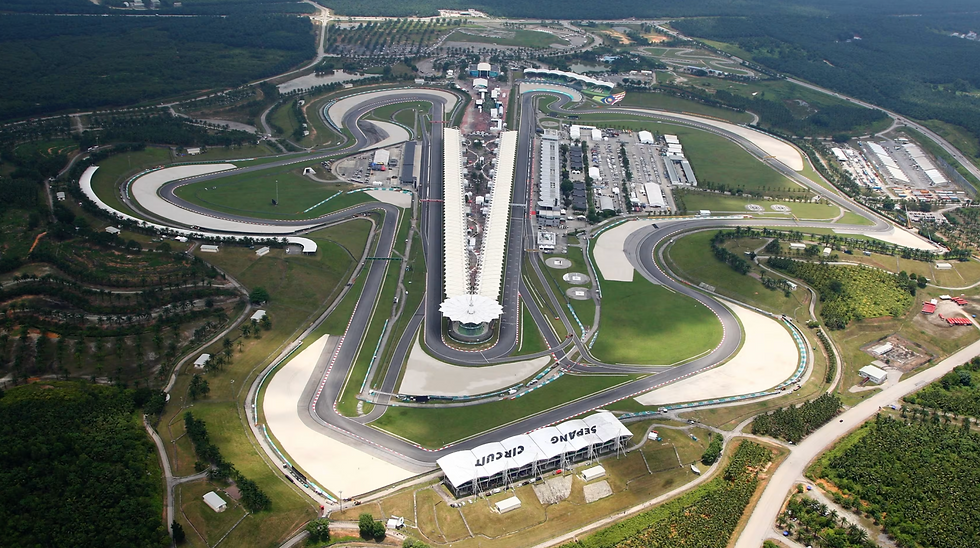
The track has a good combination of long straights, heavy-braking zones and fast corners, accompanied by plenty of overtaking opportunities.
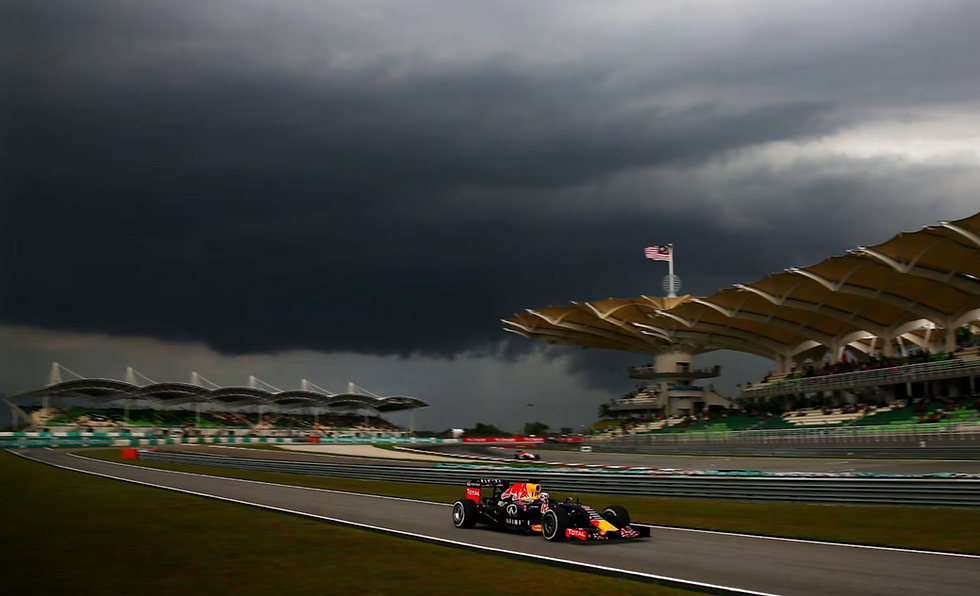
The weather in Malaysia can be unpredictable, with the heat, humidity and tropical storms providing an extra bit of character to the event.
In the current era of F1 machinery, Sepang would be a thrilling race to watch, and after seeing how its one-off goes in October, maybe its status will be reconsidered. If it’s good enough to stand-in for a cancelled race, why not let it return to the official calendar with a permanent spot?
Edited by Meghana Sree




Comments