
Cadillac Mid-Season Review: Unremarkable but steady start


As we prepare to head into the second half of the 2026 Formula One season after a lengthy summer break, our Formula One writers take you through the state of play with each team on the grid. F1’s first new team since 2016 hasn’t pulled up trees so far, but has their season to date been a success?
When the long-anticipated arrival of Cadillac in Formula One was officially confirmed in March 2025, it brought to an end a saga that had at various points seen Michael Andretti, General Motors, and finally Cadillac itself at the forefront of a charge to bring an 11th team to the grid.
Amid accusations of Andretti not being a strong enough brand, suggestions that the team would be grossly uncompetitive, and claims that prize money would be diluted, Cadillac’s journey to becoming F1’s 174th constructor was drawn out and, at times, a little controversial.
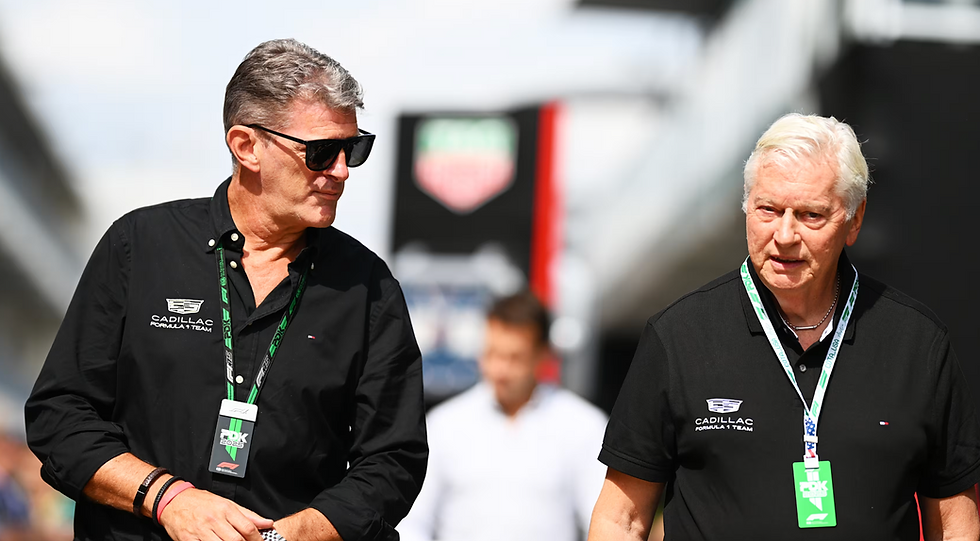
Under the guidance of Team Principal Graeme Lowdown, formerly of Marussia, the team has since got its head down and focused on the task in hand.
While Cadillac remains the only team not to score a point this season, it is only fair to judge the team by a more relaxed set of criteria, given the outfit’s status as F1’s first new constructor in a decade.
How has Cadillac fared so far?
Perhaps the most reasonable way to judge Cadillac’s progress is to compare the team’s accomplishments to the targets set out by Lowdon prior to the season.
The Englishman was vague in his remarks to the press during last year’s Las Vegas Grand Prix, but nevertheless offered some insight into the goals his team had for 2026.

He said: “It's impossible at the moment to predict anything championship-wise. Absolutely nobody knows where [we’re] going to be next year.
"We'll be measuring all the things that we're in control of and how we execute those. That's the key thing for next year. How do we operate?"
Let’s take this as the first part of our analysis, then. How have Cadillac managed the factors within their control?
The new team was firmly in the mix throughout pre-season testing, at least in terms of laps completed, which proved that everything was at least running to schedule.
However, since the season properly got underway in Melbourne, Cadillac’s reliability issues have begun to come to light.

In only four of 11 Grands Prix so far have both cars seen the chequered flag, with two particularly common problems recurring.
On three occasions, Valtteri Bottas has been forced to retire with brake issues – in Monaco, Austria and Hungary – with the sight of mechanics pointing fire extinguishers at the front of the Finn’s car becoming rather familiar.
The race in Spielberg was a low point for the new team, with Sergio Pérez blighted with the same brake issues and forcing the team into a double retirement after just four laps. This came after overheating brakes had affected the team in all three practice sessions.
The Mexican has had a recurring problem of his own, with suspension failure forcing him to retire in Canada, Belgium and Hungary. Worryingly for Cadillac, after three double finishes in their first four races, these repeated failures have begun to creep in over the last few weekends.
This points towards the team’s first real difficulty. Half a season in, the Cadillac still has two fundamental reliability concerns, which no amount of data or number of upgrades have been able to cure.
The saying “to finish first, first you must finish” perhaps ought to be on the wall somewhere at the team’s base in Fishers, Indiana.
If we now compare the team’s performances this season to others on the grid, though, the picture is a little more rosy. Granted, it does not match Brawn’s title-winning debut campaign of 2009, but there is cause for optimism.
It is true that overall the black and white car has been one of the slowest, but certainly not to the degree that may have been expected. Over one lap, they have regularly been 10th fastest ahead of Aston Martin, and it took until Round 11 in Hungary for Bottas and Pérez to qualify right at the back.
Cadillac’s quest to close the gap to the rest hasn’t been helped by the development war at the front of the field, with the team’s 5.2% gap to pole in Melbourne cut only to 4.7% by Budapest.
A fairer comparison is perhaps the gap to Q2, a more realistic endeavour for the team in its rookie year. In this regard the numbers are far more promising, with a 2.4 second gap to the top 16 in Australia cut to 0.7 seconds by Hungary – on a circuit with a similar lap time.
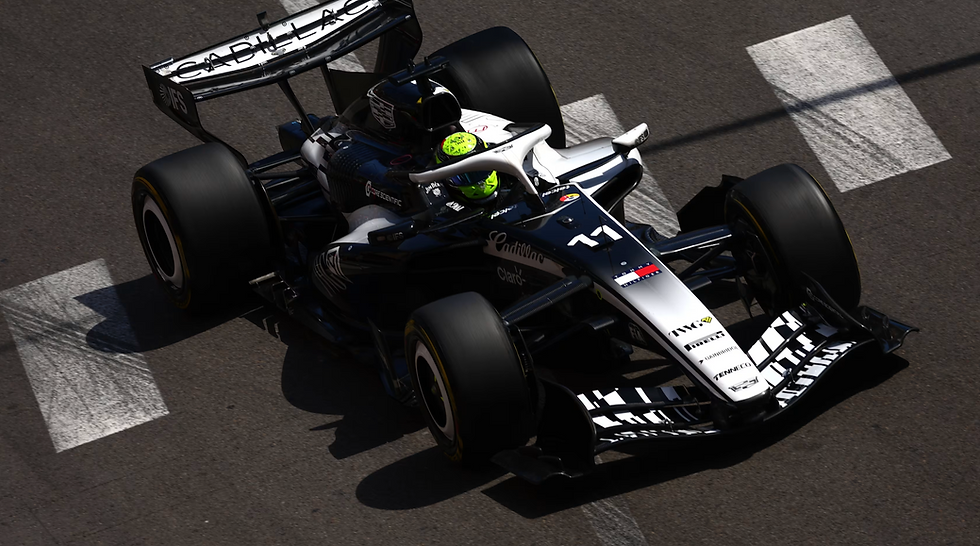
Furthermore, on F1’s least power-dependent circuit in Monaco, the team was properly integrated with the rest of the field. Pérez came within a tenth of a second of Q2, and would have obtained Cadillac’s first-ever point had he not been penalised for a starting grid procedure after the race.
This demotion was particularly costly, though, as his penalty bumped Aston Martin’s Fernando Alonso up to tenth, giving the Silverstone team their only point of the season so far.
Given Aston’s raft of upgrades – essentially amounting to a brand new car – in Hungary, they may soon be out of Cadillac’s reach, but the American team has cause to feel aggrieved not to be above them in the constructors’ standings at this stage.
In terms of Cadillac’s long-term aspirations of catching up with their rivals, the cost cap will certainly work in the team’s favour, and boss Lowdon has said there are plenty of backers to help the team utilise its budget allowance in full.
The cap, which provides an equal ceiling of spending for all 11 teams, is a leveller not afforded to any other new constructor in F1 history.
Having said that, Haas, F1’s last brand-new entry, recorded top six finishes in the team’s first two races in 2016, even without such a helping hand.
It wasn’t such a grand entrance for the three new teams in 2010, though, when, against the backdrop of a global financial crisis and armed with a thoroughly disappointing Cosworth engine, Lotus, HRT and Virgin all failed to score in their first season.

Two of those teams would never score a single point, while Virgin had a stay of execution as Marussia and then Manor, but only achieved two points finishes in seven seasons before disbanding at the end of 2016.
It is therefore quite a mixed picture in terms of the success of recent new teams, but Cadillac are almost certainly closer to Haas’ trajectory than Manor’s.
The engine also appears to be a key factor. Haas, like Cadillac, were (and still are) powered by Ferrari, while the new teams in 2010 were chronically underpowered by Cosworth. In this regard, the big test will come for Cadillac in 2029 when they start to run with their own power unit.
Drivers’ Head-to-Head Performance
The Valtteri Bottas-Sergio Pérez combination was always going to be intriguing. For two drivers with well over 200 starts and multiple race victories in their own right, both had built a reputation as “wingmen” for Lewis Hamilton and Max Verstappen respectively.

Cadillac offered a fresh start for both and the opportunity to reset their reputations, and overall it is Pérez who has better seized upon this.
The Mexican narrowly leads 6-5 in Qualifying, but has made his mark on Sunday with a 6-3 advantage over Bottas. Neither driver is credited as beating the other in Austria or Hungary, as both retired.
Including sprint races, the head-to-heads become 9-6 (Qualifying) and 9-4 (race) in Pérez’s favour.
The Mexican also crossed the line tenth in Monaco for Cadillac’s highest on-track finish, while Bottas’ 13th place in Shanghai is Cadillac’s best classified result to date.
Best Moments
Cadillac’s season is better characterised by a series of milestones, rather than any particular standout moment.
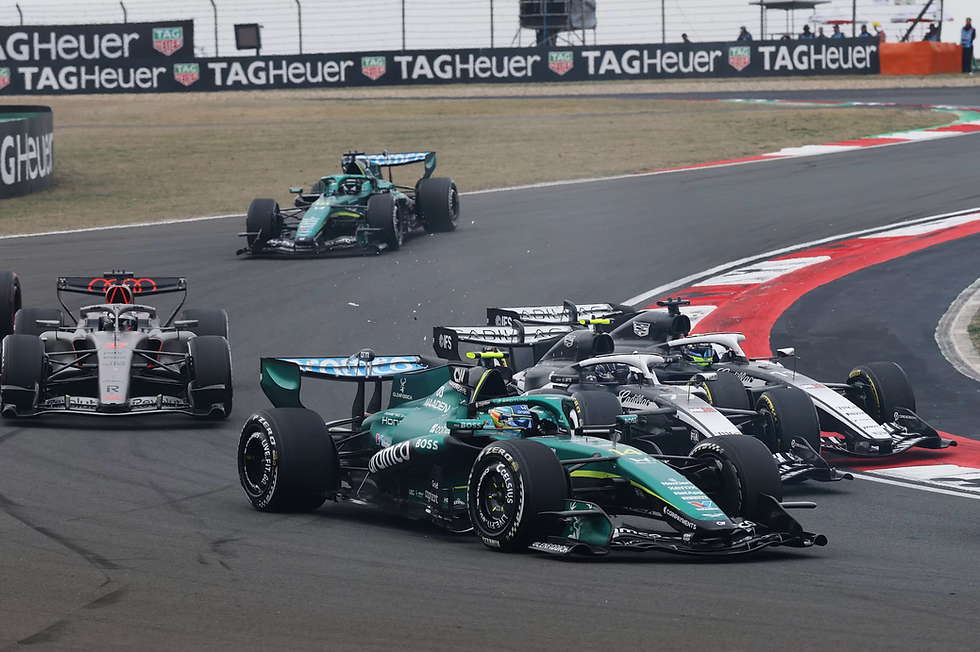
The team’s first race weekend in Australia was of course the first big step, with the double finish in China another significant achievement. Monaco marked another big moment for the team as Pérez crossed the line tenth, and but for a careless mistake at the standing restart should have scored Cadillac’s first ever point.
Other targets within the team’s reach include a first appearance in Q2 and maybe yet a first point, although that would surely rely on another retirement-filled race as happened in Monaco.
Worst Moments
The Austrian Grand Prix weekend was Cadillac’s most difficult of the season so far, with the brake issues usually attached to Bottas’ car also affecting Pérez.
The team suffered from overheating brakes in all three practice sessions, with the Mexican stopping on track in the first two, and by Lap 4 of Sunday’s race both cars were forced to retire as a result of the issue.
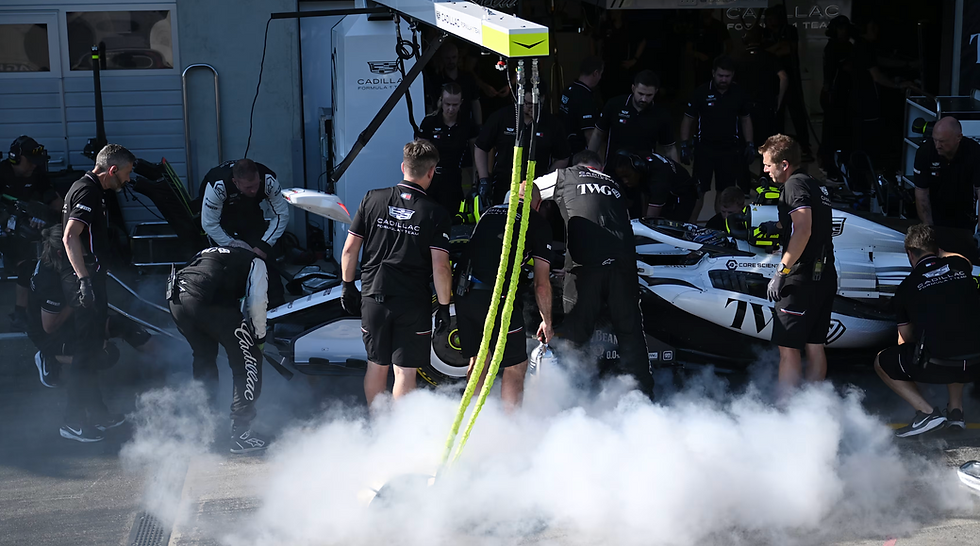
Hungary was also a reality check for the team, as the pair qualified 21st and 22nd for the first time this season after Aston Martin’s significant upgrade package.
This may become a more frequent sight in the second half of the season, and Cadillac just have to keep learning and developing.
Looking Ahead
Returning to Lowdon’s words in late 2025, all Cadillac can do is keep improving what is in the team’s control. There are two particular areas for attention, namely the suspension and brakes, which have plagued the season to date.
Elsewhere on the car, Cadillac has no control over the engine, provided by Ferrari, so can dedicate their attention to developing their aero package. The team has already performed well in this regard, with the car getting noticeably closer to the rest of the pack as the season has unfolded.
Comparing Cadillac to the opposition has been a fun, if not slightly pointless, exercise so far, given Aston Martin’s well-documented struggles, to which the team has now begun to find answers.
It is likely the new team will return from the summer break as the slowest in the paddock, but this is a season of learning, and they most certainly have done that. The rest of 2026 is about putting building blocks in place for 2027 and beyond, and the real success of Cadillac’s debut campaign may not be obvious for quite some time.
Edited by Meghana Sree






Comments