
The tragic origins of the Team TOM’S No.36 entry

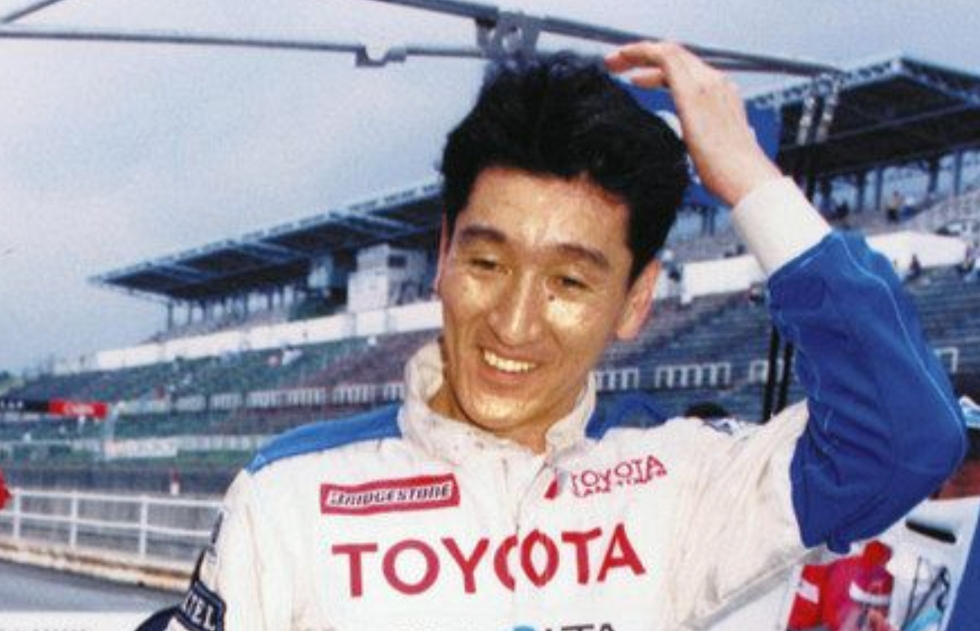
The story of Team TOM’S No.36 has become one of the most iconic and recognisable ones in Japanese motorsport, having achieved eight Super GT titles, two Super Formula titles and a further five in Super Formula Lights to date.
The story of how the No.36 came to be is, however, one of tragedy.
Hitoshi Ogawa joined Team TOM’S in 1987, stepping in for former Formula One champion Alan Jones in the All Japan Sports Prototype Car Endurance Championship (JSPC) on a one-off basis, having driven for Team TOM’S’ customer teams previously in other regional series.
The race he’d step in for was the historic Suzuka 1000KM, an event first held in 1966 and had been dominated by the Porsche 956 for the past four years, from ‘83 to ‘86.
Ogawa, although considered a late bloomer, was an up-and-coming driver at this point, and would be accompanied by the 1983 and the first non-Japanese Super Formula (then called All-Japan Formula Two) champion Geoff Lees, and the first Japanese driver to win Le Mans, Masanori Sekiya, in the TOM’S Toyota 87C.
The Team TOM’S crew would go on to grab Toyota’s first Suzuka 1000KM win in 15 years and end Porsche’s recent dominance.
This performance made him one of Team TOM’S’ co-founder and team boss, the Tiger of Macau, Nobuhide Tachi’s favourites. Ogawa’s win on debut would soon make him a mainstay in the Team TOM’S and Toyota roster and in the Japanese motorsport world.

Domestically, he’d go on to win the premier Japanese single-seater series, the Super Formula championship (then called All-Japan Formula 3000 Championship) in 1989, his first full season, despite starting the season off with the previous year’s car.
His championship-winning season was yet another display of his consistency and calculated driving going the long way. His season was mostly a cumulation of second and fourth place finishes, with the exception of Round 7, which he dominantly won from pole, his only win in the series.
He finished second in the standings the following year as the legendary Kazuyoshi Hoshino had a season for the record books, but remained a consistent top finisher for the remainder of his time in the series.
Internationally, he was among the team’s and manufacturer’s driver lineup at the 24 Hours of Le Mans for the next three years, from 1988 to 1990.
Over the years, Ogawa earned several monikers, chief amongst those being “Japan’s Alain Prost.” He became reputed for a driving style that, according to Tachi, “cared for the tyres and the machine.” He also became well known for being great at developing cars, giving precise and valuable feedback to the engineers.
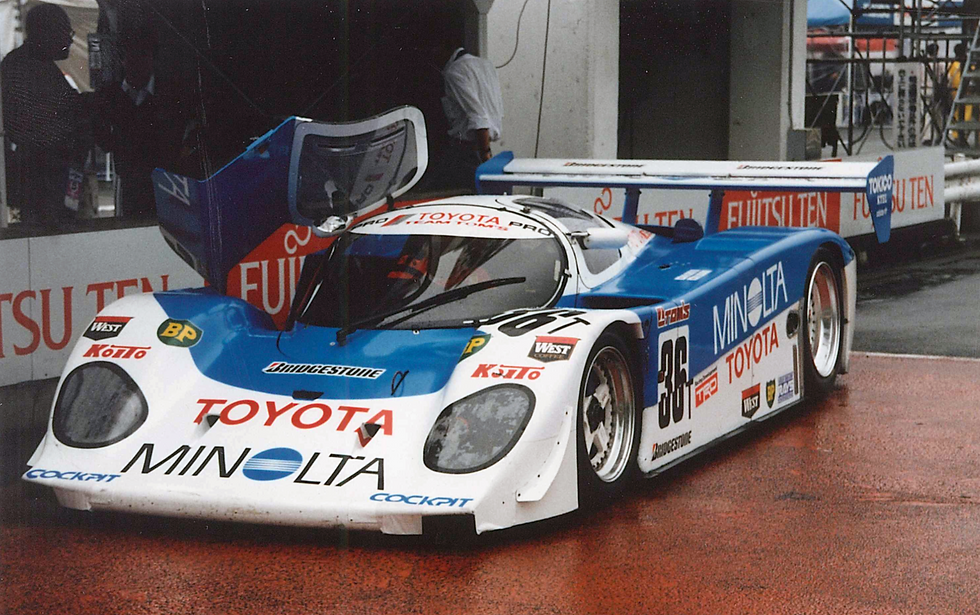
Around the same time, Ogawa would be driving in the World Sportscar Championship, also for Team TOM’S and Toyota. He took his career’s most important win.
The now iconic TS010 made its debut in 1991 for the WSC season finale at Autopolis. The next year, the car made its full season debut for the WSC.
Ogawa would drive the machine for the opening round of the season for the 500km of Monza alongside Geoff Lees. The duo faced tough competition from the Peugeot crew, who had been the favourites.
While the Peugeots led the race towards the end, four-time Le Mans winner Yannick Dalmas, who was behind the wheel, crashed with two laps remaining. Every other competitor had retired from the race at this point, except the ever-so-reliable duo of Ogawa and Lees.
Ogawa’s mindful driving style came in handy in winning a race that proved to be strenuous.
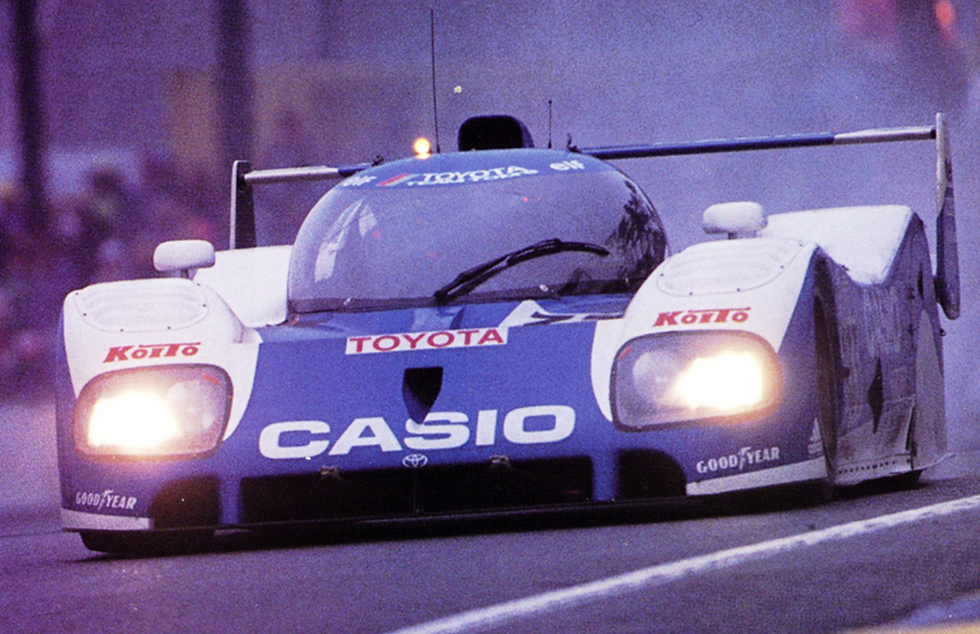
This was also the first win for the now iconic TS010, but also Ogawa’s last.
Ogawa would race in the All-Japan Formula 3000 Championship again, scheduled to race in a handful of rounds, including the fateful Round 4 at Suzuka.
On lap 27, Ogawa was involved in an intense fight with 1993 Japanese Touring Car Champion Andrew Gilbert-Scott. Ogawa tried to overtake Gilbert-Scott down the main straight, but the Brit held his line. So Ogawa switched to the outside, but during the switch, clipped Gilbert-Scott’s car, sending them both hurling into the barriers.
The Brit hit the tyre barriers, but Ogawa’s car hit a mound in the gravel trap and was sent over the barriers, hitting a pole. He suffered a severe fracture to his cervical spine and was rapidly taken to a hospital.
He was pronounced dead two and a half hours later at 4:59 PM on 24 May 1992, aged 36.
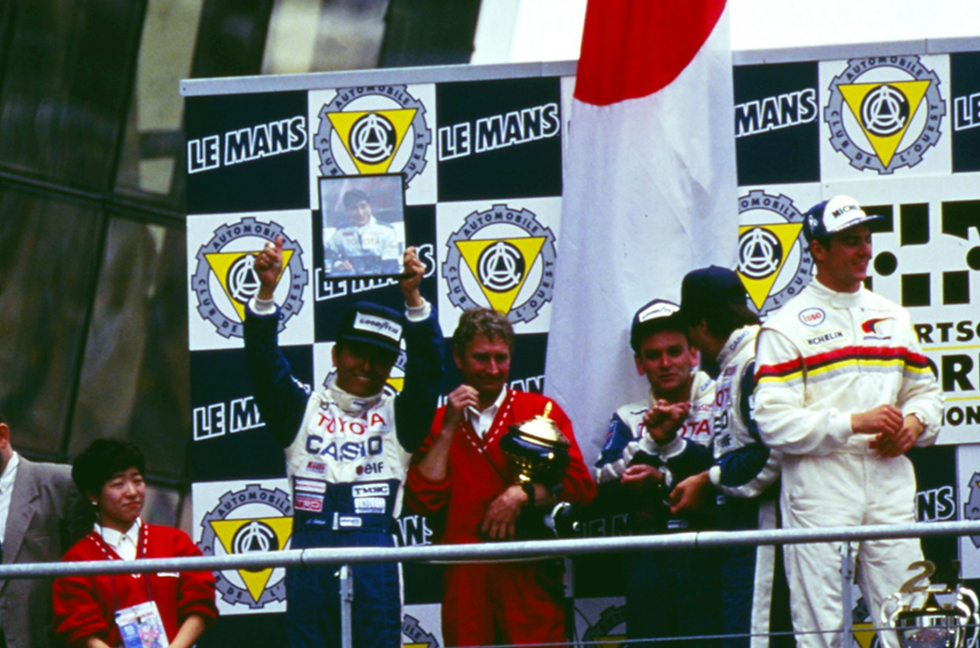
Ogawa’s presence was deeply missed around the paddock. The same year, at Le Mans, where he was yet again scheduled to race with Toyota and Team TOM’S, the team would finish second following a close fight with Peugeot. Teammate Masanori Sekiya would take a photo of Ogawa to the podium in his honour.
Sekiya and Ogawa were close friends; it would not be uncommon to see the pair together in the paddock. Sekiya said later in an interview: "This might sound cheesy, but Ogawa's face was overlapping in my mind. I tell [my wife] Yoko the same thing, that Ogawa was with me. But I don't know. Is it real or not?"
Having driven the No.36 car for the final parts of his career, and having died at the age of 36, team boss Tachi only saw it fitting to have the No.36 be a permanent fixture in the team’s lineups.
The No.36 has since become one of the most iconic numbers in Japanese motorsport, especially in Super GT, most notably with the “Godzilla slayer” Castrol TOM’S Supra, winning the 1997 title in the hands of Michael Krumm and Pedro de la Rosa in a comeback story for the ages.
Most recently, the No.36 has won the championship in four of the past five seasons in a record-breaking stint, with Sho Tsuboi (2021-25), Yuhi Sekiguchi (2021), Ritomo Miyata (2023) and Kenta Yamashita (2024-25) driving the car. Tsuboi has also won the 2024 Super Formula championship with the No.36 crew.
“TOM'S had been using the number '36' in our race numbers since 1984, but it wasn't something we were particularly attached to. However, Ogawa's death made us decide to stick with '36'.
“I intend to continue to cherish the number 36 as it represents Ogawa, who won the World Championships in car number 36 and passed away at the age of 36,” Tachi wrote in a column for Toyota Gazoo Racing.
Ogawa would leave behind a wife and child, his son Ryo Ogawa, who was just a year and a half old at that time. Ryo Ogawa would go on to follow in his father’s footsteps and become a professional racing driver, becoming a four-time Porsche Carrera Cup Japan champion and the 2015 Japanese Formula 3 (now called Super Formula Lights) champion.
Through his untimely death, Ogawa has been immortalised in the form of the No.36 Team TOM’S squad. Their performance on track might wax and wane, but their achievements will not be forgotten for decades to come.
A special thanks to Jens “Geinou” Sobotta for his help with this article.
Edited by Vyas Ponnuri






Comments