
Milwaukee doubleheader “like a go-kart event” amid IndyCar’s five-week closing stretch


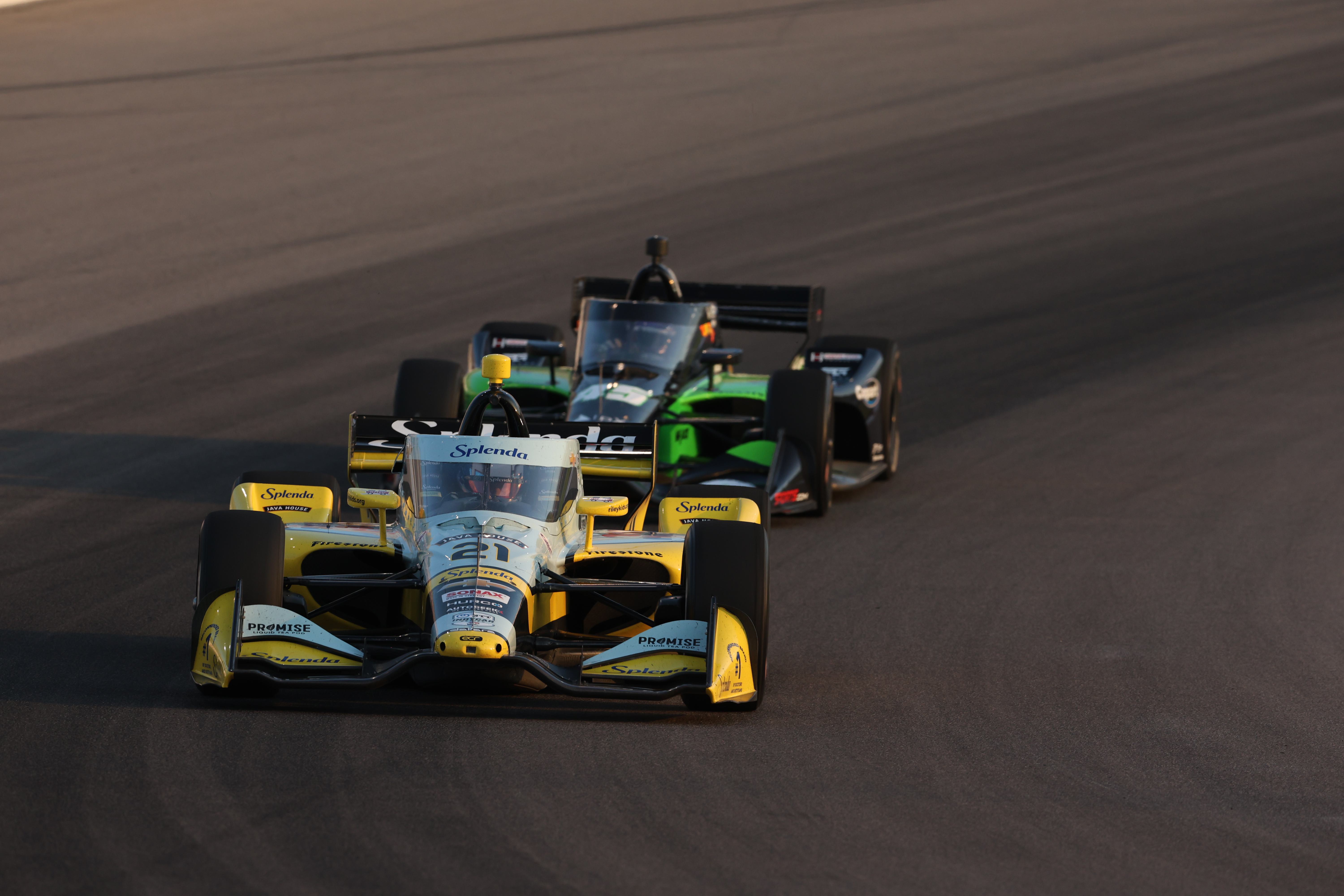
As IndyCar takes to the Milwaukee Mile this weekend, the series’ teams are enduring their fourth successive week of competition. It doesn’t come to a close here, either, as they end the season next weekend with a trip across the country to Laguna Seca.
By the time next week has concluded, there will have been six races in a five-week run, owing to this weekend in Milwaukee playing host to a high-pressure doubleheader.
“It feels like a go-kart event, which is not a bad thing. Go-karting is the most fun that you have in racing, okay?” said Team Penske’s Josef Newgarden after leading the weekend’s sole practice session on Friday. “It feels very pure, a little bit chaotic, get after it, just go do it. That’s a good thing. It’s kind of fun. But it’s also tough. It’s tough on the teams.
“[You] have to show up with your A-game when it’s like that. If you don’t roll off the truck good, it’s very difficult to catch up on a weekend like this. Very difficult. You’re sort of trying to learn through the race then to fix it for Race 2, which is a really bad equation on the doubleheader. You don’t want that to be the case.”
The presence of doubleheaders within the IndyCar calendar have tended to prove divisive. At the time of the 2026 schedule release last September, Milwaukee’s hosting of a two-race weekend was a necessity to extend the season to the desired 17 races, before the season was ultimately drawn out to 18 rounds by the addition of Washington D.C.

Single-race oval weekends this season - at Phoenix Raceway, World Wide Technology Raceway and Nashville Superspeedway - have all followed a traditional two-day format. An hour of pre-qualifying practice, qualifying, high-line practice and a final hour of pre-race race practice is run on Day 1, with the race taking centre stage on Day 2.
Milwaukee runs over three days, but with the opening day of the weekend on Friday playing host to the only 90 minutes of practice and nothing else, before qualifying runs late on Saturday morning, Race 1 that afternoon and Race 2 the following day.
“All of our preference would be to have a more standardised format, which we would normally see a practice, a Q, a practice and the race,” Newgarden said. “That’s IndyCar’s preference too. Maybe some of this came down to some variables: TV, et cetera - how can we get the best audience? That’s what was explained to us.
“You can’t fault FOX or IndyCar for trying to put the most eyeballs on the sport. It doesn’t bug me. If there’s a preference, we like the standardised format: coming, showing up, having to do it this way. It also doesn’t bug me. It’s still fun.”
Chip Ganassi Racing’s Scott Dixon also questioned the schedule, given the single practice session can become messy with teams on mixed run plans across qualifying and race preparation. The evening running on Friday also did not match the early-to-mid afternoon race start times, though conditions are expected to change across the weekend.
“These schedules are kind of strange,” Dixon said. “Trying to put qual sims and race runs in the same practice is not particularly easy. It’s what everybody has to deal with - same for everybody. It’s not perfect but I know for next year they can switch that up.”

Both of the weekend’s races will be the same distance, at 250 miles, which has also led to questions over whether there will be enough variation between the two days. Newgarden sees both sides of the debate but is not overly concerned about an unchanged lap count.
“Two years ago when we did the doubleheader, the second race really changed because the grip level changed,” he said. “The strategy altered because the way the track was driving. Balance of the car was different. You’ll get natural deviation [with] different weather conditions. From what I looked at, it looks like it might be hotter on Sunday. That will change the way you race as well. I’m not too perturbed about it being the same distance.”
Dixon added that it “probably doesn’t matter” and that the naturally different circumstances within the race will alter how it unfolds, particularly from a strategic standpoint.
“Where the cautions fall really change how the race plays out anyway,” he said. “Race 1, in previous times that we’ve had doubleheaders, to Race 2 strategy-wise have been quite different. It just really depends on where the cautions fall, where you have accidents and things like that.”




Comments