
Survival of the fittest: Has F3 at Monaco lost its racing identity?

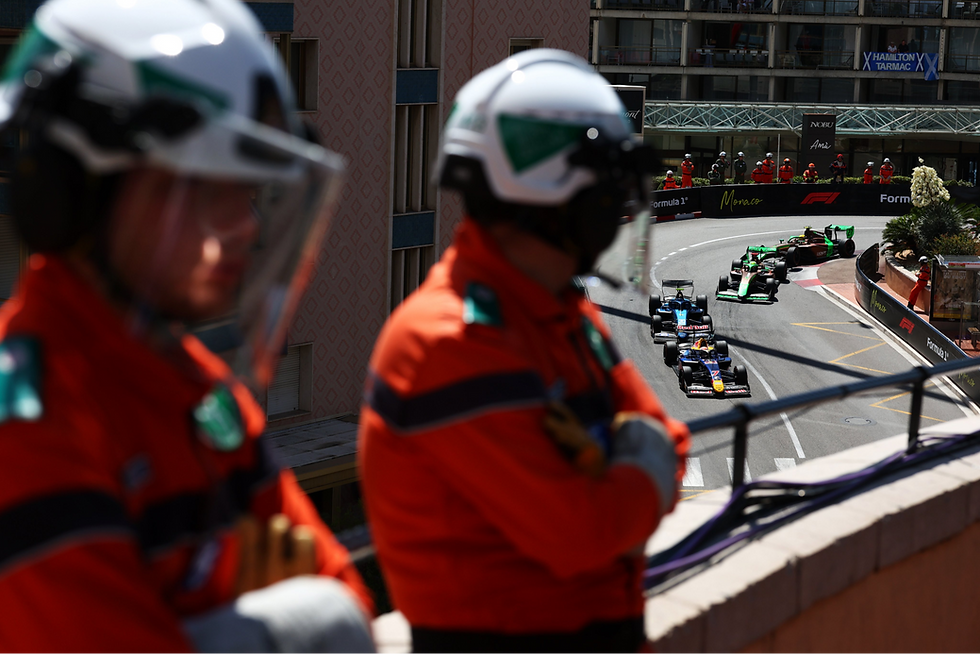
Monaco has for long been the crown jewel of motorsport - a circuit where legends are made and careers are defined. But as F3 returned to the principality once again this season, a familiar question resurfaced this year: Is Monte Carlo still a racing circuit, or has it simply become an exercise in survival?
The evidence from Saturday's sprint race was difficult to ignore. Five drivers failed to see the chequered flag, two safety cars and a virtual safety car punctuated the action, and a red flag brought the race to a halt entirely, all stemming from a circuit that offers precious little room for error and even less room to overtake. Then, even after the chequered flag had fallen, the drama was not done.
Before the post-race chaos unfolded, the race itself delivered a sobering reminder of just how brutal Monaco can be. Brad Benavides of AIX Racing was amongst the casualties of the opening lap carnage at the hairpin, when Christian Ho of Rodin Motorsport struck him and pitched his machinery into the barriers.
Benavides was transported to hospital, where it was confirmed he had suffered three broken vertebrae. It was the starkest possible illustration of what is at stake every time a Formula 3 driver ventures out onto the streets of Monte Carlo: the line between racing and survival is not merely philosophical. At Monaco, it is painted on the barriers and measured in medical reports.
Freddie Slater of Trident, himself no stranger to the chaos having received a ten-second penalty for his role in the hairpin collision, offered a candid assessment of the Monaco mindset.
"Everyone knows how difficult it is to overtake, so everybody tries to get stuck in the first couple of laps, especially in the start, because it might be your only opportunity to make a difference.
"I think everybody tries to do that. I was one of those people yesterday, for sure. I think it's just how it goes sometimes," the Briton said.
It is a brutally honest admission - that the frantic scramble for position in the race is not recklessness but rather cold, calculated logic. When overtaking is almost impossible, the start moulds the race.
The famous Loews hairpin becomes a flashpoint. Not down to drivers being careless, but because the need for overtaking and manoeuvring is desperate. And as Benavides' injuries demonstrated, the consequences of that can extend far beyond a damaged front wing or a lost championship point.
Slater continued: "Yes, you will survive at the end of the day and try not to crash, but we're all racers at the end of the day, and we just want to... we always want to try and overtake each other and battle as hard as we can. Yeah, it's just how it goes around here."
The tension between the racer's instinct and the circuit's unforgiving nature is perhaps what makes Monaco simultaneously the most captivating and most frustrating round on the Formula 3 calendar.
Drivers arrive knowing that qualifying is everything, yet the competitive spirit refuses to be entirely subdued once the lights go out. The problem is that when twenty-odd young, ambitious drivers all arrive at the same conclusion - that the opening laps are their best and perhaps only opportunity - the hairpin becomes less a corner and more a collision waiting to happen.

Rodin Motorsport’s Brando Badoer, one of the unfortunate retirees from the opening lap carnage, echoed that sentiment whilst adding a broader perspective. "It's a particular race. More than in the other rounds, the race is basically settled on Friday, qualifying. Then, of course, we race as we want to race, but it's different than the other tracks, for sure. You need to be more careful and strategic."
Badoer's words cut to the heart of the debate. Monaco does not simply reward the fastest driver. It rewards the most prepared, the most composed and, crucially, the most fortunate. A single mistake in qualifying can render an entire weekend irretrievable before a single racing lap has been completed.
For Badoer himself, it was not even a mistake of his own making that ended his race. He was simply in the wrong place at the wrong time - a verdict Monaco delivers with alarming regularity.
The sentiment was not confined to the sprint race alone. When the field returned to the Monte Carlo streets for the feature race the following day, Monaco wasted little time in making its presence felt once more.
A collision between Tuukka Taponen and Maciej Gładysz on Lap 2 sent the former into the barrier. It brought out the safety car, whilst Fernando Barrichello's afternoon came to a premature end after clipping the wall on Lap 19 - a painful reminder that even the smallest lapse in concentration carries a disproportionate punishment around these streets.
VAR’s Hiyu Yamakoshi crossed the line first and appeared to have converted the sprint pole position into a maiden sprint race victory. The Japanese driver offered a measured assessment of Monaco's unique demands. "I mean, yes and no. For me, I think all the drivers are now taking a bit too much risk compared to the past few years,” he said.
"Everyone now knows Monaco is most likely, most likely, not impossible, but most likely impossible to overtake. So the only chance they have is a fast lap right after the safety car is down. I think they try to use all the chance, as much as possible, but sometimes the drivers, they can’t talk to each other when we are racing, so that's also causing some problems in the race.
"Of course, surviving is important, but also the most important thing for us is understanding each other more."

It is a nuanced and perhaps surprising take from the man who crossed the line first. Yamakoshi does not dismiss the survival instinct - he acknowledges it - but his focus on communication and mutual understanding between drivers points to something deeper. Monaco does not have to be a war of attrition. It becomes one when drivers stop understanding the shared language of racing.
Unfortunately for Yamakoshi, who maintained a clean race, hours after the chequered flag, his VAR car was found to have breached Articles 1.5.3 and 17.1 of the FIA Formula 3 Technical Regulations following post-race scrutineering. The front push rod components had been fitted on the incorrect sides of the car, the left-hand rod on the right-hand side and vice versa.
VAR argued the regulations were ambiguous as to which side constituted left and right, but the stewards were unconvinced, ruling that it should be taken to mean the driver's left and right. Yamakoshi was disqualified, his maiden victory erased before the champagne had barely dried.
It was, in its own way, yet another Monaco reminder that survival extends beyond the circuit's walls. Here, for Yamakoshi, the threat did not only come from the barriers.
DAMS racer Gerrard Xie inherited the victory and, with it, a place in the history books as the first Chinese driver to win a Formula 3 race. He offered a similarly balanced view on the survival debate during the post-race press conference.
“Yeah, again, yes and no. Because at the start, I think the battle is still quite intense and I think there's definitely a lot of drivers trying to make good moves.
"Maybe some of them didn't work out, but I think there's definitely moves around the track. But when it's all settled, I think yes, it's a bit trickier to overtake."
Xie's perspective is perhaps the most telling of all. The opening laps at Monaco are not devoid of racing - they are saturated with it, compressed into a frantic burst of ambition before the circuit's walls close in, and the order calcifies. Once the dust settles, survival instinct takes over. The two phases of a Monaco race are almost entirely different sports.
Bruno del Pino, who was promoted to second and further extended his championship challenge, summed up the Monaco philosophy most pragmatically. "For me, we know that before going to Monaco, qualifying will be crucial because the chances of overtaking are quite slim,” he said
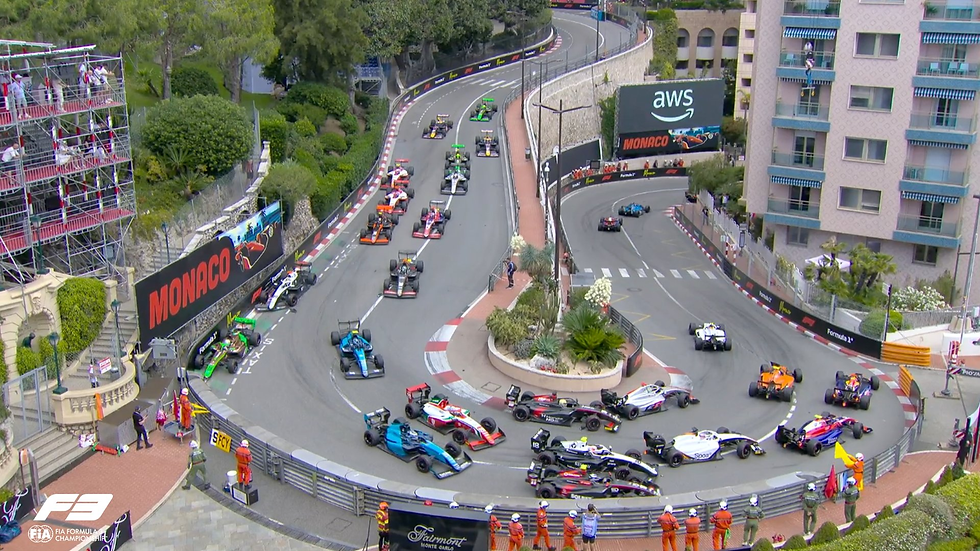
"So yeah, I think if you manage to do a good qualifying and you're in the top 10 or top 12 for the reverse, it's a completely different weekend. You know, people, even as we saw today, risk it sometimes here and there and can have really likely chances to crash. So hopefully, people learn from today and for me to be a bit more relaxed for tomorrow.
"I don't want to get in trouble, so I get points. But yeah, I think for me, Monaco is this track where the qualifying, the terms, the full weekend. And last year, I didn't make the best qualifying, so I knew that it was going to be a completely different story compared to this weekend.
"But yeah, I mean, we know what Monaco stands for and we don't want to risk reward for trying to overtake this and just trying to analyse what's best for the driver."
Del Pino's words are those of a driver who has learned Monaco's lesson the hard way. The circuit does not punish aggression outright - it punishes miscalculation. There is a fine line between a brave move and a costly one, and at Monaco, that line is painted on the barriers.
So, has Formula 3 at Monaco become more about surviving than racing? The answer, as the drivers themselves suggested, is yes and no. The opening laps remain as raw and competitive as anywhere on the calendar.
But once the field strings out and the barriers loom large, Monaco demands something different - patience, precision and the wisdom to know when and when not to attack.
The F3 race weekend was a microcosm of everything Monaco represents. A driver hospitalised with three broken vertebrae. A race winner disqualified in the stewards' room. Chaos, history and survival all compressed into a handful of minutes and a post-race investigation on the most unforgiving strip of tarmac in motorsport.
The drivers who understood what Monaco truly demands came away with points. The ones who did not were left counting the cost - on track, in the garage and, in the most serious case of all, in hospital.
Edited by Vyas Ponnuri



Comments