
Two wheels vs four: The difference between motorcycle and car races

Written by Silvia Cojocaru, Edited by Gabriel Tsui

Have you ever thought about what it would be like to have a professional racing career? If so, would you go racing on two wheels or four? This article may help you decide what kind of racing would suit you best.
Starting your career
While they are not solely for kids, most young people start their racing careers by choosing karts or minibikes. Either path can lead to a large variety of racing series to choose from later on, but generally MotoGP and Formula One will be the most sought after.
It is important to note that karts will generally be more expensive to start with, already setting up car racing as the more expensive endeavour.
The price difference doesn’t just affect the aspiring athletes, as most motorsport fans would have noticed that car races, especially in Formula One, tend to be more expensive to attend.
Furthermore, karts are considered more competitive, meaning that getting good results in karting competitions is crucial when starting out.

In his 2005 autobiography, ‘What If I Had Never Tried It’, motorcycle racing legend Valentino Rossi reflects on his time racing both karts and minibikes: “For two years I raced both. Karting is more serious, at least at first, because it’s more professional even at lower levels. Racing on four wheels, rather than two, makes you seem more important when you are little. I don’t know why exactly, but I took karting very seriously, whereas minibikes for me were like a game. The way I see it, I raced karts and played with minibikes.”
Training
Different vehicles require different physical skills from the athletes. Both sports are extremely demanding, and they have some overlapping requirements.
Cardio exercises are a must for both drivers and riders as good stamina is important during races. High intensity cardio training is also linked with improving stress management and recovery times, crucial for athletes.
Therefore, in order to stay in shape during the season, you’ll often see both Formula One drivers and MotoGP riders run or cycle on the race track before racing. A great way to get familiar with the track, while also building stamina.

Another quality that both drivers and riders aim for is a good reaction time. Sharp reflexes are crucial when racing at 186 mph (299.34 kph), as it can offer racers an advantage over their competitors right off the line and help them make split-second decisions.
Former Formula One driver, Daniel Ricciardo, presented an easy exercise that many racers practice: “Stand really close to a wall, facing it. Stare at the wall as a mate behind you throws a tennis ball at it. Then when the tennis ball bounces off the wall, you’ve got to catch it with one hand. That’s good for your reflexes and your peripheral vision. It’s fun too!”.
Moving to weight training, racers prefer working with their own body weight, rarely putting on muscle mass. This helps maintain their vehicles as light as possible, making them faster in the process and even helping with the aerodynamics when it comes to motorcycle racing.
However, being too light can also be an issue for riders, as they might face issues handling the bike.

Neck training is also important when facing high G-forces, something both drivers and riders encounter at every track.
In addition, something which is also needed for enduring the G-forces is core strength. For drivers, this also enables them to be more precise with their movements in the car, while on a motorcycle, this is crucial for maintaining balance and remaining on the bike.
Also specific to motorcycle racing is a focus on flexibility and mobility. Riders use their entire bodies to control the bikes, so good body control is imperative.

Racing
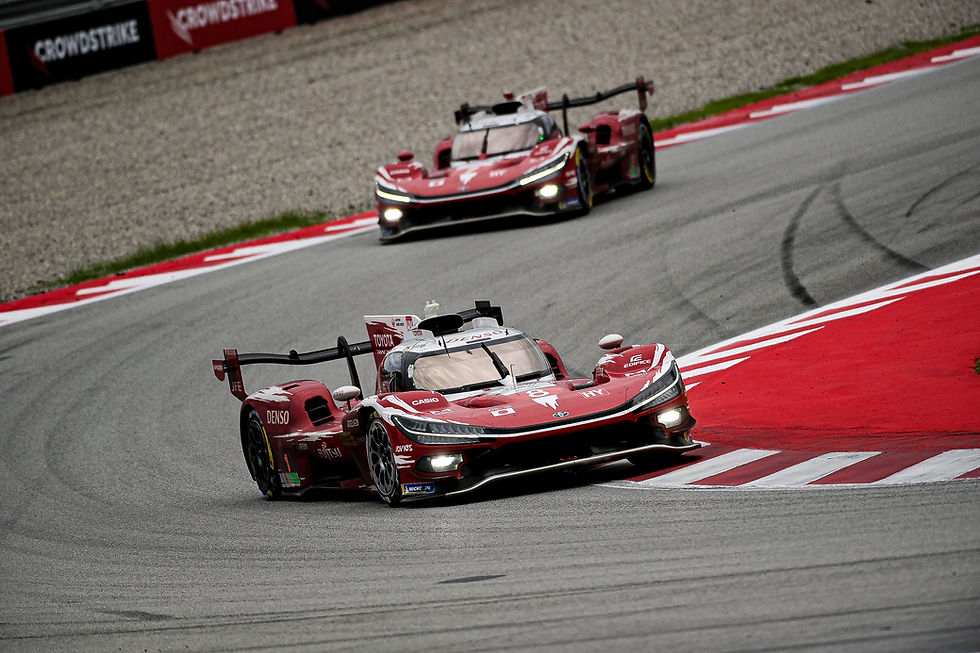
45 minutes of non-stop racing, or elaborate strategies? Motorcycle races last significantly less than car ones and will generally only see riders swap bikes in the event of rain. This means non-stop action on track and a more individual approach when riding a bike.
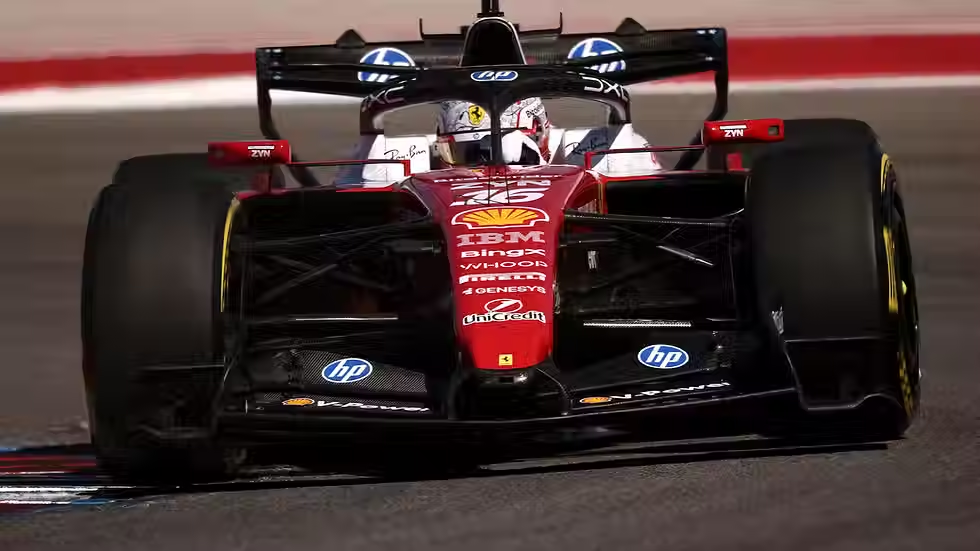
In contrast, drivers are more reliant on their engineers and strategists in order to maximise their potential.
Drivers communicating actively and efficiently with their teams during races is a necessity, as some of the most crucial overtakes can happen in the pitlane. This means that even slower drivers can have the chance to gain an advantage if making the right call in the pits.

When racing motorcycles, most passes are made directly on track, being up to the rider to make the right call in the event of rain.
Each of these approaches to racing is exciting and demanding in its own way, requiring different knowledge from the athlete.
Where speed is concerned, bikes and cars have different qualities, but both are incredibly fast in their own merit. A MotoGP bike for example accelerates faster than a Formula One car and is able to reach a top speed more consistently, but over one lap, the car manages to achieve a faster time.
This is because the higher downforce of a car helps it go faster in corners.
Safety
Both sports have made important steps when it comes to the safety of the athletes and everyone involved. However, going over 186 mph (299.34 kph) evidently has its risks.

Overall, cars offer more protection for the drivers, who are surrounded by safety devices inside the cockpit. One of the most important safety developments throughout the years has been the introduction of the survival cell, an enclosure made out of carbon fibre specifically to protect the driver in the event of a crash.
When mounting on a motorcycle, riders don’t have the same luxuries, only relying on their suits to protect them in the event of crashing.
While these suits are expertly designed to protect the rider in the event of crashes, the nature of motorcycle racing means putting one’s own body on the track, often going shoulder-to-shoulder with other riders.

This makes motorcycle racing more aggressive, having to overtake without the vehicle absorbing some of the impact in the event of an impact.
Public perception
Formula One enjoyed various important sponsorships and marketing endeavours over the years,such as movies and docuseries,which helped boost the sport’s appeal to the general public. This caused the sport to reach a global audience, especially in recent times.

MotoGP’s marketing choices on the other hand, have been more subdued. The sport brings in numerous fans,sometimes more than Formula One,and has a large social media following.
With generally cheaper prices both for attending races and merchandise, motorcycling racing could be considered closer to fans, especially compared to Formula One, which attracts numerous celebrities.
After all, cars have long been seen as a symbol of status, while bikes on the other hand, not so much.
Therefore, if given the chance to start your motorsport career today, which one would you prefer: adrenaline on two wheels or excitement on four?




Purchasing a tax free car for sale was a seamless and rewarding experience. The team was professional, knowledgeable, and committed to helping me find the right vehicle. The transaction was completed quickly, and all documentation was handled efficiently. The car itself has exceeded my expectations in terms of comfort, reliability, and overall quality. Combined with the financial advantages of buying tax free, it was an experience that left me completely satisfied with my purchase. https://patriot-autos.net/
The contrast between motorcycle and car races is fascinating, from the raw exposure of riders to the intense precision of drivers handling complex machines. Bikes feel more visceral and risky, while cars emphasize strategy, aerodynamics, and teamwork. Both demand incredible skill, just in different ways. If you’re into motorsports and want to explore vehicles yourself, platforms like AutobidMaster delaware auto repo auction are worth checking out—they offer access to a wide range of cars across the USA, making it easy to get closer to the racing world.