
Why do AI companies want their name on an F1 car?


The 2026 season is now in its final stretch. The championship fight has narrowed, the regulations reset has reshuffled the order. However, the commercial machinery behind the grid has never been louder.
Artificial Intelligence (AI) sponsorship spend has accelerated to $565 million across the sport this year, with eight partnerships signed in the six months leading into the season. Racing Bulls added a ninth, naming Introl as its Data Centre Deployment Partner — a deal which, like the others, is framed around performance but delivers something rather different.
Tech brands now extend their lead over financial services in Formula One team spending, and AI has emerged as a distinct sponsorship category in its own right.
However, the season has also produced a less sponsor-friendly story. When the software underneath the sport stops working, the branding becomes irrelevant. The question is what teams are actually buying into; and whether it holds up when the conditions are wrong.
What the deals actually look like
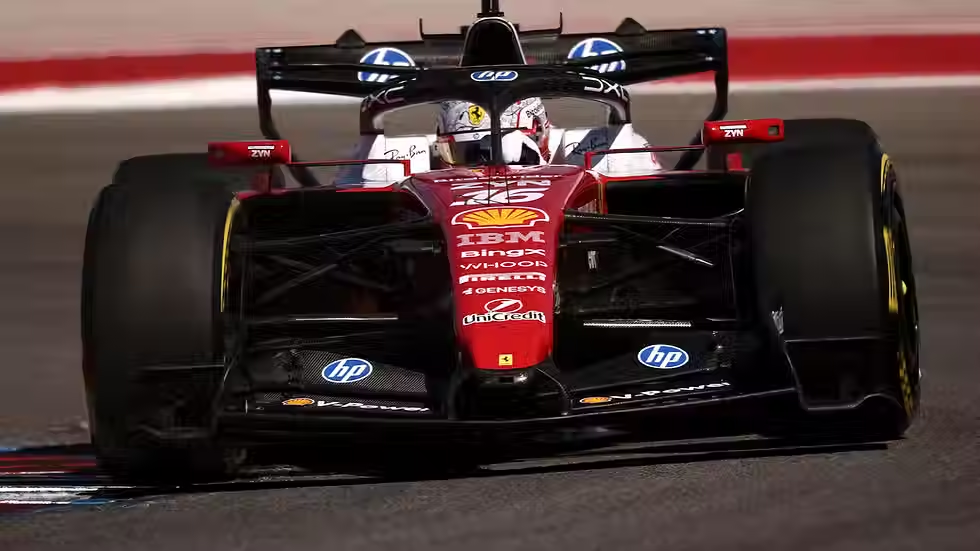
The headline numbers are staggering. Oracle’s title partnership with Red Bull is reported at approximately $110 million annually, making it the single largest team title deal in the sport. HP’s deal with Ferrari sits at $100 million per year. Mastercard’s McLaren partnership is valued around $100 million, Petronas continues at roughly $80 million with Mercedes.
New entrants like Revolut with Audi and Aramco with Aston Martin each commit around $75 million. Alpine’s incoming Gucci title deal, confirmed in May 2026, is reported at $55-60 million per season starting 2027.
Total sponsorship spend across F1 and its teams is projected to exceed $3 billion in 2026, a 15% year-on-year increase. Title sponsorship alone is expected to surpass $500 million this season.
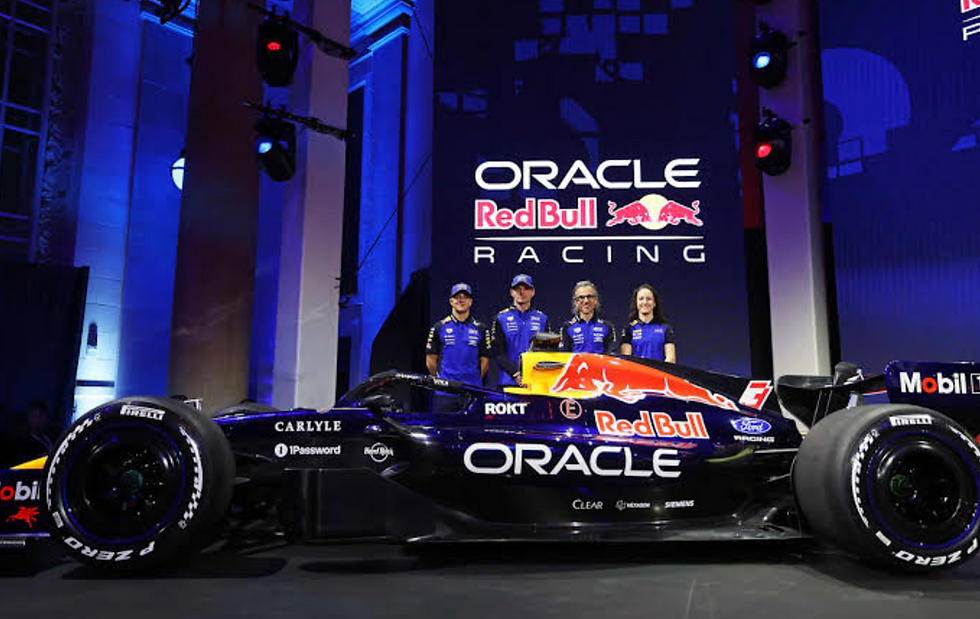
The AI-specific deals follow the same pattern. Red Bull expanded its Oracle relationship into a multi-year extension in February 2026, with Oracle Cloud Infrastructure and Oracle AI now supporting Red Bull Ford Powertrains’ hybrid development.
Williams runs Anthropic’s Claude inside its operations and strategy stack. McLaren has migrated its Google partnership from Pixel hardware to Gemini. Mercedes has Meta AI branding on its title slots. CoreWeave’s GPU cloud powers Aston Martin’s CFD pipeline. Racing Bulls brought in the Neural Concept for aerodynamic digital twins.
On 20th October, Racing Bulls announced a second AI partnership – this one with Introl, a company founded in 2021 that says it has deployed more than one million GPUs. The announcement is careful to define the relationship in technical-sounding terms: Introl becomes the team’s Data Centre Deployment Partner, with branding on the nose of the VCARB 03 and across the garage partner stacks.
Introl will host customers trackside in Austin and Las Vegas, and the two organisations will “highlight how the speed, reliability and performance at scale demanded in the F1 garage are equally essential to deploying and operating advanced AI data centres”.
The exchange becomes unusually explicit if read closely. Introl is not supplying the team with a performance tool. It is using the team as a venue to demonstrate its own data center capabilities to its own customers. CEO Peter Bayer’s statement framed it as “the growing connection between AI infrastructure and the future of our sport,” but the concrete deliverables listed are branding placement and hospitality.
The partnership also builds on Introl’s existing personal sponsorship of Liam Lawson, which the company describes as expanding “from his cap to his helmet”.
Williams board adviser Peter Kenyon was direct with Reuters about the framing: “It’s much more than a sticker on a car or a sticker on a billboard.” That’s the pitch.
What the teams say they’re getting
The operational case is not fabricated. In a sport where the cost cap sits at $215 million and every marginal gain matters, AI addresses real inefficiencies.
Red Bull’s Oracle stack has moved beyond search. Jack Harington, the team’s group partnership lead, described the shift: “It’s gone from a sort of basic AI to more of an agentic approach where rather than just searching for something, it’s actually providing decisions for us.”
The expanded deal includes an AI strategy agent designed to work alongside race engineers, plus Oracle Fusion Cloud Applications optimising finance, HR and marketing operations.

Williams’ Kenyon framed the Anthropic partnership as a way to navigate new regulations and the spending cap: “We see it as one of our differentiating points: how can this partner help us in that journey back to the top?”
The team’s stated goal is to integrate AI across operations to demonstrate value both for itself and for Anthropic—a mutual validation exercise.
The efficiency argument is the one teams reach for first, and it is the one that deserves the most scrutiny. Adam Lewis of Ampere Analysis noted that “efficiency is one of the ubiquitous benefits of AI products, meaning a natural synergy between teams and AI brands”.
Interpreting the labyrinthine technical and sporting regulations, sifting administrative tasks and accelerating simulation cycles are the tasks AI is said to compress.
However, compressing administrative work is not the same as making a car faster or a strategy smarter. The regulation queries, the HR workflows, the marketing pipelines—none of it touches the part of the weekend where positions are won and lost.
What teams are buying, in large part, is back-office automation dressed up as competitive edge. The pitch is that every saved hour is an hour redirected to performance. The reality is that the hours “saved” are additional hours lost in correcting these AI automations.
Simulation is the other frontier, and it deserves the same skepticism. CoreWeave’s compute capacity allows Aston Martin to run aerodynamic evaluations that would otherwise be constrained by physical testing limits.
Neural Concept’s digital twins at Racing Bulls serve the same purpose: exploring configurations that cannot be tested on track within the FIA’s restrictions.

This is where AI’s defenders are loudest, and where the argument is weakest. Running more simulations is not the same as running the right ones. Adding compute capacity to a CFD pipeline does not correct a flawed correlation model or a misjudged assumption—it simply produces more results from the same underlying logic.
The FIA’s testing restrictions exist precisely because unlimited simulation does not produce unlimited understanding. Teams are now buying their way around that intent with GPU hours, and calling it innovation.
None of it addresses the fundamental problem. The systems being sold as efficiency tools are the same systems that stop cars on wet formation laps and drain batteries mid-overtake.
A team can save a thousand engineering hours on regulations queries and still lose a race because the software running the car decided, at the wrong moment, that it knew better than the driver.
If AI’s value to F1 is administrative convenience and extra simulation cycles, that is a sponsorship proposition, not a sporting one. It should be priced and framed as such—not sold as a competitive necessity. Because the evidence so far suggests the competitive advantage is largely theoretical, while the failure modes are very real.
What the AI companies are getting
The exchange is not symmetrical. AI companies are not buying logo space. They are buying a validation environment.
Ampere Analysis’ Lewis was explicit: “These blue-chip companies are using F1 as a launchpad and spotlight for their own AI products or rebrandings.”
Oracle’s CEO made the same point from the other side: “The same technologies the Team uses to model strategy, refine its hybrid power unit, and deploy the latest AI innovations trackside are the ones powering transformation for companies across every industry.”
That is the real transaction. F1 provides a high-pressure, high visibility context where an AI product can be demonstrated under conditions no enterprise sales pitch can replicate. When Oracle’s agentic system helps Red Bull make a strategy call, that becomes a case study. When Anthropic’s Claude sits with Williams’ strategists, that becomes a reference deployment.
Introl’s deal makes the mechanism even plainer. Its president, Alex Koumarelas, states it directly: “F1 and Introl's AI deployments share the same DNA: precision, speed and zero tolerance for failure.”
The company is not claiming its technology makes the car faster. It is claiming that the team’s environment—its garage, its deadlines and its margin for error—validates the company’s own deployment credentials. The customers being flown to Austin and Las Vegas are the audience. The car is the prop.
The sport’s global audience is the multiplier. F1 team sponsorship revenue hit $2.54 billion last season, second only to the NFL. For an AI company trying to differentiate itself in a crowded market, association with a visible team carries marketing weight that conventional advertising cannot match.
When the software fails
The case for AI in F1 is strongest when it is doing the work that humans cannot do at scale—processing vast datasets, running parallel simulations and querying regulations in real time. It is weakest when it is framed as a decision-maker, because the moments that define races are precisely the moments where conditions deviate from the training data.

Sepang made that concrete.
Heavy rain delayed the start. When cars finally took to the track behind the safety car, multiple drivers lost power entirely. Lewis Hamilton told his Ferrari engineer: “I’m pressing the throttle and nothing’s happening.” He stopped on track to restart the systems. Max Verstappen reported the same problem. Several cars were scattered around the circuit, barely moving.
The FIA’s explanation, delivered afterward by single-seater director Nikolas Tombazis, was candid: a software bug in the energy management system, triggered by an “unprecedented combination” of low engine speed, low-grip conditions, wet-weather settings and the Sepang circuit configuration.
The software had not been tested in these conditions because F1 had not run in the wet all year. “We didn’t manage to test the software as extensively as we would have liked,” Tombazis said.
The fix was a software patch disturbed during the delay. Verstappen stated: “It’s not what you want in the sport. I hope there is a lesson learned.”

This is not an argument that AI sponsorships caused the Sepang failure. The software in question was FIA-developed, not vendor-supplied. However, the incident is relevant to the broader AI narrative for a simple reason: it demonstrated what happens when software systems fail in the most visible moments.
The systems that AI companies are selling into F1—strategy agents, decision-support tools, simulation platforms—operate in the same environment of unpredictable conditions, compressed timeframes and minimal margin for error.
Introl's language—"zero tolerance for failure," "precision, speed"—sits awkwardly against a season in which the sport's own software failed on a wet formation lap at Sepang just over two weeks earlier. That is the tension at the heart of this boom: the marketing claims are absolute, and the systems they describe are not.
More AI in the car does not fix the fact that the software can decide, at the worst possible moment, that it knows better than the person driving.
What’s actually being bought and sold
What teams are getting is a mix of genuine operational tools and marketing-friendly partnerships. The operational value is real but uneven, concentrated in simulation and administration, and unproven in the high-stakes, low-predictability moments that decide championships.
Williams’ Kenyon describing it as “much more than a sticker” may well be true for the parts of the operation that benefit from faster data processing. However, the claim that AI is a differentiating point in race strategy remains largely untested in the conditions where differentiation matters most.
What is being sold as a competitive edge is, in large part, back-office automation with a racing logo on it.
A partnership with a team signals that an AI product is ready for high-stakes deployment. It is a marketing claim rendered in carbon fibre and pit-wall integration.
Introl is the clearest example yet. It is not selling the team a system to win races. It is selling its own customers on the idea that it can deploy GPUs at scale, using an F1 garage as the showroom. The team gets better branding revenue and a hospitality partner. The AI company gets a credibility transfer. Neither of those is a performance upgrade, and framing the deal as one would be inaccurate.
Sponsorship revenue is growing. The technology is becoming more deeply embedded. Whether the value proposition holds up when the conditions are wrong remains the open question that no partnership announcement can answer.





Comments