
Women Spotlight Wednesday: Leena Gade


Women have played an influential role throughout the history of motor racing. Many have taken to the wheels of motorsport machines, while numerous figures have worked tirelessly on the sidelines in various roles, shaping the motor racing world to the present day.
Woman Spotlight Wednesday aims to take a look at the tales of these superwomen, who have surpassed various hurdles to reach where they are today. In this article, we spotlight a titanic name responsible for major success in the world of endurance racing.
The 24 Hours of Le Mans has run 79 times since 1923. But only once has the strategy on the winning car been called by a woman.
That happened in June 2011, in one of the closest finishes the race has produced. Peugeot’s final stop was a simple splash and go; Audi’s included fresh tyres too, which by rights should have cost them the race outright. It doesn’t.
The two cars rejoined within seconds of one another and fought it out to the chequered flag, and eventually, the No.2 Audi R18 TDI – driven by André Lotterer, Benoît Tréluyer and Marcel Fässler – crossed the line first, having spent the whole weekend third in Audi’s own pecking order while both faster stablemates crashed out around it.
The engineer calling every one of those final laps from the pit wall is Leena Gade. With the win, she became the first woman in the history of the race to engineer a Le Mans victory.
She would call it “just doing my job.” Motorsport spent the next decade disagreeing with her.
Learning to push back
Gade was born in Perivale, west London, to Indian immigrant parents, was one of three sisters and spent three childhood years in India before her family returned to England.
It was there, watching Formula One with her younger sister Teena, that both girls fell for the sport – not for its glamour, Gade has said, but for “what the machines could do.”
Nigel Mansell was the driver who hooked them first, and neither sister ever really let go of that early fascination with what a car could be made to do under pressure.
She studied aerospace engineering at the University of Manchester, one of five women in a class of a hundred, and the only one left standing by graduation.
Six and a half years followed at Jaguar Cars as a vehicle refinement engineer, with motorsport worked in one the side – Formula BMW, A1 Grand Prix, GT racing – wherever she could get a seat at the table.
“Every time someone said you can’t do this, or you haven’t got the experience for that,” she has said of those years, “Well, that’s what we did. We went off and got that experience.”
Three wins, one trio

Gade’s route into the biggest race in sportscar racing began modestly – a 2006 Le Mans campaign with the Chamberlain-Synergy team – before an invitation from Audi engineer Howden Haynes brought her into Audi Sport Team Joest in 2007.
She worked her way from data engineer to assistant, then in 2011, at 35, took the lead role on the No.2 car.
That car wasn’t supposed to be the main plot of the story. It was Audi’s third entry, the reserve for the reserves, while its sister cars – including the pole sitter – crashed out of contention. Gade’s Audi was left to fight Peugeot’s factory challenger alone, and she brought it home.
It wasn’t a one-off. Gade led the same car and the same driver trio to further outright Le Mans wins in 2012 and 2014, along with back-to-back World Endurance Championship titles in 2012 and 2013.
That first year alone brought her the WEC’s Man of the Year award and the C&R Racing Woman in Technology prize – an odd pairing of trophies that says plenty about the sport she was working in.
Building a career on movement
Audi’s LMP1 programme folded at the end of 2016, and Gade’s career didn’t slow down so much as widen.
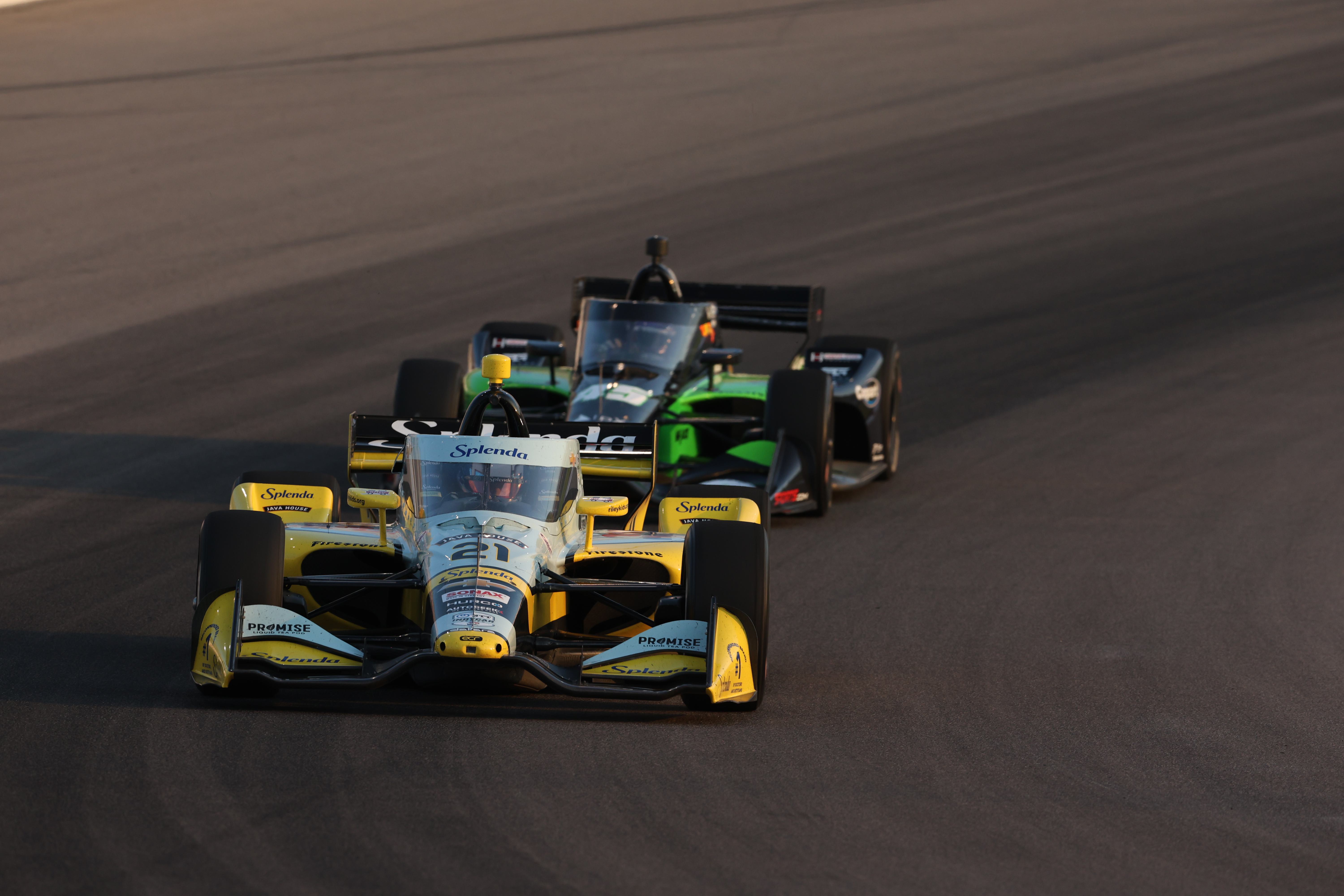
A stint at Bentley Motorsport led into IndyCar in 2018, engineering James Hinchcliffe’s car for Schmidt Peterson Motorsports, before Canada’s Multimatic brought her on board in 2019 to run its Mazda DPi entry in the WeatherTech Sportscar Championship.
She was appointed president of the FIA GT Commission in the same year, overseeing global grand tourer racing.
Gade later took on a role as an Ambassador for the FIA Commission for Women in Motorsport – a natural extension of a career that already made her one of the sport’s most visible reference points for young female engineers.
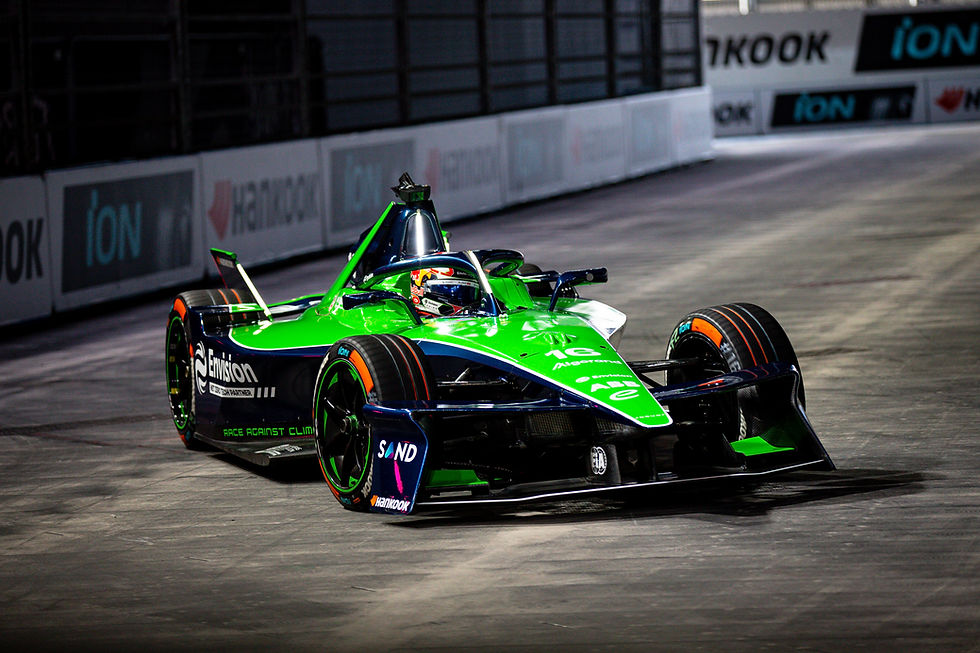
Her next chapter arrived in 2021, when McLaren entered Extreme E and brought Gade in through its Multimatic partnership as senior principal and race engineer – with Teena Gade, by then an experienced performance engineer in her own right, joining the same team.
The sisters who’d once watched F1 together in a living room in England were now sitting on opposite sides of the same garage.
“The series itself is pretty much driven around sustainability,” Gade said of the all-electric off-road championship at the time. “That’s a huge part of one of McLaren’s hallmarks.”
Extreme E wound down in 2025 after a shortened final season, but the years Gade spent building that programme from scratch, on unfamiliar terrain, in a discipline nobody in the paddock had raced before, were their own kind of proof of concept.
A new chapter, the same nerve
In March 2026, Ford Racing announced Gade as one of the highest-profile signings for its new WEC Hypercar programme – an ORECA-based LMDh set to debut in 2027.
Ford’s own language leaned on exactly what makes her a Le Mans specialist: her “deep understanding of the Circuit de la Sarthe and long-distance strategy.”

Gade put it more plainly herself. “WEC tests every aspect of a team,” she said, “from the car’s durability and performance to the crew’s precision and the drivers’ endurance.”
It’s a fair summary of endurance racing, and an even fairer one of her own career – 15 years and five different championships since the first Le Mans win, and she is still the engineer teams want holding the strategy sheet when the race gets long, and the margins get thin.
Gade has never leaned hard into the “first woman” framing of her own story, preferring to talk about the work itself.
Her advice to anyone trying to follow her into the garage has stayed consistent for over a decade: experience everything, treat no task as beneath you, and never assume the job is finished. “If you believe you know it all,” she has said, “I can guarantee you will fall flat on your face.”
It’s guidance she and Teena have carried into every paddock they’ve worked in since, on the understanding that representation only means something if it’s backed up by someone willing to show the way.
The number of engineers who have followed a path Gade had to build without a map is its own kind of legacy – one measured less in trophies, and more in how ordinary it is to slowly start to look for a woman calling the shots on the pit wall.
Edited by Vyas Ponnuri






Comments