
ADUO and the 2026 F1 engines: What is it and who will benefit?


With the new regulations and power unit configuration for 2026 and beyond, the Federation Internationale de l’Automobile [FIA] have also introduced Additional Development and Upgrade Opportunity [ADUO]. This incentive, which was included in the written regulations for this extensive overhaul prior to the start of the 2026 season, will continue between 2026 to 2030.
Looking specifically at the Internal Combustion Engine [ICE], the FIA have created an ICE index to monitor the performance of all five power-units on the grid — Mercedes, Ferrari, Ford, Honda and Audi — who provide engines for all 11 teams. It is important to understand that AUDO is not designed to represent what the full power-unit is capable of achieving. In fact, the FIA have acknowledged that the energy recovery system [ERS] is a major part of what gives teams performance however that is not included in the index.
When will ADUO come into effect?
In 2026, an outlier year considering that it is the first year of these engines who have a 50/50 split between electrical energy and fuel, three monitoring periods have been agreed upon between Formula One and the FIA. After the cancellation of races in Bahrain and Saudi Arabia due to regional unrest, these monitoring points were subsequently adjusted.
Covering the first five races of the season (Australia, China, Japan, Miami and Canada) was the first monitoring period; results from this period had to be revealed within two weeks of the Canadian Grand Prix to teams. Looking towards the future, another two monitoring periods are between rounds six to 11 of the championship (Monaco to Hungary) and rounds 12 to 18 (the Netherlands to Mexico City).

What is the eligibility for ADUO?
Outlined by the regulations for the 2026 season specifically, power unit manufacturers must have engines that are at least two per cent below the best performing engine in order to be eligible for ADUO. If the gap between the front-running engine is more than four per cent, those engine manufactures are entitled to further support to turnaround their performance.
For teams in the realm of two per cent, they will be eligible for one major adjustment in 2026 and then a further adjustment in 2027. Teams who are further behind and face a gap of four per cent or more will be eligible for two adjustments in the current cycle and a further two in 2027. Any teams who are found eligble for ADUO will be allowed to bring upgrades as early as the next race however the speed at which upgrades are introduced is down to the discretion of each team.
Although eligibility for ADUO is determined by the performance of the ICE, the list of upgrades and changes that can be brought by teams is far more extensive. Outlined by the regulations created by the FIA, upgrades can be brought to “certain elements of the ICE, engine exhaust system, turbo and waste gate/pop-off, ICE or exhaust-mounted electrical components and sensors, ERS (and associated cooling systems), the MGU-K, and the car’s Control Electronics, as well as certain hydraulic functions, fluids, and ballast”.
What is the impact on the competitiveness of the sport?
Dramatically changing the make-up of a manufacturer’s engine is not the aim or intention of ADUO. FIA Single Seat Director Nikolas Tombazis confirmed that “a team or manufacturer will not suddenly get greater fuel flow rate or more or less ballast.” Instead, he outlined that especially in the first year of such a major overhaul in regulations, ADUO provides teams with “leeway to develop their power unit within the framework laid out by the Technical Regulations.”
During a previous overhaul in engine regulations in the 2014 season, Mercedes dominated the field to extents that had not been seen before and were not seen again until 2023 with Red Bull. From the perspective of the FIA, one potential incentive to introduce ADUO would be to avoid a similar situation where the domination of one power-unit could lead to limited on-track racing and overall competitiveness; two major promises of this new era.

What is the effect of ADUO on the cost-cap regulations?
While this is an excellent opportunity for teams to try and make gains on the front-runners, it is important to remember that bringing upgrades of any nature must be a well thought-out decision given the added expense that teams must consider during this cost-cap era. Introduced in 2021 to bring the field closer together in terms of financial investments, the intention was to prevent teams with bigger budgets unlocking performance where teams with smaller spending capablites not able to replicate the same results.
Again, the regulations from the FIA also outlined how ADUO will work in a cost-cap era of F1. In essence, the upgrades that are allowed as part of the initiative will fit outside the normal financial allowances that teams are awarded at the start of every season. Like with the allocation of upgrades, financial allocations will also be made depending on the manufacturer’s gap in performance to the leading engine.
Unlike the different categories based on ICE performance which only go up to a 4% gap to the leading team, financial considerations and allowances have been made for gaps that can go up to and beyond 10%. If a team is found to fall in the two per cent to four per cent bracket, they will be allocated an additional allowance of up to $3.0 million. Between four per cent to six per cent will award the team with up to $4.35 million. At a maximum, teams can be awarded up to $8 million with further considerations applicable if the gap goes beyond 10%.
Results from the first monitoring period: Australian Grand Prix to Canadian Grand Prix
Although the results from the first round of ADUO were circulated to all 11 teams ahead of the Monaco Grand Prix weekend, it has taken until now for these results to be publicly shared. As confirmed by the FIA, the performance of the Mercedes' ICE awarded them "one additional homologation in 2026 and an additional one in 2027" whilst Audi, Ferrari and Honda will be given "2 additional homologations in 2026 and 2 in 2027".
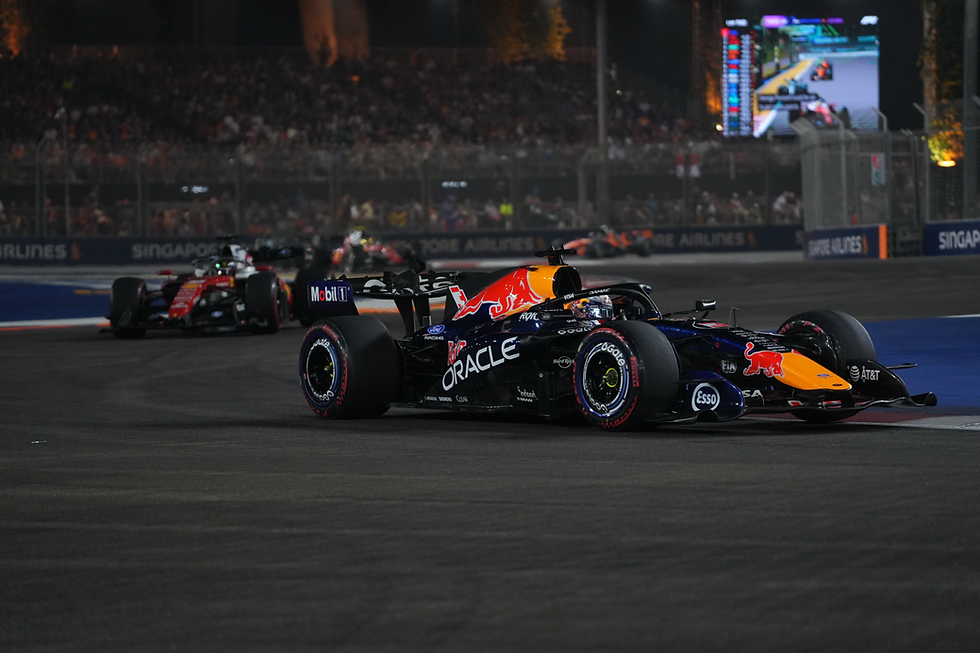
Red Bull, who are collaborating with Ford to create their own engine for the first time in the team's history, emerged as the pace-setting team although their on-track performance so far this has not demonstrated this level of pace. Even with the clarification, Red Bull maintained their position at the top of the field based on ICE performance alone, giving other engine providers the opportunity to introduce upgrades as early as the Austrian Grand Prix.

Based on the results released from the first round, some teams introduced upgrades to their engines with little hesitation. In Barcelona, Audi became the first time to introduce an upgraded engine package to the R26 and although it did not immediately yield the results that the team were hoping for, they scored their first points since the season opener in Silverstone only a few rounds later.
Following Audi's lead, Ferrari also introduced some engine upgrades in Austria. Although their performance at the Red Bull Ring was not promising immediately after introducing the upgrades, Charles Leclerc's first race win since 2024 at Silverstone has proven that they are heading in the right direction. There can be no doubt that Ferrari are making the most of the two opportunities given to them given their deficit in the 2-4% region.
Results from the second monitoring period: Monaco Grand Prix to Hungarian Grand Prix
Also released with the results from the first monitoring period were the results from the second monitoring period which spanned from round six to round 11 of the 2026 F1 championship. In a statement released by the FIA, it was confirmed that "no additional homologations were granted to any of the Power Unit Manufacturers".
Despite the detailed internal review requested by Red Bull, it appears that there has been no change to the ADUO system between the first and second monitoring periods. As a result, the six-time former world championship winning team will remain ineligible for engine upgrades for the time being.
With the announcement, Tombazis also released a statement discussing the confidence that the FIA have in how this new iniative has been implemented so far in 2026. Within the statement, the FIA Director of Single Seaters identified: "With the release of the findings of period 2, we are confident that, based on the quality of the data, its analysis is incredibly robust, giving us a high level of confidence in our findings."

With the upcoming Italian Grand Prix, there will be plenty of teams hoping to utilise their upgraded engines. Home heroes Ferrari have reportedly had their upgraded engines in the works for a few weeks but it has not yet been announced whether they will be running these engines in Monza.
As a brand-new initiative implemented at the start of the 2026 season, there is still a lot that remains up in the air about how ADUO will develop over the course of the next few years. Addressing this, Tombazis added that: "This is the first year of ADUO so naturally there are areas which we may evolve over time, in discussion with all the PU Manufacturers."
Looking ahead, the third monitoring period will take place from round 12 to round 18. Although there are many teams who are intending on introducing upgrades in the remaining part of the season, manufacturers will no doubt be turning their attention to the 2027 cars and engines soon enough.



Comments