
FOX’s cruel blow: The unravelling of IndyCar’s major World Cup lead-in weekend


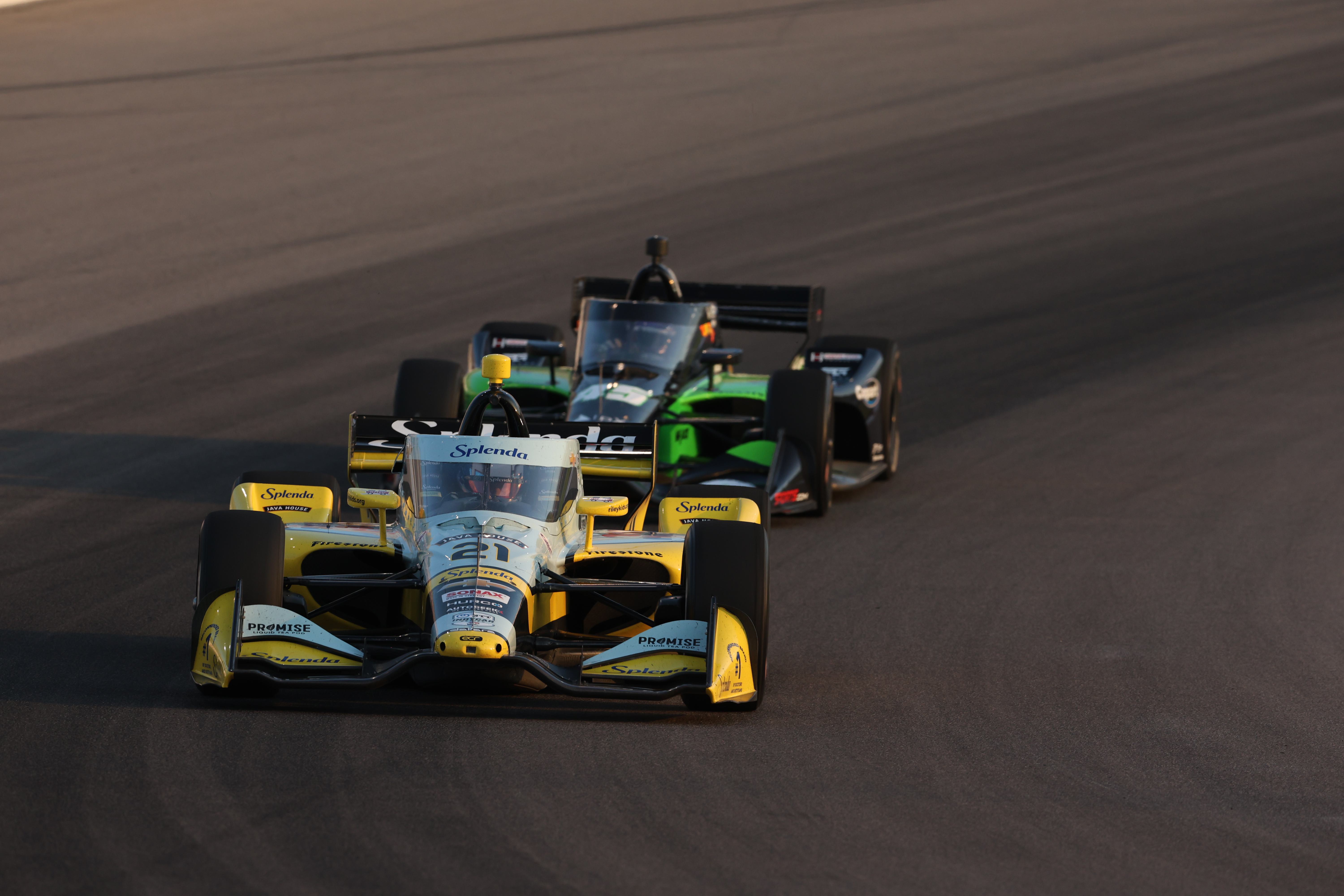
This was supposed to be IndyCar’s big day. A defining weekend for the series with a television lead-in from FOX Sports’ coverage of the FIFA World Cup Final. Millions of fresh eyeballs set on the drop of the green flag at Nashville Superspeedway, a 300-lap epic in store.
The race on the 1.33-mile oval was moved to this slot from its newly-beloved season-finale berth for this sole purpose. Widely perceived as being IndyCar’s standout race of 2025, switching it to the position with the greatest opportunity of generating a new audience was part of a promotional masterplan from FOX, IndyCar’s new-for-2025 broadcast partner.
The intention was abundantly clear: for the millions of viewers of the Argentina-Spain showdown in New Jersey to be thrust straight into IndyCar’s most high-octane action.
Nashville being ushered away from the closing race of the season was derided in some quarters. And being about as pure a spectacle as you can get in a sport defined for its competitive, racing purity, that derision made some sense; it felt IndyCar had found the perfect showcase to close the season and conclude the championship.
But by the same token, being arguably the best non-Indianapolis 500 exhibition of the IndyCar product, in the circumstances of following one of the globe’s biggest sporting events on the TV billing, losing it as the 2026 finale felt a justifiable and worthwhile trade-off.
It was the perfect display of FOX’s buy-in to IndyCar, too, if that was not already clear enough with their one-third investment into Penske Entertainment last summer. The willingness to hand IndyCar one of its biggest lead-in slots was only further exemplification of their belief in the product and the level to which they are adamant to make the series grow.

Come Sunday’s race day in Nashville, they were willing to hold off on starting the IndyCar race for as long as was required to allow the World Cup coverage to naturally conclude. As extra-time beckoned at the MetLife Stadium, the best part of another hour was to be added upon the extremely tentative initial planned IndyCar on-air time of 16:35 CT (22:35 BST).
The indefinite nature of the slated start time will undoubtedly have been irritating for the drivers - maybe other than Spaniard Álex Palou as he watched his nation reign - and their preparations. But equally, they all knew the reasoning was entirely valid.
“Leading in from the World Cup will hopefully just bring a whole new audience for IndyCar,” Kyle Kirkwood affirmed after taking pole position on Saturday afternoon. “That’s such a big opportunity for us [that] we’ll maybe not ever have again.”
But the Andretti Global driver had prefaced his answer with something a little ominous.
“I’m very hopeful it doesn’t rain. There’s rain on the horizon and that could put a damper on some things for us. Hopefully we’ll be able to run as soon as that broadcast ends.”
The weather was maybe always something of a fear for a mid-summer race in the Midwest, though a risk surely worth taking for the opportunity FOX’s canny lead-in ploy promised. Still in its untapped-potential, hidden-gem phase, IndyCar had to pounce at the opportunity.
So the way things panned out - through nobody’s own fault - was a brutal blow for all parties.
The first threat of severe weather, marked with an advisory from the Music City Grand Prix for fans to exit grandstands and enact their personal safety plans, came at 13:39 CT (19:39 ET). This was frustrating in its own right for the event, a mere 21 minutes before kick-off for the World Cup Final, for which they were holding an at-track watch party.

Within a little over an hour, lightning had cleared from the area and The Pub in the fanzone had reopened for business. But as the afternoon progressed, it became clear that the rain-avoiding first weather event would be a tamer prelude of what was to come.
Anxious radar-watching ensued. Then the dreaded message again at 16:32 CT (22:32 BST): “The National Weather Service has indicated that severe weather is imminent.”
Thankfully for IndyCar, Argentina had held Spain to a goalless 90 minutes and extra-time had bought some time for any weather to clear. The original scheduled green flag had been only eight minutes after the second advisory, which came with the dreaded half-hour lightning clock being forced into action, resetting for every strike within an eight-mile radius.
But the agonising Race Control messages kept on coming. At the top of the hour, 23:00 local time: “The lightning hold keeps being reset.” Two minutes later, the full-time whistle as Spain were officially crowned World Champions. IndyCar was truly on the clock.
In true trophy-ceremony style, faff was abundant and the post-match presentations dragged on for a little longer than FOX may have initially planned. And somehow, Nashville Superspeedway had remained dry. But as a further “clock continues to reset” message was sent out at 23:30 at the track and dark clouds loomed, a regretful acceptance built.
After 20 more minutes, with FOX’s World Cup coverage continuing with a longer post-match in a waiting game for IndyCar, the dreaded inevitable came. Rain. And not the drizzling type.
With it, ever-dreaded words, the track was lost - and with it IndyCar’s shot at capitalising upon the gift of a major lead-in. Still, while of course no match for the race itself, FOX did come on air at 18:15 CT (00:15 BST) and did a strong job at appeasing any stragglers.

The booth trio of Will Buxton, Townsend Bell and James Hinchcliffe led with a showcase of the diversity of drivers within the field and an apt feature comparing some of the series’ bigger stars with some of the World Cup’s big names. Christian Rasmussen’s likening to Erling Haaland may have been strange but the sentiment was welcome.
They also did well to promptly link Spain’s success to Palou’s dominance and immediately introduce him to any new sporting fans who may still have been tuned in. And to later showcase Felix Rosenqvist and his stunning last-lap Indy 500 win.
You have to respect that they took on the ultimate broadcasting challenge of filling time, explaining crucial frameworks of IndyCar to any newbies and interviewing a whole host of drivers, rather than simply waiting out the delay and going into their own holding pattern.
You could still easily see how the broadcast was going to shape up - a good balance of introducing people to the sport, with coverage geared a little to the layman in by no means an over-explained, patronising way to turn away the hardcores. It was a right shame that clearly masses of effort was to come to such less avail than anticipated.
All the while, attention had to switch to the hope of simply running the race at all. And so emerged the prospect of a night race under the lights - the dream scenario without the lead-in - once the second, lengthier batch of inclement weather had subsided.
By 18:54 CT (00:54 BST), track drying was allowed to commence. Within half-an-hour of that, the gates were reopened too and FOX could begin to sell the prospect of a night-time, prime-time race. There was genuine optimism as fast-drying Air Titans were deployed and dry lines started to appear. But again, any hope quickly started to look ill-advised.
The emergence of a towering shelf cloud behind the track - and eventually the unloading of its heavy-falling contents - sparked doom for the evening, for once and for all.

At 19:46 CT (01:46 BST), the final nail in the coffin. Another weather advisory and, 15 minutes later, news that a day that had promised so much for IndyCar and its future prospects was to conclude with a postponement of this marquee race to Monday.
With a new start time of 14:00 CT (20:00 BST), the race has switched from its World Cup lead-in slate to mid-afternoon on a workday. FOX warrants credit for ensuring the race will still run on network television, but the unfortunate rescheduling promises suboptimal viewing - and anomalous figures against the season average of 1,979,000 viewers per race.
Needs must, but one can imagine there may have been greater appeal to a night-time race, even if on FS1, albeit with caution required around a repeat of Sunday’s weather situation.
In worse news still, the race has been shortened from its intended 300 laps across 399 miles, back to last season’s 225 laps, as a result of forecasted record temperatures - a heat index of over 100 degrees fahrenheit - amid the heat-of-the-day start time.
And so, it is a weekend that has unravelled and lost its several flavours of extra-special sauce, encompassing the lost lead-in, snatching of possible post-delay night running and shortening of the longest non-Indy 500 race since Pocono in 2018.
Nashville may yet host a Monday-afternoon epic. But even that would be doused in the bittersweetness of what could have been - through who (and how many) could have seen.







Comments