
From dominating Can-Am, to winning in Japan and racing Touring Cars: Alan Jones’ lesser-known racing career


The world of motorsport mourned en-masse on the 5 November 2026, when the 1980 Formula One World Champion Alan Jones, sadly passed away at the age of 80.
Aside from being an F1 World Champion, a Williams benchmark whose shadow loomed over the team for decades and a respected commentator known for his humorous and friendly character off the track and his tenacious, forceful approach on it, above all he was an avid racer.
Most will only talk briefly about his rise to prominence, battling financial hardships to eventually impress the right people and reach F1, writing many well-deserved lines about his peak, his wins, his title, or his significance to one of the sport’s most historic teams.

Few however, will take the time to look at his other motorsport adventures. Although not as stunning, his sportscar and touring car years are interesting to look at nevertheless.
Jones’ sportscar debut came even before driving a privateer-entered Hesketh in the 1975 Spanish F1 Grand Prix.
In September of 1974, he drove a Chevron B21 in the Brands Hatch 1000 km race, which was part of the World Sportscar Championship (WSC), but did not manage to finish the race.
The following season saw him contest his first Formula One races, but he also raced four times in the WSC for the Steward Chubb Racing team, driving a Lola T294.
Driving alongside John Sheldon, Jones competed in the Dijon, Monza, Spa and Nürburgring rounds of the championship. Racing against the Alfa Romeo, Porsche and Alpine-Renault titans, the privately-entered Lola had little chance of challenging for overall honours, competing in the two-litre class.
Having claimed a class second place at Dijon with a 12th place finish overall, the pair were close to achieving a repeat at Monza, before a front suspension collapse forced their retirement, around 12 laps from the end.

A strong result was possible at Spa, where the pair started from eighth on the grid before a rear wheel-bearing failure caused them to retire, with Nürburgring bringing about a 15th place overall finish and third in class.
Racing experiences like these were undoubtedly key to Jones’ development as a driver. His next sportscar adventures though would take him overseas, far away from the now familiar European tracks.
In 1977 the Australian drove a Shadow DN4B in three rounds of the Can-Am Challenge Cup for the Phoenix Racing team. Although unspectacular results-wise, they proved to be the catalyst for Jones’ first championship win.
Now an established Grand Prix winner, having secured a memorable maiden F1 win at the 1977 Austrian Grand Prix, he switched to Carl Haas’ team for 1978.
The partnership proceeded to dominate the competition en-route to winning the 1978 Can-Am title, achieving nine pole positions and fastest laps, five wins and two further podiums in a Lola T333CS from a total of nine races entered.
He would not return for a full title-defense however, as he was now firmly focused on F1, with 1979 commonly referred to as the start of his peak as a driver.
Nevertheless he contested two Can-Am races, winning one, to add to his four victories with Williams in that year’s F1 season.
Alongside that, another unique experience was the BMW M1 Procar championship. This was a supporting series for Formula One from 1979 to 1980, where the field raced in identical BMW M1 machinery.
Jones raced alongside stars such as Niki Lauda and Clay Regazzoni, as well as future champion Nelson Piquet, among other notable drivers.

In 1979 he ranked 10th overall with 26 points and one podium to his name, although he demonstrated his pure pace by taking pole position for the last five rounds.
1980 would of course become his F1 championship-winning season, as Jones triumphed over Brabham’s Nelson Piquet, helping secure Williams’ first drivers’ title as well as their maiden constructors title.
Piquet however had defeated him in the M1 Procar championship, with Jones finishing second in the standings, with three podiums and 77 points to his name.
After retiring from Formula One following the 1981 season, Jones returned to his native Australia, but did not stop racing. In 1982 he took part in the Australian GT Championship, driving a Porsche 935, entered by Porsche Cars Australia.

He would go on to absolutely dominate the series, winning all 16 rounds, with his closest on track competitor being the legendary Peter Brock, who only contested three rounds.
1983 would bring his WSC return, in a one-off drive with Kremer Porsche, racing a 956 to fifth at Silverstone, alongside compatriot Vern Schuppan.
This proved to be the springboard for his Le Mans 24 Hours debut, again with Kremer, in 1984. Jones was paired up again with Schuppan, who was defending his 1983 win and joined by Jean-Pierre Jarier.
Despite starting seventh, they were in contention for the win in their Porsche 956B, but even a second place finish was lost in the final hour of the race, when a blown piston forced the team to pit.
The car eventually returned back to the track a few minutes from the end, to claim a sixth place finish.
He also competed in the WSC finale, which took place on home soil, at the Sandown Raceway, where he and Schuppan drove for the factory Rothmans Porsche team.

Despite Jones leading after the first corner, he subsequently found himself in third early on, but alas, a podium position was again lost to a reliability issue, this time a turbocharger-related one, leaving the pair to finish in eighth.
Jones had also briefly taken part in the famous ‘’Race of Champions’’ at the Nürburgring, where a certain Ayrton Senna emerged victorious, with all drivers using identical Mercedes 190E. Jones, despite qualifying fifth, retired after just three laps with mechanical issues.
1985 proved to be the beginning of his true F1 comeback, with the ill-fated Haas-Lola team, as well as the year of his sole CART appearance, where Jones finished a surprising third at Road America, demonstrating he ‘’still had it’’.
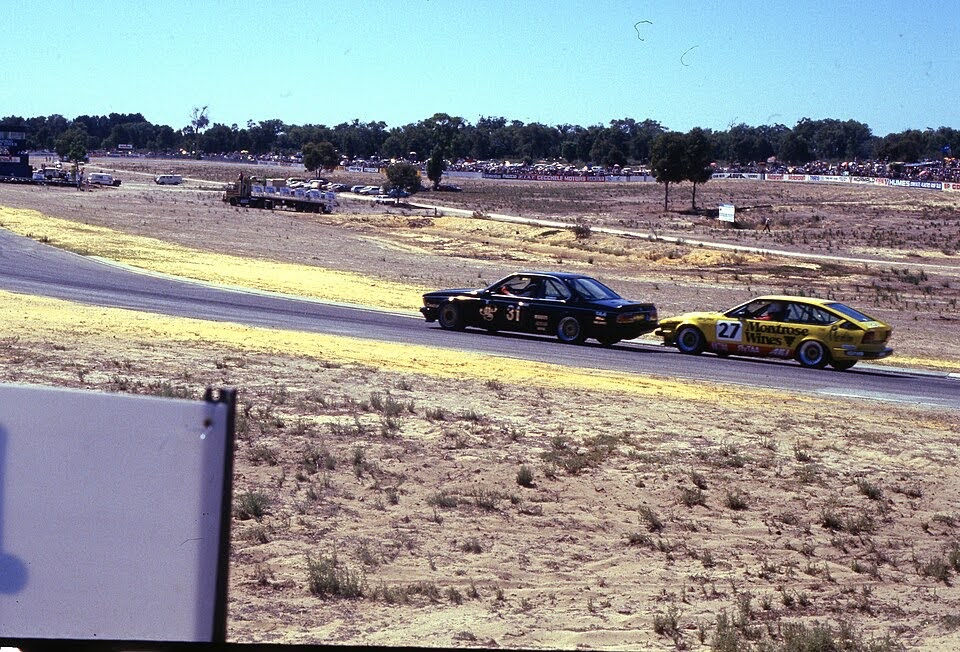
Few outside Australia know however, that he started the year by competing in the native Touring Car Championship, a precursor to today’s V8 Supercars, driving an underpowered Alfa Romeo GTV6 for the Network Alfa team, finishing eighth in the standings with three fourth places to his name.
In between trying to make the best of the Lola THL1 in F1, the then 39-year-old also made a one-off Sportscar appearance at Brands Hatch, driving for Tom Walkinshaw Racing’s Jaguar team, sharing an XJR-6 with Jean-Louis Schlesser.
Despite starting from a promising fifth place and remaining there early on, once again reliability cost Jones the chance to fight for a great result, with his throttle jamming wide open and forcing his retirement.
After the demise of the Haas-Lola project following the end of the 1986 F1 season, Jones once again retired from the sport, this time for good.
That, however, did not mean that his racing days were over, as for 1987, the now 41-year-old tried his luck in the booming motorsport scene of Japan, signing with Toyota.
The deal was for the Aussie to take part in selected rounds of the All Japan Endurance Championship, the All Japan Touring Car Championship as well as competing at the 24 Hours of Le Mans.
Jones enjoyed a considerable amount of success in the ‘’land of the rising sun’’, as he managed to be extremely competitive in the AJEC, driving for the TOMs Toyota team in a Toyota 87C.
He notably won the All Japan Fuji 1000 km race alongside Geoff Lees and Masanori Sekiya, having achieved third in his debut, at the Suzuka 500 km race, with two retirements in the remaining races from good positions, one of them being at the WSC finale, where he had qualified in second.
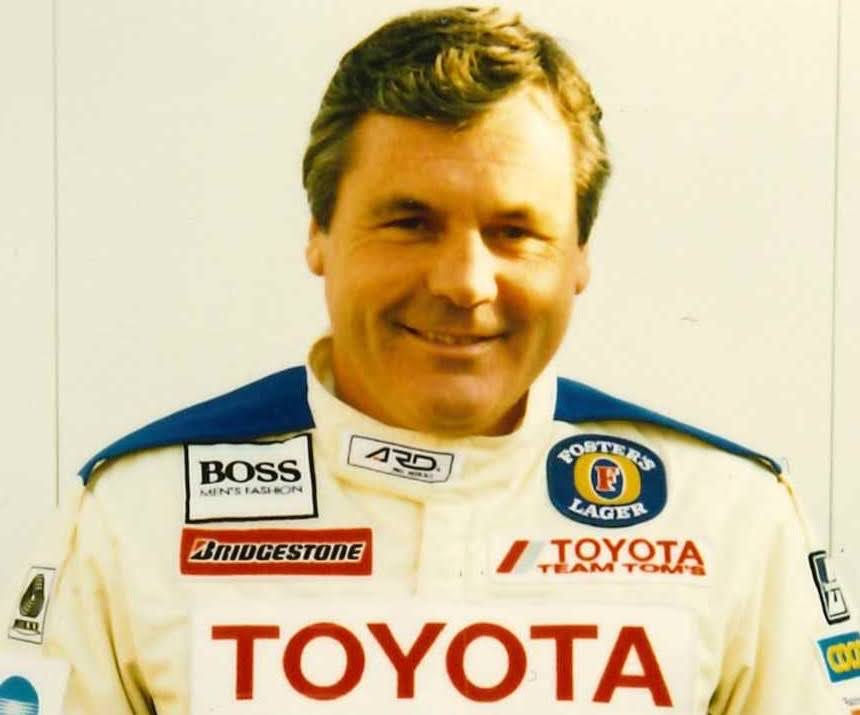
In Touring cars, driving the brand new Toyota Supra MA70 Turbo, Jones remarkably delivered a win at Sugo, despite the car more often than not being inferior to the all-conquering Ford Sierra RS500, with a fifth place at Suzuka in his other appearance in the series.
Le Mans arguably was the most disappointing outing of them all, with Jones paired up with Lees and Eje Elgh. Having qualified 14th, in a field full of superior Jaguars and Porsches, a misunderstanding said to be from Jones’ part, resulted in the car running out of fuel and retiring after running well very early on.
This ultimately successful season proved to be Alan Jones’ last of racing outside Australia. From 1988 he only raced domestically, starting with his participation in all three Australian rounds of the Asia-Pacific Touring Car championship.
He managed to finish as the runner-up alongside experienced racer Colin Bond, driving a Ford Sierra RS500 and taking a third place at that year’s Bathurst 1000, surprisingly one of only two he would ever achieve at the race, with him developing a love-hate relationship with Mount Panorama.
In fact, despite racing in the Bathurst 1000 a total of 19 times, he would only ever achieve two podiums, a second place in a dramatic 1995 race - the closest he ever got to winning the 1000 km race. He even had a stretch of 10 retirements from 12 events, including five in a row from 1990 to 1994.
He returned to the Mountain in 1989 as a member of Tony Longhurst’s Benson & Hedges racing operation, that was run by Frank Gardner, a team he would sign on to race full-time from 1990 onwards.

Again he would be driving Ford Sierra RS500s, which proved more unreliable than their opponents, despite being spectacularly fast. The team switched to the BMW M3 Evolution for 1991.
He was still capable of good results, taking a good amount of points and grabbing five podiums from 1990 to 1992, although he was far from consistently challenging for wins.
A switch to Glenn Seton Racing was the start to his most successful season of competing in Australian Touring Cars.
1993 saw Jones conquer Bathurst, winning the 12 Hour race with a Mazda RX-7, as well as securing three victories en-route to ending as runner-up in the ATCC, behind his teammate/team boss Glenn Seton, driving a Ford Falcon.
By the end of 1995 however the relationship had fallen apart and Jones left the team, taking Philip Morris International (their biggest sponsor) with him. He joined forces with Ross and Jim Stone - formerly of Dick Johnson Racing - to set-up his own team.
This partnership was short-lived though. Despite showing some promise, at the end of 1997 Jones was bought out by the brothers.
Having secured what was his final win at Oran Park in late 1997, Jones moved back to Longhurst racing for his final full-time racing season, although he still raced part-time up until his retirement in 2002 (Grand Prix Masters excluded), mostly at Bathurst.
Even in his later years, he showed occasional moments of brilliance, displaying his trademark resilience behind the wheel, as well as his hard-charged and elbows-out attitude, which sometimes got him involved in incidents.
While not as memorable as his time in F1, Alan Jones’ time in sportscars and his achievements were important both for his improvement as a driver early on and served as a reminder of just how versatile and talented of a driver he truly was.
From conquering Can-Am, to dominating domestic GT racing and from competing in Endurance’s golden age, to successes in Japan and touring cars, his exploits deserve far greater recognition.
Edited by Aaron Carroll





Comments