
Verstappen’s Suzuka nightmare as RB22 struggles

Written by Kavi Khandelwal
The 2026 Japanese Grand Prix has been nothing short of a nightmare for the four time World Champion Max Verstappen so far.

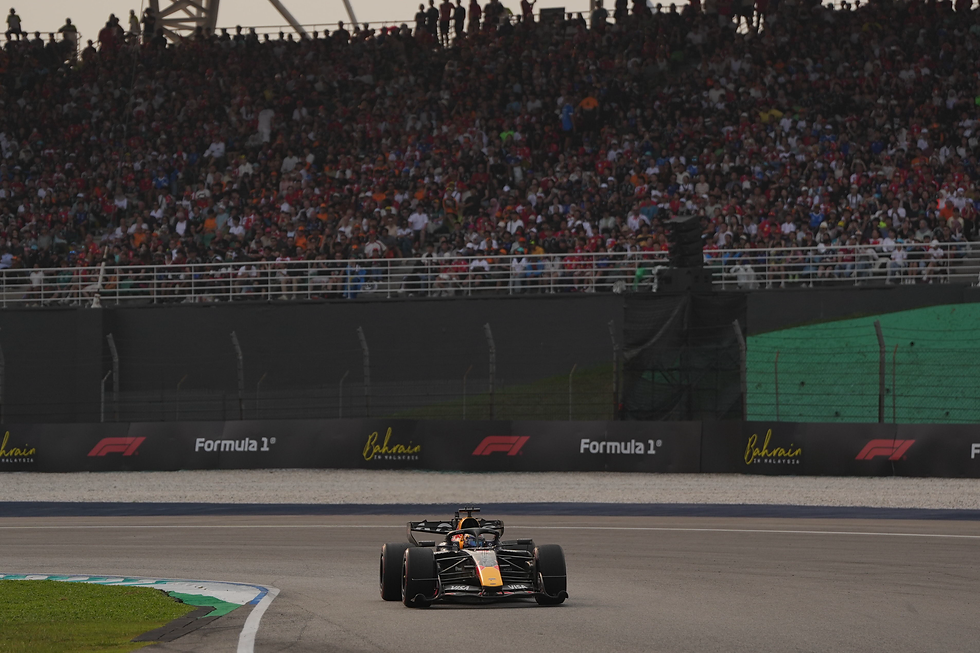
The Milton Keynes garage has usually remained clinically efficient in the past. However, it has been replaced this year by a frantic anxiety as the RB22 struggles to find its footing on the technical demands of Suzuka.
The weekend began with a muted P7 in FP1, a result that felt like an unsettling tremor before the earthquake. The frustration had been palpable by the time FP2 concluded with a dismal P10. The car looked nervous on entry and lazy at the apex, refusing to provide the feedback required for a high-speed commitment.
Mechanics worked through the night, chasing a setup window that remained stubbornly out of reach. There was a brief flickering of hope during the final practice session where a P8 finish suggested the team had stemmed the bleeding, but the stopwatch in Qualifying told a much more brutal story.
As the RB22 slid through the Degner curves, failing to find the precision that usually defines Verstappen’s laps, the reality of a P11 start became an unavoidable verdict. For a driver who has dominated this circuit in years past, the failure to even reach the final stage of Qualifying was a mechanical gut-punch.
"Yeah not good," said Verstappen, his expression a map of technical fatigue as he addressed the session's failure. The gap between the simulator data and the track reality was visible in the way he described the car’s unpredictable nature.
Despite the overnight efforts to rectify the balance, the solutions proved to be nothing more than temporary plasters on a deep-seated wound.
"We thought we fixed a little bit in FP3 but then going into Qualifying it was again very difficult. Just sliding a lot but also at the same time not having the rotation mid-corner everywhere, so that makes it quite a complicated balance. It's not ideal around here."
The telemetry mirrored his words, showing a chassis that was perpetually on edge, oscillating between a nervous rear and a disconnected front end. In the high-stakes transitions where Verstappen usually thrives, the car looked cumbersome, lacking the aerodynamic stability needed to carry momentum through the Esses.
Every steering input seemed to be a negotiation rather than a command, leaving the driver to wrestle with a machine that felt alien. Verstappen recognised the foundational crisis within the current aerodynamic as he repeated post-session that is "was again very difficult."
When pushed on whether these issues were simply a repeat of the minor stumbles seen in the previous season, the Dutchman was quick to dismiss the comparison. He pointed toward a more systemic failure that transcends simple setup errors.
"Yeah but I think we have bigger problems that what we had last year. Some parts of the car at the moment are not working how we want them to work," he admitted with the blunt transparency that is his trademark.
This admission shifts the focus from a single-lap failure to a long-term strategic headache. The teammate psychology within the garage must now pivot toward damage limitation, as the engineers scramble to reconcile their simulations with a car that is physically fighting its driver.
Verstappen now faces a race from the midfield on a track where overtaking is a high-stakes gamble, forcing him to rely on pure racecraft to salvage points from a machine that has clearly lost its way. The nightmare in Japan is far from over; it has merely moved into a new, more desperate phase.






Comments