
Why IndyCar’s multi-year Barcelona venture presents a massive opportunity


Growing up only 20 minutes from Circuit de Barcelona-Catalunya as a budding racing driver, Álex Palou would spend all the time he could at the track during his childhood.
After school, regardless of what was on the circuit, he would often make the short trip just for practice sessions. Free weekends would then be spent watching races on the track located in Montmeló, from which Palou’s parents still live only 20 minutes.
As he recalls, having quickly turned from fan to motorsport prodigy himself, it is over a decade since Palou has raced at his hometown track, where he would have liked more success as a junior. When he joined IndyCar in 2020, it became fanciful that he would compete again on home turf for as long as that stateside chapter would last.
But incredibly, two decades on from the last American open-wheel race hosted in Europe, owing in substantial part to Palou’s stardom in IndyCar, that dream will become a reality in 2027. Because as was announced late last week, IndyCar will venture to Spain to race at Circuit de Barcelona-Catalunya on the 16th-18th July weekend next year.
Pouncing on the absence of a Formula One event from Barcelona’s schedule - with the race run at the track since 1991 now turning biannual - it will be the first time since racing on the streets of São Paulo, Brazil in 2013 that IndyCar will race outside of North America.
As a journalist covering IndyCar from Europe, it is naturally an especially welcome piece of news that IndyCar is returning from the continent. But from any perspective, this marks a breakthrough opportunity for IndyCar, as a series, to expand its footprint.
In agreeing to this event, the sport rectifies a problem from recent times, whereby it felt as though IndyCar was falling short of adequately harnessing its biggest stars. That has started to change in the last two years, under the guise of FOX Sports as broadcast partners, headed by their driver-focused pre-season television advertisements.
But taking IndyCar to the home of Palou, for a first-ever Spanish race for the series, notches the embracing of drivers’ star-power up to an entirely different level.

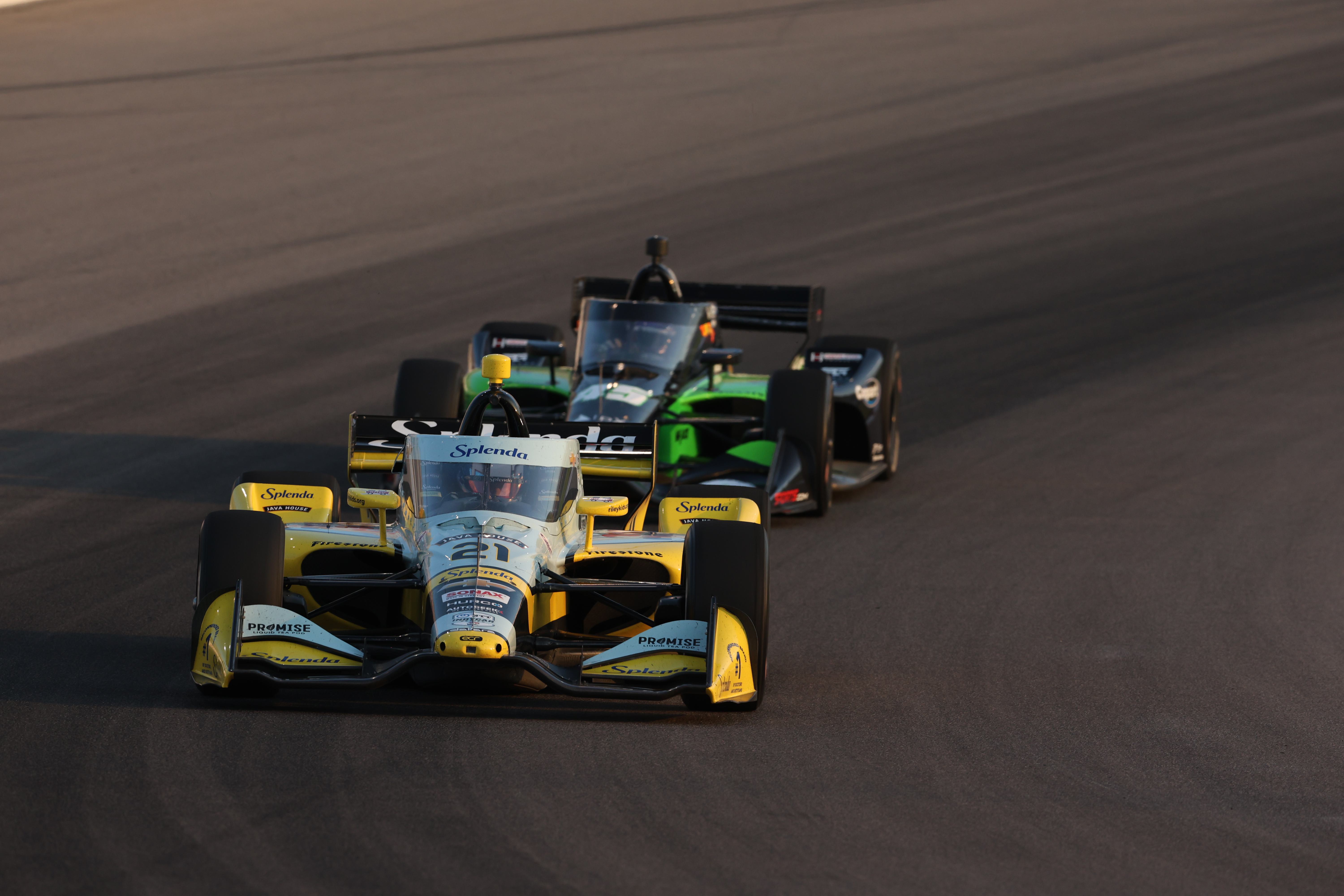
Since joining Chip Ganassi Racing (CGR) in 2021 for his sophomore season, Palou has become an IndyCar legend in record time. This year, he became only the third five-time champion in series history - the youngest driver to reach the milestone (at 29 years old) and doing so in record time, after only seven years in the series and six with CGR.
With his 2026 crown, he joined Sébastien Bourdais as only the second driver to win four successive titles. In any case, the sport is in the process of witnessing a generationally historic, almost unparalleled run of success.
After winning his fourth overall title in 2025, alongside a legacy-defining Indianapolis 500 that May, Palou toured his home country last December, including a presentation at FC Barcelona’s iconic Camp Nou stadium. But there is still a sense that, in the scheme of things, Palou is something of an unjustly underground sporting great in Spain.
Next year, though, IndyCar is aptly rewarding one of its greatest champions by affording him the chance to race at home, showcasing him to and celebrating him before his home nation and continent. It serves as a chance, where IndyCar may recently have failed to do so, to move one of its icons closer towards the deserved status of a sport-transcending star.
“This is super special,” Palou reacted. “I never thought this could even be an option [to race at home]. I always dreamed about it because that is where I’m from. I think there’s not really anything more special than racing at home and feeling the love from the fans at home.
“I feel like I am very lucky that a lot of people in the US are showing me the love that I would receive at home, but being able to go sleep at home, I have some family members [attend] who are a little bit older or they are not able to travel and they have never been able to see me race. It will be super cool to bring it there - and to a lot of friends, as well.”

By his involvement in meetings with circuit officials and promoters, Palou played a central role in getting next year’s race off the ground. During the event unveiling ceremony at the track last Friday, he was even handed a ceremonial trophy in the shape of the circuit.
Speaking at the launch, Mark Miles, president and CEO of Penske Entertainment, suggested IndyCar had been “looking for the right way to start” the expansion back out of North America for some time. And the first venture is not intended as a one-off intercontinental foray; officials have touted the confirmed multi-year contract as being a 10-year deal.
“We are working with a long-term vision,” said Pau Relat, chairman of the board of the track-managing Fira de Barcelona and Fira Circuit, “to make [the] IndyCar Grand Prix of Barcelona a benchmark event on the international racing calendar for years to come.”
This apparent long-term international-racing play from IndyCar to expand its global awareness contrasts priorities laid out by the series not too long ago, when the stated aim was to restore domestic popularity before attempting to crack the global market.
“We have this undiscovered diamond in the rough,” assessed FOX’s lead IndyCar commentator, Will Buxton, speaking to DIVEBOMB in February 2025. “You get people onboard to watch it and there’s no limit to how big it can get - in the United States, first and foremost, and then growing globally. Our [primary] objective is America.
“Our objective is not just to take it back to where it was in the 90s - not just to take it back to its heyday - but to go beyond that and to make it more popular than it’s ever been.”
The first two years of FOX’s broadcasting of IndyCar have been a marked success, bolstering viewership by 57% in two years, owing to increased promotion and all-network television coverage. Combined with IndyCar’s at-track attendance rising by approximately 20% year-on-year, there is evidence that the sport is rebounding sufficiently in the US to warrant already seizing the opportunity to host a true international race again.

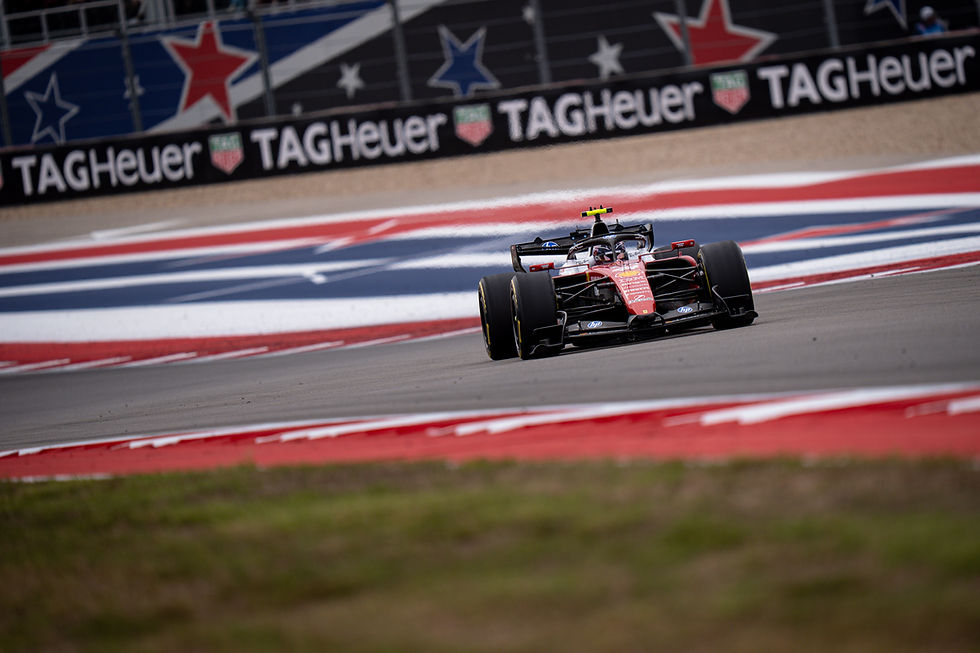
By electing to race in Spain, IndyCar will be thrust before a European market of rich motorsport culture, centred largely on F1. With a selection of that fanbase left a little disillusioned by that championship’s direction amid the unpopular new, 2027 regulations, IndyCar should appease a craving for authenticity and purity of product.
Naturally, there may be trepidation that the Indy cars could look inferior on a track F1 has frequented for 36 years, given it is regarded as the pinnacle of motorsport performance. But while it has suffered a little in the era of the heavy hybrid system, IndyCar’s road-and-street racing has long usurped F1 for its entertainment factor and field-wide competitiveness.
Aiding the scope of the spotlight under which the event will fall, it is of no harm that the inaugural running of the IndyCar Grand Prix of Barcelona will not clash with an F1 weekend elsewhere, despite being run in the midst of F1’s summer European swing.
Regardless, being hosted by a facility that is “to another level” and not “even close to” another IndyCar road course, as Palou assesses, there is the clear opportunity for IndyCar’s own standing and perceived sense of ‘importance’ in the motorsport landscape to be elevated. Even if the track’s traditionally subpar raceability raises some skepticism, it marks a wholly logical start point for any expansion, given both the Palou factor and F1 vacancy.
And if it is a ‘start’, how far does IndyCar want to go? Or maybe, how far should they go, in terms of any prospective growth of a greater catalogue of international rounds?
The risk, as the NFL may be approaching the brink of, is reaching oversaturation. That such example has shown, albeit on a much larger scale than IndyCar, the appetite for and growth benefits of international expansion, but it can equally be easy to overstep and lose the novelty factor that can be one of the greatest selling points.

“I think a few races to start with, a race or two to expand our footprint, is a good idea,” posed CGR team owner Chip Ganassi in his team’s press release. “With Álex being the champion, it’s a great opportunity for us to go to a place where they want us to race and there are great motorsports fans that want to see great racing.”
IndyCar still has its USP of being a North America-based series to preserve. F1 exists as the marquee global motorsport series and it may be unwise for IndyCar to embroil itself in more direct competition, rather than standing out in its own, unique way.
But equally, without racing internationally at all, IndyCar would risk failing to maximise its potential by capping its global growth. Right now, it remains a hidden gem in a worldwide motorsport landscape with plenty of appetite. Especially as 2028 and the introduction of the modernised IR28 chassis beckons, a crucial juncture for a possible boom in growth looms.
The IndyCar grid has become increasingly global, too, featuring 14 different nationalities across 25 full-time drivers in 2026. This ever-diversifying field, which has been a vehicle for worldwide television deals to serve an existing, baseline non-domestic fanbase to build upon, offers yet more validation that the timing is right for this European enterprise in 2027.
Some fear was harboured by how teams would be supported financially for such an event, given many sponsors are US-based and travel and shipping costs will be much greater than for domestic races. But early reports indicate these finances will be covered, thus a major obstacle is overcome, alleviating pressure on some of the lower-funded outfits.
This means IndyCar is full-steam ahead on another ambitious project as the series continues to use marquee events in their bid to take the series to fresh heights. And with this latest venture, 20 years in the making, the benchmark should continue to be raised.






Comments