
Callum Ilott interview: Life on IndyCar’s outside & a career fighting for fulfilment


It is the first morning of the Indianapolis 500 fortnight and into the elevator of the Indianapolis Motor Speedway media centre steps a striking figure, resplendent with a bushy mullet, pronounced mustache and large pair of sport sunglasses.
The Australian accent to match the look of the newest member - for one day, at least - of IndyCar’s press pack would prove passable enough to fool Takuma Sato in the driver bullpen. But the mistake had first been made of still sporting his hard card, which rather exposed the disguised being who had joined us on the initial four-floor trip down.
His identity rumbled, the mystery man gives us a condensed lowdown of the travails of his last year on a short walk across Gasoline Alley, to the garage hosting the drivers’ media session. For the four years prior, he had been one of those drivers. His temporary new brief offered entertaining respite from the hurt of not being on that side of the media scrum again.
Ultimately, though, the portrayal as a stereotypical Aussie for IndyCar’s digital content output symbolised the lengths to which one of IndyCar’s finest budding talents was having - and willing - to go in his effort to even stay present within a paddock he more than belonged.
“Just for clarity,” he says, “I did all of that for a parking pass. Obviously I’m connected but I hate asking for favours. So I like a transactional sort of thing. Look, when you’re not doing anything, it’s nice to be there and doing something and contributing.”
In a year where he should have been in the IndyCar field, after ending 2025 in a hot streak for the startup PREMA Racing team, Callum Ilott had struggled to even get hold of a hard card to grant him access to this year’s races merely on the sidelines. Obtaining that was a necessary evil in itself, for it is imperative he remains in the eyeline of the paddock’s biggest players, even if every day at the track as little more than a spectator deals a stinging blow.
There is no luxury to the gig of being unwillingly sidelined, whether the waiting for someone else’s misfortune to provide a substitute opportunity or the roaming of tracks’ infields, almost as a walking billboard advertisement for yourself. It can be draining.

“Psychologically, it sucks,” Ilott concedes. “Because it’s not my actions that should have led to this situation, in this circumstance. So I do struggle with it. Sometimes, I get to the end of the day where I’m like: ‘Right, it’s time to go.’ Most places, it’s okay - there’s a couple of places to hang out and chill out. But it’s not like an F1 paddock.
“This is like I’m a fan who’s trying to be there. So I’m making myself seen but I don’t have any more access than a fan, other than some nice comfy RVs [and] the meetings that I might plan. It’s tough. It’s a weird one.”
There is a harsh familiarity to the situation for Ilott, who was similarly confined to the sidelines at the end of the 2023 IndyCar campaign, despite coming off the back of a 16th-place season for Juncos Hollinger Racing (JHR). In a campaign bookended by a pair of fifth-place results, that remained the team’s best championship finish heading into 2026.
Under the Juncos Racing name, they had competed as an underdog Indy 500 squad from 2017 through 2019, racing a selection of other events but never breaking through as a full-time outfit. But revamped as JHR, having purchased the assets of the failed Carlin Racing effort, they launched a new IndyCar attempt with rookie Ilott at the helm, starting with the final three races in 2021 to lay the foundations for a complete campaign in 2022.
Despite missing Detroit with a broken hand sustained in the Indy 500, which continued to plague him until season’s end, Ilott finished a laudable 20th of 25 full-season drivers in points - as a rookie in a single-car effort, with no past data or teammate to lean on.
The following season, though, JHR took the bold decision to add a second car - but not for an experienced driver who could help continue to aid the development of both Ilott and the team. Instead, Agustín Canapino, a touring-car driver from team owner Ricardo Juncos’ native Argentina with no open-wheel background, was signed for 2023.
The internal dynamics shifted. Tension grew through the year, coming to an early head during a fraught Indy 500 campaign, where Ilott had to fight his corner hard to be vindicated by an eventual chassis change, after a practice week of severe car struggles.

A pair of minor run-ins with his teammate on-track also invited barrages of online vitriol from Canapino’s fanbase, which were not always dealt with amply by the team. Fractures continued to emerge and, despite Ilott having spearheaded the start of their venture, a split - said to have been reached by mutual agreement - was unduly initiated in October, over one month post-season, once most other openings for 2024 were already solved.
“I felt very hard done by in the situation, very stunted in a growth way and having to prove to everyone,” Ilott reflects almost three years on, speaking as part of a 90-minute conversation with DIVEBOMB. “I was in a kind of revenge-type situation where like: ‘I just need to get back in, I need to be racing and driving.’
“I came into a very different world with no real role model, no one to teach me out here. And now I see what in Europe is the golden boy versus out here - and it’s two very different things. I’m talking about in the team, not outside. It’s all great to be loved outside but everyone’s different.”
Ilott’s time at JHR, in the formative stages of his own IndyCar and professional racing career, had still been a stark affirmation of the talents which could well have led him to a drive in Formula One, having served as reserve driver for Alfa Romeo in 2021. The fact that cutting of ties with JHR did not hinge on performance made it outwardly feel all the more unfair.
It was tough to comprehend for Ilott, but the success of his stateside stint at least left him with options to continue as a professional driver, even if timing had denied him the chance of being in his ideal situation of IndyCar for 2024. So he explored other avenues, which led him to JOTA Sport in the World Endurance Championship (WEC)’s premier category.
His signing for the British-based Hypercar outfit marked an unexpected career shift, having appeared to have been at the beginning of a long career in IndyCar. But throughout the ensuing year, he made a sure-fire statement in the world of top-class sportscar racing, helping a privateer team stand up to the benchmark-setting factory efforts.

Ilott curses his chassis-destroying crash in practice for the 24 Hours of Le Mans and a late incident in São Paulo. But his time in the car mustered major highs, chiefly a runner-up finish on debut in Qatar and a first customer-team win of the Hypercar era in Spa.
“I was very quick - very, very quick - in that car, surprisingly,” Ilott assesses of his time in the Porsche 963. “It wasn’t as enjoyable to drive as I expected. With those tyres, no blankets, that’s one of the toughest things I’ve ever driven. It was hard to understand. It was F1-level technology put into a car with very heavy tyres that don’t work for the first three laps.
“It was a very steep learning curve, very quickly. You have to have a lot of patience, risk versus reward. I had to learn a little bit. But I was fast. I was very fast in those cars.”
Throughout the year, though, IndyCar continued to play on his mind. In fact, only one week after his WEC racing commitments commenced, he found himself thrust back into that world when Arrow McLaren, who he had previously held talks with, called him up to stand in for the injured David Malukas for the season-opening race in St. Petersburg and then the exhibition event at the Thermal Club later in March.
But the substitute duty was something of a challenge for Ilott, given his commitment to JOTA but also the way it was sometimes handled. Despite his start-of-season role, for April’s Indy 500 open test, he was given only two days of notice that his services would be required.
“The whole situation was very unexpected and quite difficult to navigate,” he recalls. “And I ended up doing three laps [at the test] because of the weather and unexpected problems. And then returning back to the UK, I’m like: ‘Okay, right, that was unexpected.’

“The last-minute decisions to all of this was quite tough to understand. But I’d been having conversations with them from the previous year so the opportunity itself was not unexpected. The opportunities as it was ongoing were like: ‘Okay, are we doing this again? Are we not?’ I had to give priority to JOTA and I knew there was a bigger opportunity coming with JOTA.”
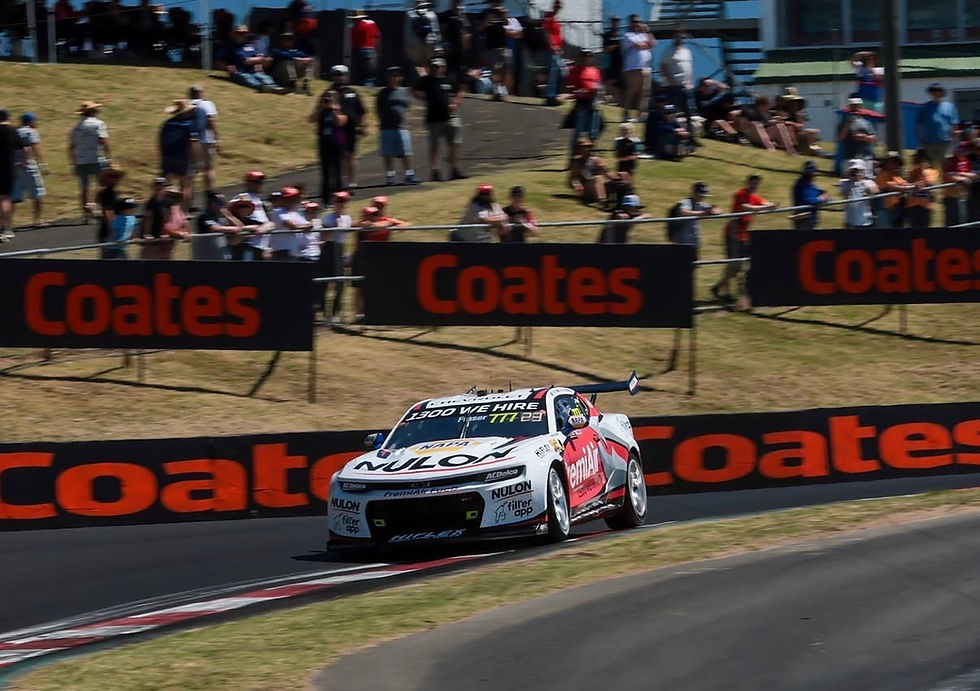
As Malukas’ contract was terminated at the end of April, Ilott ultimately raced the Indy 500 with Arrow McLaren, rallying to a gutsy 11th place with a stuck weight jacker, which had forced him to pit before the race start, giving up his 15th-place slot. But that was as far as his papaya duty went, with reigning Formula 2 champion Théo Pourchaire racing the three pre-500 rounds and the two after, before being replaced by full-time signing Nolan Siegel.
Being engrossed back in IndyCar had served to remind Ilott of the priority for his future, especially given it had been announced in April that one of his former junior-series teams from Europe, PREMA, were to join the series with two cars in 2025.
He simultaneously grew increasingly coveted in the Hypercar world, leading to a dilemma-inducing offer which would have granted him a settled career in a competitive ride in WEC. But a little beyond mid-September, with one round remaining in his campaign with JOTA, a return to IndyCar was formalised - with anything but the same guarantee of stability and front-running capability, as he became the face of the PREMA project.
“It was just one of those things [where] at the time, I got exactly what I wanted,” Ilott says of accepting the return to IndyCar for 2025. “It was a hard deal to turn down.”
The opening rounds of PREMA’s debut season were trying, as their European views grew accustomed to the differing requirements of American racing. The Indy 500 offered the first glimmers of real promise, as Robert Shwartzman took a pole that shocked even the team and Ilott finished 12th on the road, albeit that result was docked for a technical infraction.
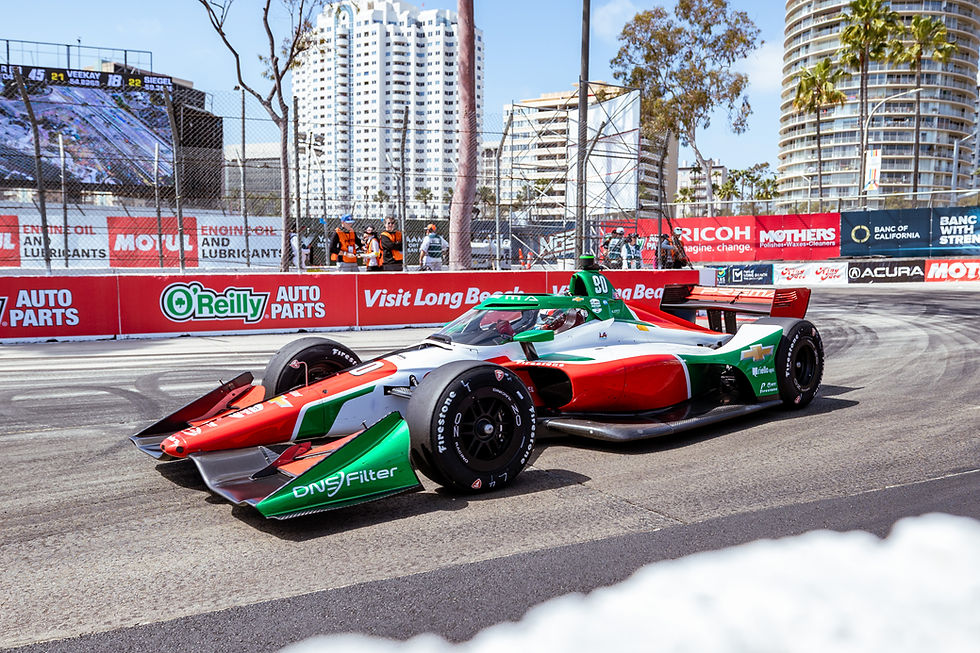
The following race in Detroit looked to be a marker of a step forward on road and street courses, though that ended with Ilott in the wall after a wheel came loose following a pit stop. His first pair of top-15 finishes with the team came in the subsequent non-oval rounds at Road America and Mid-Ohio, before a big breakthrough in Round 13 in Toronto in late July.
From that eighth-place day in Canada, Ilott finished the season with four top-10 results in the final five races, including sixth place at Laguna Seca and in Portland. Solutions were found on car setup and execution took a massive stride forward, with pit stops reduced from not uncommonly near the 11-second mark to regular in-and-outs in the eight-second ballpark.
“We battled so many unknown issues prior to the 500, which just killed performance in all aspects,” Ilott divulges. “I just remember St. Pete, I tried to push one corner in qualifying and the thing would just be doing things that weren’t expected. And you figure out three races later why. It was a challenging start - not unexpected but it was not easy.
“The car, there was a heavy European mindset at the beginning of the year, which just didn’t work with what we had. And once that was changed a bit more to what I was used to, we were just able to out-punch our weight with the finishes we had at the end.”
But as things grew rosy on the track, inklings of turmoil started to brew behind the scenes. Some concerns over PREMA’s funding had emerged through the season, but the seriousness of the situation started to proliferate by the end of the campaign.
“We had challenges right from May onwards,” Ilott admits, “which we worked through - it wasn’t impossible. We finished the season very strongly on a performance basis [but] I got the feeling that things were going to be a bit tough [with] maybe two weekends to go.
“[Then] it seemed as if things were going to head in a direction which would kind of solve the problems. And that I don’t think went ahead.”

The reality started to dawn when PREMA’s two drivers were absent from IndyCar’s annual media day in late January, only one month from the start of the 2026 season. Then, as they missed pre-season testing, everything started to grow ominously quiet and, indeed, PREMA were missing from the entry list for the St. Pete opener.
But in the meantime in the off-season, Ilott had been in communication with driver-owner of Wright Motorsports, Adam Adelson, with whom he has a long-time relationship, over the possibility of racing their Porsche 911 GT3 in IMSA in 2026.
“He knew roughly what was going on with PREMA and suggested that this could be an option,” Ilott discloses. “He gave me a call and was like: ‘Would you consider it?’”
It was not Ilott’s only option but he accepted Adelson’s offer to run the November test in Daytona. The following month, it was announced he would be joining the team for the full GTD season, when his IndyCar prospects were not yet ruled out. But amid fears that IndyCar may not pan out, Ilott wanted a fallback option with which he could race as much as possible, which was why GTD was preferred over the shorter LMP2 campaign.
Most important was, by signing with Wright Motorsports, he had some driving commitment confirmed. The only IndyCar clash would have been Long Beach, which was the initial race slated for PREMA to attempt to begin their IndyCar season. He had no concerns about navigating that, if it came to it, but the discussion was never required.
PREMA’s plans eventually shifted to returning for the Indy 500 and beyond. With a team still in place, talks then ensued about only running the 500. Ilott himself attempted to put a programme together, though that was never realistic enough to come to fruition.
So as it has transpired, IMSA has been Ilott’s only driving commitment in 2026, with a mixed year headlined by a third-place finish in Sebring and a runner-up result at Watkins Glen.
“It’s been very up and down,” he analyses. “It’s been rewarding in some ways. The Porsche itself is a very difficult car to drive so that’s been an interesting challenge. I’ve gelled well but it requires a very different style. Once I got the hang of that, I’ve been very competitive.
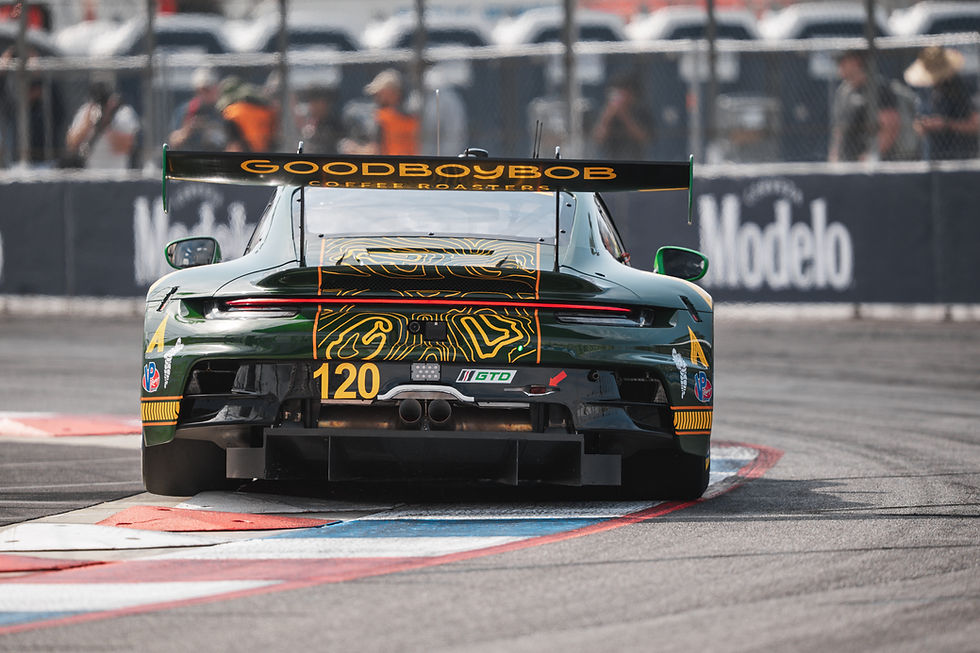
“It’s great to be driving something because there’s a chance that I wouldn’t have been driving anything this year. And to be able to do the full IMSA championship in a new car with a great team and great teammates, it’s good fun. I can’t complain but it’s a change of fate.
“If I didn’t take that opportunity, I’d be sat here doing nothing.”
The idea that he could have been doing nothing, when two years prior he had the chance to become a long-term, established driver at the elite end of sportscar racing before gambling on PREMA, is a cruel one. Ilott still sees the punt as having been worthwhile, but there is a natural what-could-have-been element to his predicament.
“It hasn’t come to complete fruition but I did get back into IndyCar. It was going to be an amazing project,” he asserts. “There’s this little bit of me that goes: ‘Well, if you’d have taken that deal to stay in WEC - in Hypercar - you’d have that career for the rest of your life and you’d be settled, you wouldn’t be complaining.’
“I’m in the middle there… career-wise, what do you do? Because that probably was the more secure route. But there’s just something about IndyCar which is so enticing, so competitive.”
That’s why he keeps coming back. It’s why he keeps trying - by any means possible.
Compared to two years ago, he feels a little differently about his current sidelined status. He struggled to come to terms with the fallout from the JHR exit, where the saga led to his something of a revenge arc. On this occasion, there is no ill-feeling towards anyone or anything and he knows there is no element for which he can be rendered culpable.
“It’s a different type of optimism. I was a lot more questionable that year. I was in a different mindset. What I would say is this year I just accept it. What else can you do? You sign a great deal into a long-term project and it doesn’t quite turn out the way you expect. I can’t blame myself, whereas the time before I blame myself. I blame everything.

“There’s learning. In the first situation that I had, there’s obviously a lot of things that you can do better. And I had to reflect on those and, whether it’s right or wrong, you have to always be learning and doing a better job. I would say I’m a lot calmer. Everyone has their moments but I’m a lot calmer and I’m a lot more introspective than I used to be.
“[Now] it’s like: ‘Okay, you need to make this work. You need to have a career.’ I still love to prove what I can and prove people wrong but [there is a] little difference.”
Ilott’s career has been laden with similar adversity all the way back to his F1 chance never materialising, having spent the season embedded within the Alfa Romeo squad after finishing runner-up in F2 in 2020. He has had to come to reframe his situation and view his disappointments with an altered perspective, beyond the motorsport microcosm.
“In the grand scheme of things, I’m not hard done by,” he acknowledges. “It’s a shame, going from being on the edge of Formula One to now being on the edge of even being a professional driver in highly competitive series. That’s a tough thing to swallow sometimes.
“At the same time, I live a nice life. There’s the days where you’re like: ‘You could have done this, you could have done this, you could have done this.’ But it’s very tough to continuously live by the could-have-beens. At some point, you have to accept it.”
There was an extended period in which Ilott struggled to overcome the letdown of never gaining a promotion to F1. Having also transitioned from the Ferrari Driver Academy to a Ferrari test driver in F1, on top of his Alfa Romeo reserve duties, he met all of the parameters laid out to graduate to F1 in 2022, coinciding with the regulations overhaul.
But Alfa Romeo’s wholesale lineup change at the end of the 2021 season instead featured the additions of Valtteri Bottas and Zhou Guanyu (who finished third in F2 in 2021) in place of Kimi Räikkönen and Antonio Giovinazzi. Ilott was overlooked.

“It took a long time for me to accept the F1 stuff,” he admits, having run two Free Practice 1 sessions with Alfa Romeo in 2021. “It was on my mind a lot for a while around that time.
“The reality of how close was I? I don’t know. Was it discussed? Yes, of course it was discussed. Did I meet the benchmarks that were set to me at the beginning of the year to get into F1? Yes. Was that verbal and not contractual? Yes. The tough part for me is looking at the drivers and knowing I could hold my own against most of these guys.
“There’s no point giving comparisons but I wish I just got one year. One year to give it a go and see how it was. Over some of the guys that got three years, give me one of them. You can have two; I’ll have one, just for the experience. It was amazing to drive these cars. It was amazing to be in these teams. But to get it and just… even one race.”
It took a steady period of time building his home in IndyCar before he had properly shelved thoughts of F1, but Ilott quickly came to love the racing culture stateside. He was given the appreciation that there is more to the open-wheel world than F1 - and that moving away from what had been his lifelong dream was not necessarily for the worse.
“There’s pros and cons to [F1],” he explains. “Until this year, was the car mega? Yes. Was the environment awesome? Yes. Do I like all the attention, media, the lack of time that you have to yourself? No. That’s very tough. They get paid tonnes, tonnes more and all of that. But there are ways to look at it and equalise it a little bit without fame and fortune.
“I go to Le Mans, I go to the 500 and I’m like: ‘This is cool.’ It’s different. F1, in its own way, is awesome. Do I prefer it in the 2007 era? Maybe. People go back to the 90s, 80s. But that’s what we have in IndyCar; the 80s, 90s, even 70s style is what we have right now.
“We’ve got a very special project that I think could be great. And it’s really undervalued.”

It is that belief in IndyCar’s direction - along with all he has already sacrificed - that also fuels Ilott’s unwillingness to call any end to his pursuit to return to the series.
“I live out here; my whole life is out here. So I don’t really want to give that up just yet. I’m at that stage where I gave up a great deal to come back to do IndyCar and that hasn’t worked out the complete way that I expected it to. It’s hard to just accept that that’s the end of it.
“I’m in a bit of a place career-wise where nothing has been ideal. I’m very grateful to be driving, to be a professional race driver, but you have a window of where it’s achievable [and] lucrative. I’m still within that [so] I’d rather try to achieve what I know I’m capable of - and if it fails, restart another way.”
It does irk him a little when he reads reports in the media about the driver market and his name is not among those mentioned. There is a sense he has almost become a neglected figure within the public-facing silly season.
The reality is that he is working tirelessly to engineer himself another opportunity. From the first 15 rounds of the season, he has only missed Mid-Ohio, Markham and Washington D.C., attending every race for which he has been available. And all by his own means.
“It’s like when I was a reserve driver for Alfa Romeo in Formula One,” he suggests. “You have one year where you could be a reserve driver and then you kind of just get forgotten and pushed to the side. It’s not nice but I see it in the media with the silly season stuff. I’ve gone to every race except [three] and you’re not even mentioned in the silly season.
“You’re like: ‘That’s bulls**t because I’m there and I’m speaking to these people and I know what the situation is.’ But it’s just funny how quickly you get sidelined. I don’t take it personally but I just find it very interesting that that’s the atmosphere.”

Ilott earmarks this year’s rookie crop as oft-mentioned players within the driver market, even though Mick Schumacher is currently outside the Leaders Circle and Caio Collet is directly on the cut line for securing the financial reward for his AJ Foyt Racing team.
“That was not the case when I was racing. I finished in Leaders Circle every single time with new teams,” Ilott reacts. “But they’re already way ahead of you in the silly season side of things. It’s the way it is but you have to keep yourself there. You have to keep turning up.”
Ilott is consciously proactive in his approach to seeking opportunities. A lesson he learned from the methods of Mercedes F1’s George Russell, he views it as being extremely valuable to put himself at the forefront of conversations with teams.
Down the road of putting finer details of any contract together, an intermediary naturally becomes a necessity. But Ilott is a firm believer in needing to sell himself, rather than be sold by someone else or having a middleman brokering an entire deal.
“These teams want to see drive from who they’re employing,” he notes. “That was something I didn’t do when I was younger and maybe I missed out on. I don’t want to say it was an intimidation thing, but I saw all these other guys get carried by other people.
“I probably should have taken that approach earlier because no one’s a better advocate than yourself. It shows exactly why and what and they can get the real character of you.”
Ilott knows he needs to be strategic in the way he pitches himself, given he does not have the beauty of myriad headline results to his name, having never had the platform to regularly deliver as such. But that does not quell his belief that he has delivered displays as noteworthy - often in the face of significant hurdles with his pair of startup teams.
“I have to go off of individual performances,” he explains. So he’ll take 2022 with JHR and his six Fast 12 appearances in qualifying. He’ll take the front-row start at Laguna Seca, missing pole by only 0.0193s and running in the podium positions until his engine blew.

“I did half the season with my hand snapped in half, no surgery. Nothing,” he emphasises of that year. “I still finished in Leaders Circle in a single-car, new team. Come on, it’s not a bad rookie year when you compare it to some others. And started the foundations for that team.”
He’ll also take the 2023 Indy 500, calling persistently for a chassis change until it was eventually initiated only the eve of qualifying. With next-to-no practice running in that car, he still made the field in 28th - only one position behind his teammate and avoiding Last Chance Qualifying - and surged to a commendable 12th in the race.
He’ll fast forward another year, too, to another rough hand dealt in the Indy 500 with his failed weight jacker at Arrow McLaren, racing to 11th with eight turns of front wing to counter the understeer, despite a pit-lane incident having him last after the midway mark.
“So just putting that all into perspective and the results and the achievements we’d had in combination with the challenges and what I had to be a part of building, I just don’t understand why the environment that you’re in isn’t considered slightly more.”
Being alone as a rookie and without more than a novice to lean on in his other two seasons, Ilott has plied his trade almost as a self-taught IndyCar driver. “Give me [Scott] Dixon,” he clamours, for he has never had what he views as a valuable veteran benchmark to showcase the full extent of his capabilities against.
Maybe that leads to an off-putting mystique around Ilott as an option. Or maybe, as he implores teams to delve deeper, there is equally great upside to the unknown quantity.
“I really feel not undervalued but underappreciated compared to some other guys,” he implores. “And it all comes from the fact that I’ve always been with new teams and where’s the comparison? What comparison do we have to any drivers who’ve achieved other stuff? I’m like: ‘Really, until you have a direct comparison, do you want to give up on this?’

“Some people don’t think I’m good enough; some people really think that I am. I think I’m very, very quick. I’ve done a very good job with setting up new teams. And that goes from everything: working with the engineering of the team, to pushing for design parts of the cars, to the pit stop side. I’d love to just go in and not have to start from scratch.
“I don’t know my full potential. I know I would be very competitive in a solid situation. But who knows? They don’t know. They don’t know that I pull out results when it’s needed to.”
Right now, Ilott cannot afford to be picky or selective with his options; even the hint of one option to guide him back to IndyCar would be a godsend. So he converses wherever he can with whoever he can, until he gets a sense that things are unlikely to pan out, which he admits he has become a better judge of since the start of his time in North America.
“There are different conversations to be had,” he outlines. “The teams have different levels of what they expect and there’s a different demand.”
Much of that difference comes from the balance of a desire to hire the best talent and the need to acquire a financial package, particularly with IndyCar’s new IR28 chassis in the pipeline for 2028. Ilott is not blessed with a grand budget to cover a ride so he relies on vacancies at those organisations who are able to put their faith in him.
There is only so much weight that talent tends to hold but he still maintains faith that his ability can triumph.
“With the direction of charters and new car, these teams are going to want to iron out to have two [or] three strong drivers across everything,” Ilott theorises, “and not always go for the best financial option - I think in the hope that, with the new car and the charters, the financial side gets recovered a bit more. As a series, it’s trending in the right direction.

“There is the equation of the budget and it’s a massive expense. But it’s a massive expense anyway. Racing every year is not cheap. In ’28, you’re going to have to think about spare parts. Accidents happen but there are some [drivers] that cause more than others. That might be problematic, that maybe some people overlook. No one wants the cars to crash.
“Yes, budget is a factor and a consideration to a lot of people. But if you’re not thinking about performance, you’re just not in the right mindset, for me, as a race team.”
As it stands, it is hard for Ilott to gauge how things may shake out, as the campaign comes to a close and teams push to finalise their lineups by early in the off-season. He has been handed some cause for encouragement but is hesitant to get misled by positivity.
“The market’s a bit weird,” he remarks. “There’s been a tonne of people throwing a lot of money around - at least verbally - which makes options quite tempting and changes the way things are perceived. But these teams want to compete and they want to be strong.
“This season has been tough on the driver market. There’s been a few changes which were very unexpected. I still think there’s a really good chance you’ll see me in IndyCar next year but I can’t say for sure right now and I don’t know. I just have that feeling.”
Ilott has enjoyed his time in IMSA this year and would be keen to return there again for 2027, too, even if he does secure an IndyCar ride - in which case an endurance-only schedule may be preferable. He has the benefit of having run competitively in a number of top-level series, all of which could provide alternative opportunities next year.
“I’ve driven everything except the Formula E,” he points out. “The new car, I was actually quite tempted by. It’s way too late now, but there was a talk or two to maybe go and do that, which would have been a bit of a lifestyle change. That looks cool.

“I’m kind of covered for being able to drive something, I could leave it pretty late and have an opportunity to do something. [But] will it be the best? No.”
Ilott knows full well that he’s hurtling towards a critical juncture in his career. The 22-year-old who debuted in IndyCar five years ago will be aged 28 by year’s end, yet one of IndyCar’s big prodigies and one of the great products from the F1 ladder across the past decade is still to settle anywhere to sustain a complete satisfaction of his lofty potential.
While he realises his talents will always enable him to drive something, just something and many more stop-gaps won’t long suffice. In the next 12 months, the pursuit of continuity and being valued at the top may mean grudgingly shelving the IndyCar dream, if his life confined to the outside persists much longer. Not that Ilott wants it that way.
“I’m not worried about the driving side of things. The thing is my career. I thought of it like this this year but it’s just not been exactly how I expected. If I get exactly what I want right now, I don’t need to worry about this, but if I don’t get exactly what I want, I’ll think about what I need to do for the long-term next year. That’s kind of my cutoff point.”
For the time being, Ilott still has a one-track mind towards IndyCar and will do whatever he can to get back there. He has been through the wringer of several savage setbacks, but while it grinds at him, he persistently refuses to let it consume and dismay him.
Reluctant rationality may soon have to unwillingly prevail, but he has come too far in his fight for fulfillment to succumb and give in without defiance.





Comments