
Felix Rosenqvist interview, part two: Inside MSR split & Arrow McLaren rekindling


“It’s never an easy call,” he concedes, reflecting on the news-breaking conversation. “I knew that was going to be the toughest thing I was going to go through with them.”
Uncharacteristically, based on the two years prior, it had been a slow start to the IndyCar season for Felix Rosenqvist. Critically so, in the crucial early stages of a contract year. There was substantial credit in the bank after his team-record sixth place in points the year prior, but through four rounds in 2026, achieving no result better than 12th was mildly concerning.
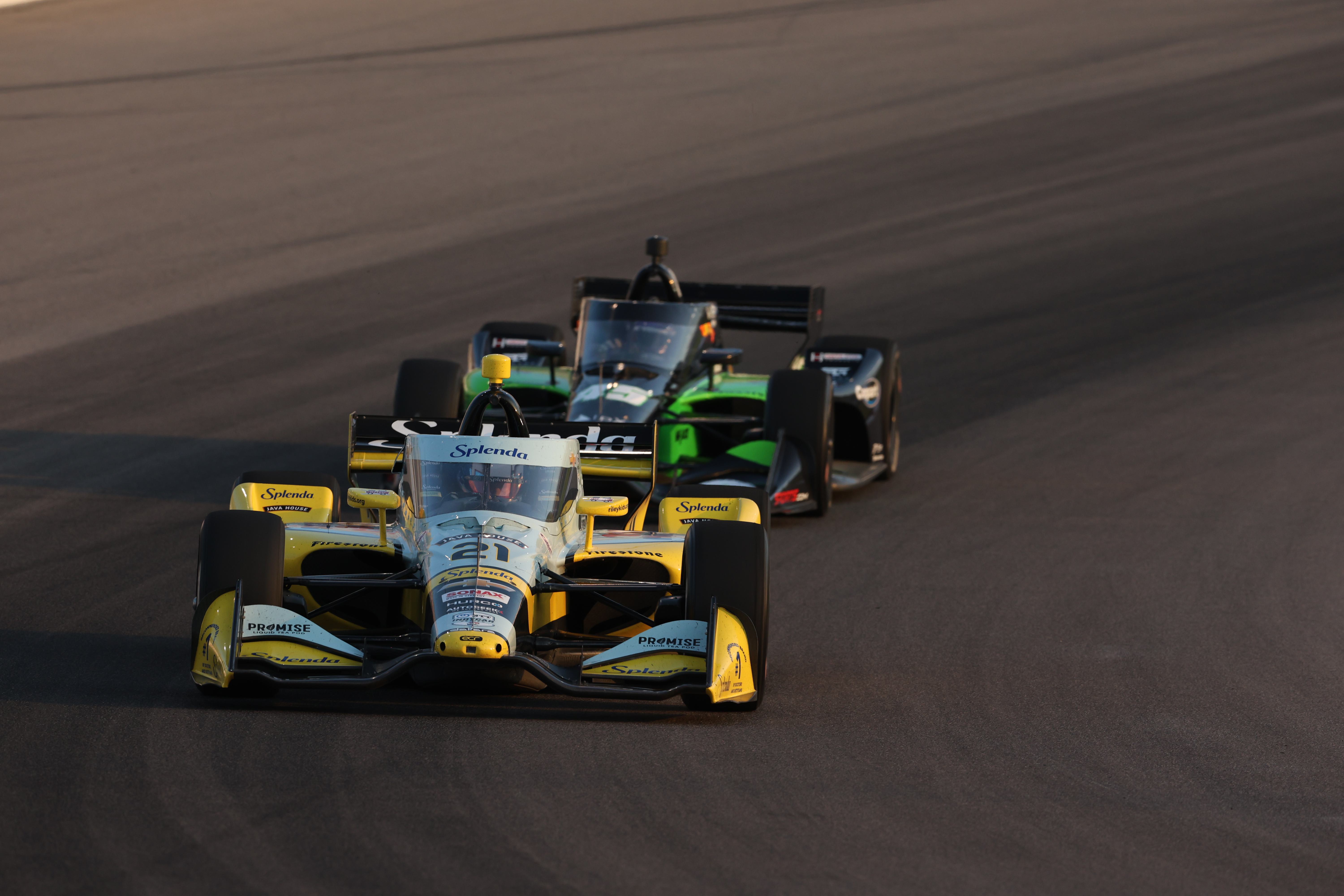
A pole position on the streets of Long Beach - a second such feat since joining Meyer Shank Racing (MSR) in 2024 - and runner-up finish was rejuvenating ahead of the impending Indianapolis 500 campaign. But with his deal set to expire at the conclusion of his third season with MSR, Rosenqvist was already having to weigh up his options.
Even ahead of the Month of May, when his stock skyrocketed with a history-making Indy 500 win, conversations had started to take force with possible alternative suitors, including former team Arrow McLaren, whose interest would promptly proliferate by month’s end.
“It was actually way before the 500, those talks came into play,” Rosenqvist tells DIVEBOMB in the midst of IndyCar’s off-season. “We had already been in touch a little bit because I didn’t have anything lined up at the time, [when the] Month of May was starting. So like always, you have a contract running out, it’s a free market, in the end.”
Rosenqvist’s addition to the MSR camp for the 2024 season - inbound from three years at Arrow McLaren - was transformative for an ailing team that had grown sapped of belief.
The season prior to the Swede’s signing, the outfit’s second full year as a two-car operation - having debuted full-time in IndyCar with one entry in 2020 - ended with only one top-10 result (Hélio Castroneves’ 10th-place finish at Texas Motor Speedway). Castroneves’ 11th in Nashville was the team’s best street-course result, while rookie Linus Lundqvist, stand-in for the sidelined Simon Pagenaud, recorded the road-course high of 12th-place in Indianapolis.

“When I joined, maybe there were question marks, especially when we have the technical alliance [with Andretti]: ‘Are we getting the right stuff?’” Rosenqvist recalls of a team that had grown a little lost. “Which I don’t think was officially questioned but maybe a lot of people were wondering: ‘Hey, are we getting Andretti’s stuff, X and Y?’
“When I came in, a lot of those question marks went out of the way and people truly believed in the car and in the team. And that’s one of the most important things, be it the driver or the engineers or the crew, that if you don’t think the car is quick, it’s never going to be quick.”
Rosenqvist starred from the outset in 2024, immediately qualifying on the front row in the St. Petersburg opener - a mere 0.0058s behind Josef Newgarden - for a team whose average qualifying result was 18.7 the year prior. The following round in Long Beach, he validated that this was no fluke, mercifully finding himself on the flipside of an even tighter margin, sealing MSR’s first-ever pole by 0.0039s ahead of Will Power, the series’ greatest qualifier.
Between those two races, he had taken pole for his heat race in the $1 Million Challenge at the Thermal Club, where he ended the exhibition event on the podium in third place.
“That’s essentially why Mike [Shank, team owner] hired me in the first place. He told me: ‘I just want to get the speed back in the team. I want to go be fast and then we’ll figure out the rest on the way.’ And that’s what we did, in the end, when you look back at my three years.”
By the sixth points-paying round of 2024, Rosenqvist had only finished one race outside of the top 10, owing to a mechanical failure in the Indy 500. But his year tailed off somewhat from then onwards, with only one more top-10 result in the closing 11 rounds, as there proved a consistent shortcoming in converting pure speed into reflective race outcomes.

In 2025, though, with a new alliance formed with Rosenqvist’s first IndyCar team, Chip Ganassi Racing (CGR), MSR made another stride forward. Again, five of the opening six races boasted top-10 results - including three top fives - but five more followed in the final 11 rounds, headlined by a runner-up finish at Road America for the team’s first podium since May 2022, matching Pagenaud’s result on the Indianapolis road course that day.
Rosenqvist’s sixth-place championship finish was not only the team’s best return but equalled his personal high from his rookie campaign six years prior, with CGR in 2019.
“In terms of his plan, it actually really worked out,” Rosenqvist reflects of Shank’s initial rallying pitch upon his signing. “I’m always grateful for the fact that he trusted me to be the guy who could bring that [belief] back.”
Rosenqvist found a home in which he could thrive, at a team he had helped leap to the peak of the midfield, acting as regular disruptors to the established front-running order. But this year, as the multi-year contract extension signed in 2024 came towards its end, his Indy 500 win added significant leverage and talks intensified with his former team, the enticement of a return to a new-look Arrow McLaren created a significant dilemma.
As May turned to June, knowing splitting with the team with which he had just achieved his life’s dream would come with anguish, Rosenqvist took his time to weigh up many factors involved in what he has labelled as the toughest choice of his career.
“I gave it a lot of time to really ponder: what will this look like for me in the future? Some of those things, you can’t truly know. You just hope, in a way. It was a tough one but that’s what we have to do, tough decisions.”
Ultimately, by late June, his mind had been made up: despite the career-defining Indy 500 win only a month prior, Rosenqvist would be leaving MSR at the end of the season.

“Especially after we won the race, from the outside, it doesn’t make any sense,” he acknowledges. “But if you look into my position and you add everything up, you’ve just got to try to not make that decision personal and emotional and make it for what it is and where you need to be in the future. It was a tough call.”
The best part of half-a-season remained once Rosenqvist had informed the team of his intentions to part company - the conversation that every driver dreads. An awkwardness would have been understandable over the ensuing months.
“I wasn’t really sure, like: ‘Okay, how is this going to go for the rest of the year?’ because people are emotional - including me,” concedes Rosenqvist, who recorded another pole and podium in Portland in August en-route to finishing ninth in the standings.
“But I was really impressed how everyone regrouped and I almost felt like our relationship got better in the end of the year, which was weird. We maintain a good relationship to this day; we talk every now and then on texting or phone.
“I always believe you can end on good terms. Especially with people you like, there’s no reason why you need to end it on a bad note. We were always going to disagree on that decision. It’s just the way it is. That’s part of the business.”
Arrow McLaren saw a significant appeal in Rosenqvist’s Indy 500 ability, given the stated organisation-wide target of winning the Triple Crown, also including the Monaco Grand Prix and 24 Hours of Le Mans. “After I won [the Indy 500], it was like: ‘Okay, let’s do it,’” he recounts of the eventual confirmation that a move would go ahead.
It took certainty from Rosenqvist himself, too, given the previous split in 2023, which came with the perception that Arrow McLaren had been actively trying to replace him as early as the end of the previous year, via their ill-fated pursuit of now-five-time champion Álex Palou.

“It’s all little things that add up,” Rosenqvist says of the decision-making process, which resulted in him being unveiled back at Arrow McLaren on July 6th. “Their ambition is probably the strongest factor: where they see themselves in the future, what they want to do and how hard they’re pushing to go there. That’s something where, as a driver, you want to be part of that.
“It’s something I’ve already noticed being at the shop. Like, it’s a matter of: ‘What do you need? We’ll get it for you.’ It’s so much more to be able to go and do those things, but the ambition is really the big thing for me.”
Naturally, some of the reaction to Rosenqvist’s re-addition has centred on the perception he is rekindling with an ‘ex’. But he is not focused on the events of 2021-2023 with a previous iteration of a team that has evolved again in the three years since, to a point where the future prospects override any past-based reservations.
“I don’t really look what has happened,” he rebuts. “I’m just looking into the future. I don’t really think about the past. You learn things as you go along but, for me, it’s all about: what can I do today and tomorrow? I don’t really think about the past. I haven’t really thought about [that perception]. It just felt very natural coming back.
“I know a lot of people who probably approach that differently and maybe hold a grudge… but I just don’t operate that way and I just like to move forward in life.”
By his own admission, Rosenqvist’s previous three years in papaya were “mixed”. His first season in 2021 - only the second year since the McLaren name returned at the team previously run as Schmidt Peterson Motorsports - was disastrous. Rosenqvist finished 21st in the standings, finished inside the top 10 only twice and missed two mid-season races after a heavy crash in Detroit, caused by an apparent stuck throttle.
There was a marked step forward in 2022, though, with Rosenqvist improving to 10 top-10 results, returning to the podium in Toronto and finishing eighth in the championship. His final year with the team in 2023 then boasted arguably the highest ceiling, albeit eight top-10 finishes - two of which were podiums - were balanced out by eight results of 19th or lower.

“I definitely look back with joy because I really enjoyed my time with the team. That was something I said during my last races there: ‘I really hope I can work with you in the future,’” asserts Rosenqvist, who ended on a high note with a runner-up finish in Portland and pole position for his was-final race with the team at Laguna Seca.
“I was the first one to admit that I love the team, love the people. I was sad about leaving. Especially in that last year, we had so much potential but it was a lot of issues going on and we had a lot of DNFs. That was probably the biggest weakness back then; now, the team was, I think, the best in terms of finishing laps and reliability [in 2026].”
Now embedded back in the Arrow McLaren camp, Rosenqvist sees a different team to that which he exited. This is headed by a new, “purpose-built” Indianapolis headquarters, the McLaren Racing Centre, which opened at the beginning of this year but has only recently reached a point where it is near-enough completely functional.
“This shop allows you to do so much more,” he assesses. “It’s a good reward for everyone who’s worked in the company for a long time. The old one was definitely getting too small.”
Rosenqvist has reunited with a host of familiar faces, too, with many who were in junior roles having progressed as far as being chiefs in their departments in his time away. The team is also now under the guise of Tony Kanaan as team principal, with the Brazilian two years into spearheading operations, in which Rosenqvist has seen distinct change.
“When I left, the team was starting a big growth phase,” explains Rosenqvist, who rejoins a team no longer with the excuse of infancy. “I definitely saw the challenges of that when I was there. [With] McLaren stepping in more, there was just a change in how the team was run and also how it was expanding, which I got to witness how hard that can be.

“Now, there’s a lot of people that still work there - probably half or maybe a little less - so you feel the DNA is the same. But it’s just so different. The team is so much more efficient in terms of how it’s being run and who you’re reporting to. If you want something done or if you have a question, it’s a full structure now, where before it was a little bit more unclear who you would report to. I’ve been really impressed. Everything has been a positive surprise for me.”
Rosenqvist feels he has grown personally, too, in the last three years, during which he has been able to emerge from any shadows and inspire a team as their most experienced driver.
“I’ve grown a lot,” he recognises. “It’s cool to come back and show what you’ve been able to change in those three years. It’s something I noticed coming back already. It was like: ‘Oh, I was a different FRO back then.’
“You look back and you’re like: ‘Oh, I’m way better at X and Y than I was three years ago.’ And I don’t really like using the word ‘team leader’ because it goes against what I [believe]. As a leader, I try to make it more of an open place. You need to try to make your drivers work in the same direction. The whole ‘team leader’ concept sometimes can backfire a bit.
“It’s something you see in F1, where maybe just one driver starts performing and the other one is not. Especially now with Arrow McLaren, definitely how we want things to be [is] very open-book, try to get the drivers on the same page, pushing the car forward. And then whoever is leading that race on that day, that’s the guy that’s going to get the points.”
Rosenqvist enters a much-changed Arrow McLaren lineup amid the departures of Nolan Siegel and, contentiously, Christian Lundgaard. This paved the way for the addition of the Swede, alongside six-time champion and 25-year CGR veteran Scott Dixon, with whom Rosenqvist worked in 2019 and 2020 and drew great plaudits from the New Zealander.

Rosenqvist also spent three years with team mainstay Pato O’Ward during his previous stint at Arrow McLaren, with their relationship blossoming into a close friendship. Both O’Ward and Dixon are drivers Rosenqvist regularly spends time with away from the track.
“On paper, it’s probably the best chemistry you can ask for,” Rosenqvist says. “You know what you hear in Formula One with teammates? It’s always some kind of drama. It was just very easy [with O’Ward and Dixon]. If you had a question, you ask it, you know you’re going to get a straight answer.”
The trio’s chemistry has been cited as a reason for the lineup being as it is for 2027. In Rosenqvist’s view, this is not so much a case purely of the drivers themselves working well together as it is the tight-knit culture those relationships drive within the wider team.
“If you have a team that has good chemistry along the board, that’s the main thing,” he poses. “[But] the driver is important because a driver is the leader in that.”
Rosenqvist has spent plenty of time inserting himself back into the team over the past two months, aiming to be at the workshop multiple times per week in the off-season, whether to work with engineers or Arrow McLaren’s prolific content team. In the engineering office, it has felt to him as though he has picked up conversations right where they left off in 2023.
In recent weeks, McLaren Racing CEO Zak Brown and the rest of the leadership conducted a meeting around the team’s goals. For a Rosenqvist, this has already confirmed many of the questions pondered when deciding on his direction for 2027.
The change may have been a tough call to make but he is invigorated by what lies ahead.
“It’s one thing signing a contract but you never truly know what you’re going to face when you step into the doors. It was a 50/50 decision. [But] the more time that’s passing, it’s gone a lot more to, I’m super happy where I’m at. I feel like timing-wise, it was a perfect move.”







Comments