
Formula E updates regulations, featuring Bridgestone tyres, attack mode freeze and extra test days


Bridgestone has officially joined Formula E to become the championship’s sole tyre supplier for the Gen4 era. The Japanese tyre manufacturer secured the contract in 2024 to supply tyres for Formula E’s upcoming Gen4 era, which kicks off later in 2026.
Bridgestone made the announcement official at a launch event in Rome earlier this week, with senior executives, Formula E and the FIA present during this event, as they unveiled a representative Gen4 tyre to feature on Formula E’s cars from Season 13.
This latest announcement sees Bridgestone expand its range of championships as a tyre supplier, adding to the marque’s current line-up featuring Super GT and Super Taikyu championships, motorbike racing’s Endurance World Championship (EWC), while it also supplies tyres to IndyCar and the prestigious Indy 500 through its subsidiary Firestone.
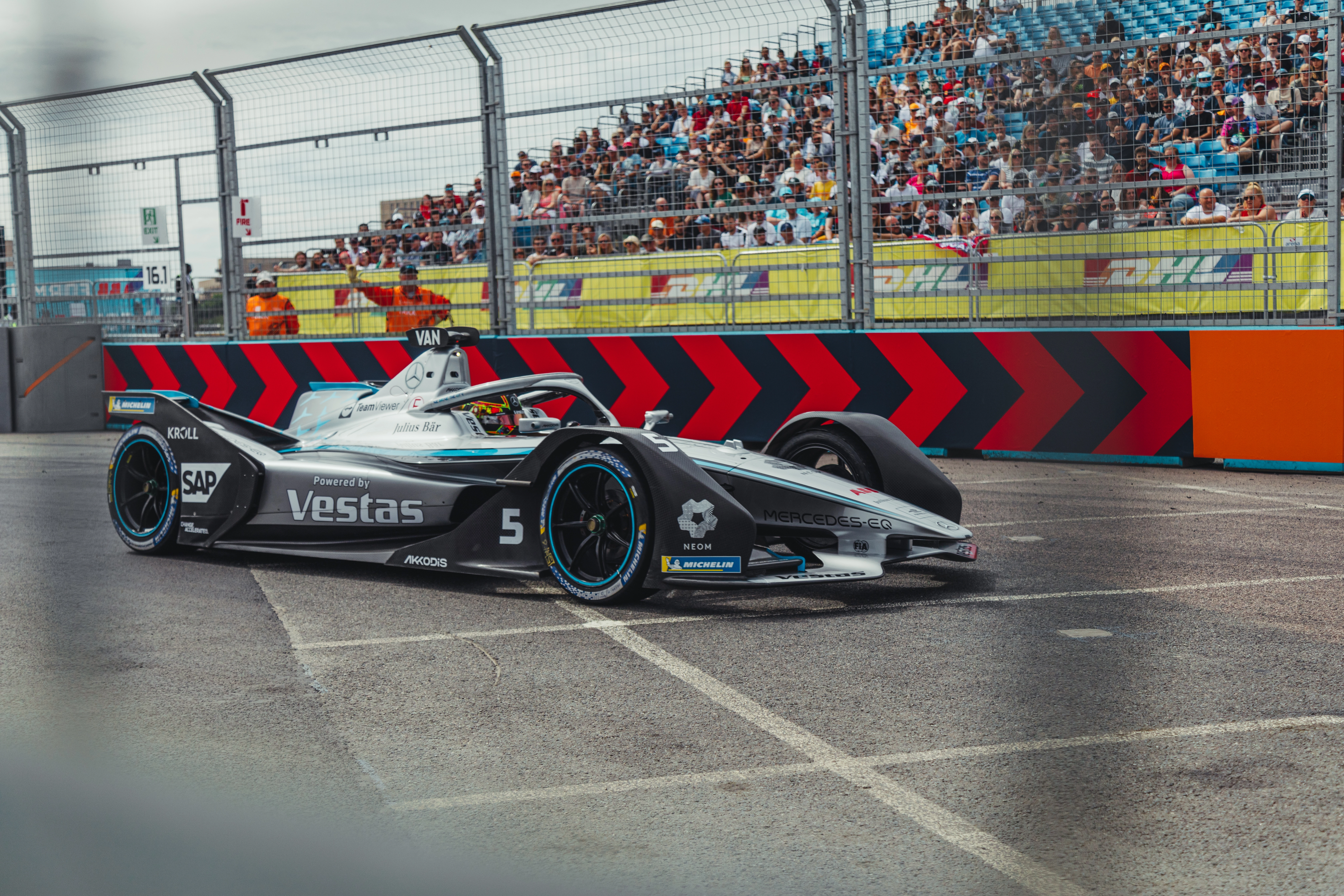
Formula E, though, presents an exciting venture for Bridgestone to leap into, as it powers the electric championship. The Gen4 era will feature Formula E’s fastest and most advanced machinery to date, with cars set to reach 450 kW (approx 603 bhp) in race trim, and 600 kW (approx. 804 bhp) in qualifying and attack mode.
“We have continued to push the limits with an insatiable quest for performance and a sense of responsibility for a better future through motorsport activities,” said Yasuhiro Morita, Global CEO and Representative Executive Officer, Bridgestone. “On the supreme stage of Formula E, we will further evolve the balance of performance and sustainability and pioneer a new future for mobility.”
His words hold plenty of weight, given Bridgestone’s big leap into electric racing for the first time. With instant torque and access to power underneath the accelerator of a Formula E car, and a proclaimed 0-60 mph time of 1.82s, the tyres will need to deliver plenty of grip to match the requirements of the machinery at hand.

This is where Bridgestone’s POTENZA Gen4 tyre comes into the picture. The POTENZA tyre variant is commonly used across a wide range of championships such as Super GT, Super Taikyu and championships. However, for Formula E’s requirements, a special tyre compound has been developed in order to handle the acceleration and cornering speeds taken by the Gen4 machine.
With all-wheel drive and Formula E’s Gen4 car allowing high downforce and low downforce variants to run during a race weekend, the cars are expected to put in more lateral loads and G forces through the tyres. In this case, the POTENZA Gen4 tyre is believed to deliver greater performance and suit the needs of the Gen4 machine.
“In developing the POTENZA Gen4, we pushed the limits of our technology to fully unlock the overwhelming performance of the Gen4 (car),” said Hiroshi Imai, Executive Officer and CPO, Global Motorsports, Bridgestone Corporation.
But what stands out in Bridgestone’s line-up ahead of their Formula E debut is the POTENZA Gen4 for Typhoon tyre. Unveiled at the company’s launch event in Rome, this tyre specification has been developed solely for the all-electric championship, in order to help drivers maintain stability even on wet tracks.
“The newly introduced POTENZA Gen4 for TYPHOON TIRE represents a symbolic evolution for the GEN4 era, enabling drivers to confidently take on even wet conditions,” Imai expressed, speaking on the new compound of tyre that will take to the track in the Gen4 era.
While Bridgestone’s tyres will certainly be tested across a wide variety of circuits and conditions, one explosive claim from Formula E’s Development Driver James Rossiter has left the championship more than optimistic for the upcoming regulation set.
Speaking at the event in Rome, Rossiter expressed that the Gen4 cars can be quicker than their Formula One counterparts in the wet, thanks to the new Bridgestone typhoon tyre.
"I am willing to say this on record: If it rains heavily, and you have a Formula 1 car on a full wet tyre, and I, a 43-year-old man, went out in a Gen4 car with a set of Bridgestones on it, I'm very confident that I'm comfortably faster than a Formula 1 car in the wet," he said.
This statement, said in response to Racingnews365 and other publications during the event, may have been an explosive claim, even before any representative running in Gen4 machinery. Yet, Rossiter remains confident in Formula E and Bridgestone’s abilities to deliver all-weather tyres.
His claims come in the light of Formula One’s recently concluded Bahrain Grand Prix in Malaysia, with rain delaying the start of the 55-lap event, before more delays ensued due to a software bug affecting several cars on the formation lap.
However, the race weekend also addressed F1’s concerns over racing in rain-affected events, with the championship often pivoting to a delayed start on wet circuits, and not utilising the full wet tyres. Formula E hasn’t faced interruptions due to the rain, but Shanghai’s Formula E events have been rescheduled or cancelled in the Gen3 era due to threats of showers and a wet track.
However, with Rossiter’s claims and the new typhoon tyre coming into play, it is expected that the championship will continue to race under wet conditions, even encouraging drivers to keep continuing racing when it rains.

While Bridgestone’s new Formula E tyres left many curious, the Japanese company have also lived up to Formula E’s billing of sustainability. The POTENZA Gen4 and Typhoon tyres are developed from up to 65% recycled and renewable materials.
Furthermore, Bridgestone’s tyres have been developed using several sustainable and environmentally friendly measures. The carbon black filler has been derived from end-of-life pyrolysis oil, while silica is derived from rice husks. The natural rubber of the Bridgestone tyre is also compliant with Global Platform for Sustainable Natural Rubber (GPSNR) standards.
The logistics for the tyres are also undertaken by DHL, with low-emission travel and transportation norms, while Bridgestone claims 100% renewable energy resources are used in the heat and electricity sources powering the production of its Gen4 spec tyres.
“By supporting the dramatically evolved GEN4 from the ground up, we are also advancing initiatives toward carbon neutrality and resource circulation, striving to realise sustainable motorsport,” Imai expressed, backing up the company’s desire to match the all-electric championship and carry forward its motto of sustainability.
Drivers and teams will continue to remain optimistic of the attacking combination of a high-speed, aerodynamically efficient Gen4 car paired with the Bridgestone POTENZA Gen4 tyre delivering spectacular racing. And they don’t need to look any further for evidence.
Bridgestone’s subsidiary Firestone provides tyres to IndyCar’s race weekends stateside, with drivers pushing and able to complete multiple racing laps in qualifying on one tyre compound. The tyre compound even received praise from drivers ahead of the 2026 season, with more tweaks made to ensure advancements in tyre life and warm-up to deliver greater racing.
“Bridgestone is a fitting partner as we embark on this exciting new era. The Gen4 car represents the pinnacle of sustainable motorsport design, and we look forward to working with Bridgestone as we continue to redefine electric racing and lead the race for progress both on and off the track,” expressed Jeff Dodds, CEO, Formula E, on the Japanese manufacturer’s entry into Formula E as a tyre supplier.

Bridgestone also presents a major long-term vision to Formula E, as it aims to introduce slick tyres to the all-electric championship at a later point in the Gen4 era. The early vision of a Formula E car on slick tyres was visible at the Goodwood Festival of Speed (FOS), when Dan Ticktum piloted a Gen4 prototype for the event.
The Gen4 car finished second in the official timesheets, losing out on the top time by a slim 0.48 seconds, delivering plenty of hope for what the championship aims to reach in the future.
In addition to its duties as the championship’s tyre supplier, Bridgestone will serve as the tyre supplier for four Formula E events in Season 13: the Mexico City E-Prix in January, the Berlin E-Prix in May, and the championship’s closing events in Shanghai and Tokyo towards the end of the season.
What about Attack Mode freezes, though?

Bridgestone’s tyres weren’t the only major news Formula E witnessed in the last week. The FIA also published an extended set of regulations pertaining to Formula E’s Season 13.
DIVEBOMB had initially reported on the changes to the regulations earlier, when the calendar was officially revealed. This story covered several talking points, including Formula E’s new ‘Unleashed’ race during double-headers, variable Pit Boost, points awarded to qualifiers and Formula E’s measures to tackle conduct between suppliers and customers.
The updated regulations set features another major advancement coming as a relief to the Formula E grid. According to Article 27.4 (f) of the regulations, drivers can now ‘freeze attack mode’ in the event of a Full Course Yellow, Safety Car or a Red Flag during a race.
They will be allowed to reactivate their attack mode allocations by going through the Attack Mode activation zone on track; however, this will not count as one activation. This is a major change to the upcoming year’s rule set, and a second successive change to the way Attack Mode can be used in a Formula E race.
Ahead of Formula E’s Season 12, the championship had already published a revised rule where drivers were not required to complete their full quota of Attack Mode during a race. This did not require them to utilise all six minutes of extra power during a Pit Boost race, or eight minutes during a regular Formula E race.
But its latest change will allow a fresh shot for drivers to continue racing hard and look to utilise Attack Mode if they face an interruption during a race. Complaints came through from the championship’s fanbase about drivers losing opportunities to fight for big results, but a safety car affected their race after activating their respective Attack Mode allocations.
A prime example of this was Andretti’s Jake Dennis at Tokyo. The Briton, who had closed up to the leading pair of Nyck de Vries and Nick Cassidy after utilising his Attack Mode, lost his chance at a better result after a red flag was flown on the penultimate lap due to a multi-car collision.
Another similar instance affected Cupra Kiro’s Pepe Martí in Shanghai. The Spaniard had emerged from the pits in the top 10 after his Pit Boost stop in Round 12.
A safety car brought out for changing weather conditions meant Martí lost all his six minutes of Attack Mode and slipped down the order when others passed him after activating their respective Attack Mode allocations.
The safety car also affected António Felix da Costa’s prospects of winning a race back in Season 11. A red flag at the Miami E-Prix affected the Portuguese driver just as he had taken his Attack Mode and set up his bid for victory. It was then Porsche teammate Pascal Wehrlein who took the victory instead, with da Costa coming home third on the road.
One can expect such instances to feature a resolution from Season 13 and beyond, allowing drivers to race hard from lights out to the chequered flag.

Another major decision taken by the FIA now allows teams one ‘Promotional Event’ per car from October 1 until the pre-season test in Jarama on November 16. This will allow teams to complete a shakedown of their Gen4 concept ahead of the official tests later in the year.
The FIA has mentioned that the maximum power for a ‘Promotional Event’ will be limited to 350 kW, with total energy capped at 40 kWh for the run. Teams must conduct this event at any official circuit on the Season 13 calendar and notify the FIA of the same under the header, “Promotional Event of Car XX”.
Teams wishing to conduct a shakedown for both cars must ensure they complete two separate events over the next month. If used, this test day will be credited back to them after pre-season testing in Jarama in November.
All this comes in ahead of a busy October for the 12 entries set to take to Formula E’s inaugural season of the Gen4 era, with plenty of unofficial testing set to take place as teams firm up their Gen4 packages for the coming season of racing!





Comments