
Formula One’s new era: A technical deep dive into the 2026 cars

Written by Maham Mir, Edited by Benjamin Crundwell

In 2026, Formula One will be welcoming the most dramatic regulations overhaul that the sport has ever seen. These new regulations, that have been years in the making, were designed with the intention to maximise racing action.
The cars themselves, which will be driven by 11 teams with Cadillac joining the grid, will be technically and visually different to that of the previous era.
Anticipation for this era has only grown since its announcement in 2024 however, given the sheer scale of changes that are being made both to the cars and the engine behind the driver, explaining the 2026 car ahead of the season has perhaps never been so important.
Physical characteristics of the car
Starting from the most basic characteristics of the new generation of cars, they are smaller and lighter compared to their predecessors. With racing action as the priority, not one aspect of the chassis has been forgotten or pushed to the side.
The minimum weight of the car, which stood at 798kg in 2025, has been reduced to 768kg for 2026. The maximum width of the car, which once measured at 2000mm, has been narrowed to 1900mm.

While Pirelli remain the tyre providers for the sport, their 16th year in this position, the measurements for the tyres will also be changing. The front tyres will see a 25mm reduction from 305mm to 280mm. Additionally, the rear tyres will be reduced by 30mm from 405mm to 375mm.
These changes in measurements for the cars and their tyres is perhaps a direct response to the vocal criticism in recent years that the size of the cars hinder racing action. For circuits like Monaco, where narrow streets make up the entirety of the racetrack, dealing with the issue of wider cars by reducing their size is a step in the right direction.
The end of the ground effects era
The end of the 2025 season ended the second ground-effect era in F1 history. Ground effect, which mainly affects the composition of the floor on an F1 car, will be dramatically changing from 2026 onwards.
During the ground effects era, which was brought to rectify the issue of cars racing in ‘dirty air’, cars were subject to issues of ‘porpoising’. Downforce was previously produced by over-body components such as front wings, the ground effect floors were introduced to combat the issue of hunting cars being forced to run in turbulent air.
Components such as front wings continued to create downforce, however less so than before.

The main philosophy used to produce the desired downforce from the floor was the Venturi effect. The working principle of the previous generation of cars, the Venturi effect, impacted the car’s aerodynamics by accelerating air under the floor, to decrease the pressure below the car and create greater grip between the tyres and the track.
However, despite the successful application of these floors and the production of the required downforce, an unforeseen consequence was that the instability of the airflow and the changing levels of pressure caused the cars to bounce – this bouncing effect is known as porpoising.
In the early years of this generation of cars, teams like Mercedes struggled to solve this issue without impacting their performance. Although increasing the ride height positively impacted the amount of porpoising experienced by the drivers, it came at the cost of speed.
Compared to the previous generation, the floors for this era of car will be designed to be flatter with extended diffusers to aid airflow and minimise the effect of dirty air as well. Paired alongside this physical change in the car’s characteristics, the minimum ride height set by the FIA has been changed.

The new engines and fuel
Alongside the overhaul for the chassis, the powertrain within the F1 car has also undergone changes in preparation for this new era. While the core of the power unit remains as a 1.6 litre V6 turbo hybrid engine, the composition outside of that has been dramatically changed.
The new engines used across the grid provided by the five engine providers – Mercedes, Ferrari, Audi, Honda and Red Bull Power Trains in collaboration with Ford – will have a changed composition between relying on electric power and combustion power.
Where the imbalance once used to be heavily in favour of the internal combustion engine, the two components will have an almost equal contribution to the power found in an F1 car from 2026 onwards.
Another change to the engine will be the recharging capabilities of the battery. Before, this was an automatic system that drivers had to be aware of when attempting to either pass or defend from other cars on track.

In 2026, battery recharging will not happen automatically but in fact occur down to the driver’s discretion. This change in system will undoubtedly become an added point of discussion between drivers and their engineers as different strategies can come into play against the driver’s closest rivals on track.
With the change in the electrical systems of the engine, the composition of fuel will also be changing. After successful trial runs in F2 and F3, F1 will be adopting Advanced Sustainable Fuels which are composed of entirely sustainable materials.
With F1’s overall sustainability goals in mind, including the sport’s commitment to be net carbon zero by 2030, the overhaul in the engine components as well as the fuel is a sure step in the right direction. Additionally, for all of the engine providers on the grid, it is a wonderful opportunity to test out engine compositions that can in fact also be moved into road cars.

The evolution of DRS – Overtake, Boost and Active Aero
Between 2011 and 2025, the Drag Reduction System was the only technical aid available to drivers that made overtaking easier. In the past, if a driver were within one second of the car ahead in the DRS detection zones, they would be able to open the car’s rear wing to aid a move on the car ahead.
2026 has seen the removal of the DRS system altogether. Instead of having one system to offer the drivers as technical aid, the cars will incorporate multiple different modes to aid the drivers technically but also allow for more freedom about when these technical aids are applied.
These three different systems which encompass and surpass the recently retired DRS system are overtake mode, the boost button and active aero. All three of these aids will be available to drivers at their disposal and the activation of these aids will undoubtedly play a role in strategy discussions for teams up and down the grid.
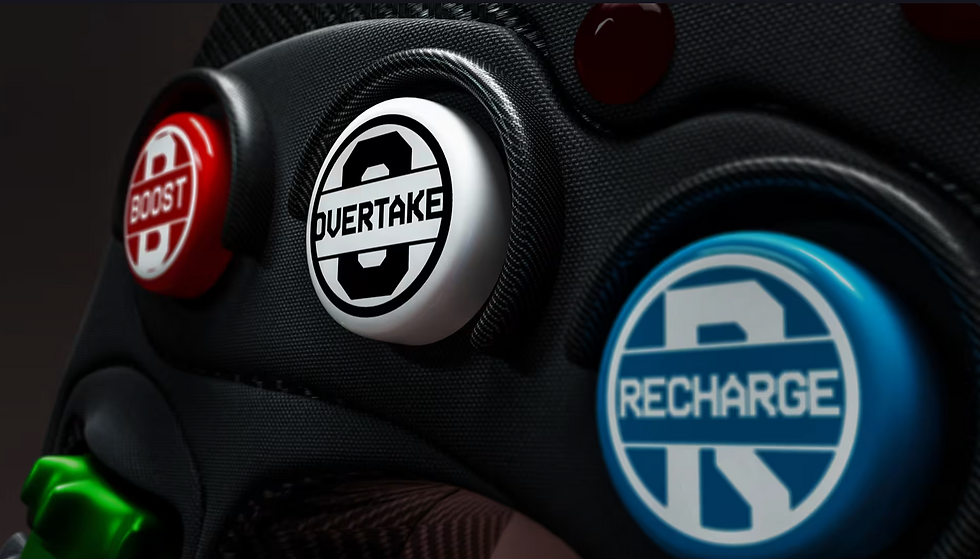
Starting with overtake mode which is only available to drivers hoping to attack and pass the car ahead. Remnants of DRS can be seen in the conditions required to utilise overtake mode as you must be within a second of the car ahead and it can only be used at a specific detection point, similar to DRS zones.
Unlike the requirements for overtake mode, the next technical aid at the disposal of the drivers does not require the same conditions. For the boost button, designed for battery deployment either for attack or defence, this is entirely down to the discretion of the drivers.
The most visible aspect of DRS was the opening and closing of the rear wing; technically, with the introduction and implementation of active aero, this will remain on F1 cars in 2026, but not as an overtaking aid. Additionally, the front wing angle of attack will also be adjustable.
Drivers, on certain parts of the track, will be able to activate low drag mode to help their speed through X Mode, for the straights, and Z Mode, for braking zones and corners. Unlike overtake mode, active aero will be at the disposal of all drivers throughout the entirety of a session.

This revised aerodynamics package perhaps sits at the pinnacle of the new regulations, reiterating the importance of harmony between the driver and their machinery. It is a car design that has been many years in the making to address some of the biggest concerns of F1 fans, journalists and drivers alike.
To combat the argument that an overreliance on DRS was removing the art of wheel-to-wheel racing and overtaking, the increased amount of driver decision about when to use the new technical aids given to them has brought driver ability back into the spotlight.
Likewise, the variety of strategies that can be chosen has reiterated the importance of the team unit from driver’s race engineers to the strategy teams on track and back in the factories as well.
Expectations
It has often been expected that specific teams will dominate eras however it seems that all 11 teams are approaching the start of the 2026 season with optimism and uncertainty.
While McLaren stood ahead of the rest of the grid in 2024 and 2025, a testament to their development, there is no telling whether the reigning world champions will be able to add to their championship tally.
Additionally, Mercedes who were forced to endure their toughest years during the ground-effects era, will be hoping that the return to flatter floors will be the key to unlocking championship success once again.
Their engine, which is rumoured to be ahead of performance compared to the other providers, might just be the thing to set them apart in 2026.

There is an air of uncertainty for all the teams as they get closer to the start of the season, with many team principals suggesting that the true pecking order won’t be known until a few race weekends have gone by.
With these new regulations theoretically putting the entire grid on level ground, the excitement of this new era is palpable and the countdown to Melbourne is on.







Ohh love the article and fascinating breakdown the shift to lighter, narrower cars and the end of ground effects will really shake things up. Logistics must be a nightmare for teams transporting all this new kit. If you ever need to track shipments or sort out transport issues, having the JB Hunt customer service number handy can save a lot of time.