
JM Correa interview: The pursuit of triumph from tragedy


You come away awe-inspired. Blown away by the resilience, after all he has been through.
Of course, Juan Manuel Correa would have rathered it not panned out quite this way - for his story to have not been one of remarkable fortitude through immense tragedy. But for all he has endured, having so greatly embraced such an incomprehensible challenge as an irreplaceable opportunity for growth, to be fighting for the top again is utterly incredible.
On 31st August 2019, the day his life changed forever, it felt impossible.
Racing in Formula 2 at Circuit de Spa-Francorchamps, Correa was involved in a serious crash which tragically claimed the life of fellow competitor Anthoine Hubert. Correa himself was left with life-threatening injuries and, one week after the accident, was placed into an induced coma after being moved from a Belgian hospital in Lèige over to London.
As a result of the high-speed impact, Correa had fallen into acute respiratory failure. But mercifully, after two weeks, he was removed from the coma, at which point his condition was revised from critical to serious. Though the road ahead was long and unclear.
Once his lungs had regained the strength to withstand a procedure, attention turned to saving his legs, particularly the right, the lower part of which had been most severely injured in the accident. This commenced with an initial 17-hour reconstructive surgery - the beginning of a year and beyond constantly in and out of operating theatres.
And even as uncertainty surrounding his legs fortunately dissipated with those many procedures and the passing weeks, a painstaking period ensued.
“It was a long and arduous time,” Correa recalls. “I was completely out of racing for about a year-and-a-half, out of which a year of that was spent in a wheelchair and around 28 surgeries to rebuild my legs. That gives you an idea of how serious the injuries were.

“I had to rebuild my right leg; suffered a lot of damage on the left as well. There were other areas that needed recovery: my lungs had damage, I broke my back. When I came out of the coma, I had lost about 25-30 kilograms of muscle. I had to completely rebuild my body.
“It’s shaped my career and my life over the last five years.”
It is approaching seven years since the accident as Correa sits down with DIVEBOMB on a late-April afternoon to reflect on a staggering journey. He is 26 years old now - turning 27 in early August - and, incredibly, is in a sixth season back racing. But as a driver and human being, he is markedly different to that then-20-year-old with the racing world at his feet.
Over the years, he has come to embrace the hand he has been dealt - to the point where he would be almost unwilling to erase large parts of the experience.
“It changed my approach to life and how I view everything. When you have something that serious, it really puts everything into perspective for you. And that’s been a positive change for me. I’m definitely not the same person I was before the crash. It’s made me grow a lot.”
It may beggar belief for a mere mortal, but even in those darkest days, there was no doubt in Correa’s mind that he wanted to race again. Back in 2019 and 2020, many will have rendered this as some fanciful delusion, given the scars both mental and physical from the trauma of the accident. And maybe, at least at points, it was just that.
But it gave Correa a necessary, far-fetched task to tackle. It drove him. In the bleak depths of his recovery, the target of racing again served him something to fight for.

“I love it. I have a strong passion for the sport, for driving,” he rallies. “It makes me feel alive. I love the rush. I love the competitiveness of it. I sacrificed most of my life to be in the position that I am so I didn’t want to give that up so easily.
“I needed a sort of almost impossible challenge because I knew it was going to be long and it was going to be hard - and it was longer and harder than even I expected it. So having that really crazy goal of racing again, which most people didn’t think was possible, gave me motivation to push through the recovery.”
There were times where, medically, a return was cast into serious doubt. After his leg reconstructions, Correa essentially had to learn to walk again, let alone race. But any indecision scarcely came from Correa himself. He was adamant he was not to be barred from continuing to chase his lifelong dream.
“Once I made the decision, which happened pretty early on, it was just a one-way train - at least mentally - to getting back in a car. There were some speed bumps along the way. At some point, it felt like maybe it’s not going to be physically possible.
“But I never stopped believing and I never really considered giving up.”
The timing of a return was a challenge in itself, much of which was reluctantly out of his hands. Of course, the 2020 season was never in the equation, but to Correa, the following term - starting what would be a year-and-a-half after the accident - felt attainable.
“I didn’t want to lose another full season. I felt like if I lost another full season, it was going to be harder to get a seat again, I was just going to be forgotten.”
And that notion was overpowering. On 1st February 2021 - 520 days after the accident - Correa’s stunning racing comeback was announced, signing with ART Grand Prix for the Formula 3 campaign. Only 17 months on from such a life-altering ordeal, even a glimmer of possibility was enough for him to leap at the chance to return.

“Was it the right call or not? Difficult to say,” he reflects. “Who knows what would have happened? It was definitely a tough season and I wasn’t at 100 percent. But I think it was probably a necessary part of my comeback.
“Once I get something in my head, it’s very difficult to not go through with it. And I just committed to it and committed early. It was like: ‘We’re doing this one way or another.’”
But still, Correa was not leading anything close to a normal life outside of the car - far from it - so it took a Herculean effort and adjustment aplenty to get back in the saddle when he did.
“I was still in a wheelchair at certain points and using crutches, had a cane. Physically, I was still in a pretty bad shape. I lost a lot of movement in my ankle; up to this day, I’m never gaining that movement back.
“So I had to get used to a much shorter throttle travel. I was struggling a lot with hitting the brake pressure because my left leg had a lot of nerve damage and it was weak. General fitness level, I wasn’t where I needed to be because I had spent a year in a wheelchair. So there were a lot of things that I had to work around.
“And then also, I was still spending most of my time day to day doing rehab, doing surgeries, continuing the whole recovery process. So it was difficult to get momentum.”
Many of his natural racing instincts, which had earned him two podiums in his rookie F2 season in 2019, had deteriorated. Adding to the physical adjustments required, this presented a mental barrier to breach too.
“I spent so long completely disconnected from racing that I lost a lot of that feel, that raw speed that I had. And it took a little while to get it back,” he explains. “It was tough because initially I found myself not being able to do the things that I could do before.

“Speed-wise, feeling-wise, it all felt a little foreign to me. And that was psychologically really hard. I gained a lot more respect for racing drivers and for the level that I myself was in before the accident than I ever had before. Because before, it felt natural, like quote unquote ‘easy’. I was coming from season after season and 10-15 years of doing that non-stop.
“So when I restarted, everything felt so difficult to do that I was like: ‘Oh shoot, this is actually going to take a lot more than just being physically ready. I need to train my cognitive abilities. I need to train my feeling, need to get some momentum going again.’”
While getting back in the car alone was a big part of the battle in which Correa had succeeded, as much as the first year was a designated rebuilding year, he still became swamped by what he was able to - or not - deliver or feel in the car.
The belief in abundance from before the accident was sternly tested because, ever-ambitious, he was aiming higher than simply being back racing.
“The big challenge to find confidence, that was the hardest part. You lose confidence. In a sport like this, confidence is very key. In any sport, confidence is one of the most important aspects of performing - self-belief, not feeling the need to overcompensate.
“When you feel like you’re doing enough and you’re good enough, it’s easier to perform. And that was definitely not the way I felt for the first few years. I was in a constant battle with myself of like: ‘How do I keep improving but, at the same time, build some sort of confidence and a working system within myself to create progress?’
“It tested me in a lot of ways. It really tested my growth, like: ‘Okay, you’ve grown so much as a person, but how do you face this next part of the challenge?’ That taught me a lot.”

Still, results-wise, relatively speaking, Correa impressed at the outset in his F3 return, finishing a low of 16th and achieving an impressive four points-scoring results - a high of sixth - in his first seven races back, including on his return weekend in Barcelona.
He did not score again until the final weekend of the 2021 season, though he returned for a second year and continued making some strides forward. His first pair of top fives came in a four-race points-scoring run in an encouraging start to 2022, before the sprint race in the penultimate round at Circuit Zandvoort crowned his return to the podium.
By the end of the year - finishing a creditable 13th in the F3 standings, despite missing the Imola weekend with a foot fracture - he was confirmed for the F2 season finale in Abu Dhabi with Van Amersfoort Racing (VAR). A full-circle moment.
Correa ultimately signed full-time with the VAR team in F2 for 2023, scoring points six times, including in the opening feature race in Bahrain and a season-best fourth in the Austria sprint. But it was with the DAMS outfit in 2024 where, despite a testing year, the greatest success of his comeback fell, finishing third in the Barcelona feature.
Something not achieved before the accident, it was Correa’s first rostrum in the headline race of an F2 weekend. New ground broken. Yet while podiums were grand achievements in the context of his comeback, lofty expectations of himself left a hollow feeling.
“In the moment, it feels good,” Correa admits. “But I still haven’t really felt in any of those podiums that I am at 100 percent of where I can be. And maybe that’s a bit the competitive racing-driver mindset, like: ‘It’s never enough.’ I’m still chasing that.
“That’s my motivation now. I know how good I am; I know what I can do. And the fact I’ve been competitive and got podiums is good - but it can be so much better. So the work never stops and I’m still chasing a higher level every time I get in the car.”

Come the end of 2024, Correa hit a crossroads. By the final round of the F2 season, having not had the overall second season he had targeted and having lost a key sponsor, he was phased out and replaced at DAMS by F3 prospect Dino Beganovic.
This prompted Correa to begin searching elsewhere. In the past, there was some single-mindedness in pursuit of Formula One, but he has come to broaden his horizons.
“I realised during the recovery that Formula One is not everything. So when I came back, I felt a little bit more freedom of knowing that I can be fulfilled and happy in other categories and aspects of racing. I went up the ranks in Europe towards Formula One so everything was pointing in only one direction for me. And this experience opened up my mind.
“So having that accident experience, that growth, changed a little bit my goals and my aspirations. And [after 2024] I pivoted my life and my career towards the US because it seemed like it made a little more sense on the professional but also the personal side.”
Correa’s family have lived in Miami since 2011 and he underwent much of his recovery in the United States, where many of his friends reside too. From a racing perspective, savvy on the sport’s commercial side, American-Ecuadorian national Correa saw “business potential” in moving back stateside, where there are a number of attractive racing opportunities.
Having raced twice in the European Le Mans Series in 2022 - winning the Portimão finale with PREMA Racing - then completing a part-season in the World Endurance Championship in the same LMP2 class in 2023, the IMSA SportsCar Championship appealed. And naturally, a single-seater racer by trade, the IndyCar path was enticing too.
“I really like IndyCar and IMSA,” Correa says. “Those were two categories I had been following already while being in Europe and I had a desire to try. But when I moved back here end of 2024, I didn’t really have a plan of what I was going to do.”

Initially after moving back stateside for 2025, Correa started coaching some younger drivers down the IndyCar ladder, in the meantime securing a deal to race LMP2s with United Autosports for IMSA’s endurance rounds from the Sebring 12 Hours onwards.
But most crucially, through his coaching, Correa met Mike Maurini, president of HMD Motorsports, and it so happened that a vacancy had emerged within their nine-car Indy NXT squad. So conversations quickly ensued and Correa took his chance to return to open-wheel racing with little hesitation, running a nine-race programme with HMD.
“I was open to doing Indy NXT because there are a lot of aspects you can learn that are really useful in IndyCar,” he assesses. “It’s funny how I didn’t plan it but destiny just brought me back on the ladder towards IndyCar. Everything happens for a reason. Maybe it’s meant to be.
“[Sportscars have] been great and definitely a potential career path for me in the future - I’m not closing the doors to that. However, I also love single-seaters. I love being the only driver in the car, the intensity you get from that. And I love IndyCar.”
Correa did not always have ample time to pay serious attention to IndyCar while based in Europe, though his interest was piqued by a trip to the Indianapolis 500 in the early 2010s.
“This is insane!” he recalls thinking.
In recent years, he has seen many of his peers from the F1 ladder take that IndyCar route - either moving directly or, increasingly popularly, developing in Indy NXT. And Correa has quickly come to understand why so many have been so captivated.
“As a racing product, it’s potentially the best one out there right now. There’s not a single driver that tries IndyCar and doesn’t fall in love with it. It’s very competitive racing. It’s hard racing. It’s raw. Cars are really tricky to drive but a lot of fun.

“What F1 is going through right now, as a driver that doesn’t look super fun [or] so appealing. Whereas IndyCar, you see it and it’s like: ‘Yeah, that’s crazy.’ You can make a difference.
“And then also getting an opportunity in Europe is quite difficult. There’s so much talent that hasn’t got to F1. [There are] amazing drivers and they probably have the same level [as] most of the F1 drivers on the grid right now.”
Correa promptly made his mark on the IndyCar ladder, debuting in last May’s Indianapolis road course doubleheader and seizing a maiden podium on the Detroit streets the following event. The adaptation was made tougher by the absence of pre-season testing, but encouraged by his stint of races, he was immediately keen to return for a complete season.
So through his relationship with HMD, he landed a drive with their new allies, Cusick Morgan Motorsports - a team fresh to the championship - for 2026. It was ideal for both parties.
“They were looking for a lead driver with experience that could help build the programme,” he suggests. “They thought I was a good fit - and they were a good fit for me and what I’m trying to do, which is establish myself here and put myself in a position to get a shot at IndyCar. It has been great, sportingly speaking but also commercially.”
After four races in 2026, Correa is sixth in the standings, peaking with a fourth place at Arlington and amassing a further two top 10s and no result worse than 11th. It has been a solid start, but should qualifying displays improve, there is evidence of a much higher ceiling.
“I want to win races,” he insists. “I want to dominate. Domination I don’t think is going to happen for anybody this year but I want to win races, get podiums for the team and put myself as a clear contender for an IndyCar seat.
“There will be seats that open up next year. I know that all the IndyCar teams are looking at us and finding the next guys to get a shot. I want to be one of those guys.”

Indeed, Correa is now all-in on seeking a future in IndyCar. A big part of that is embracing oval racing, surrounding which there is a perception from the European racing world that the discipline is unduly dangerous. But Correa, as well-versed on the sport’s risks as anyone, does not mind - maybe inexplicably so to many a non-racer, given all he has been through.
“It is dangerous - there’s no way to sugarcoat that,” he concedes. “The first time I drove an oval, after my first five laps, I came in, I was like: ‘This is crazy. Who came up with this?’
“But the more laps you do and you start to get in the groove, the adrenaline you feel, the rush, it’s so addictive. It’s a lot of fun. It’s one of those activities that feels really sketchy, but when you come out on the other side, you’re like: ‘Okay, I want to do that again.’
“I’m a race car driver; what we do is risky. I know that better than most, that things can go wrong. But it’s part of the game.”
Right now, more so than at any point since his accident, Correa is thoroughly enjoying his racing again. Part of that comes with the growing comfort with every season that passes, but now back stateside, he is immersed in an environment in which he can thrive too.
“I’m really happy here. I wouldn’t change anything about my career, in my life, right now. Well, that’s not true… I want to be in IndyCar. But I’m enjoying this process a lot.
“So far, it’s been one of the most fun seasons for me, where I am excited every time to go to the track. In F2, I loved the driving part; I hated most of the things apart from that. There were many things I didn’t enjoy. It didn’t fit with my personality.”

He now sees a clear path to the top again, too - as vivid as that route has been since he made his F1 test debut with Alfa Romeo, for whom he was a development driver, exactly one week before the fateful day at Spa in 2019.
His confidence and belief has started to return, all alongside the same endearing effervescence of character that has, impressively, seldom wavered.
“It’s been a long process of recovering physically but also rebuilding my career, getting good opportunities again, getting some momentum going. It’s been hard but I feel like now I’m at a point where I’m back in a very high level.
“I like the way I’m performing, especially this year. I feel good. I feel like I’m extracting the best out of myself. Maybe not quite 100 percent yet but getting definitely closer than I’ve been since the accident. It’s just constant, non-stop work.”
Regardless of where the coming years lead Correa, from such unthinkable tragedy has already come an altogether triumphant tale of overcoming inconceivable adversity.
For him to simply be leading a regular life, let alone gunning for the peak of racing’s harsh mountain again, leaves you in awe. And for that, Juan Manuel Correa - ‘JM’, if you like, in his new stateside chapter - is outright extraordinary.


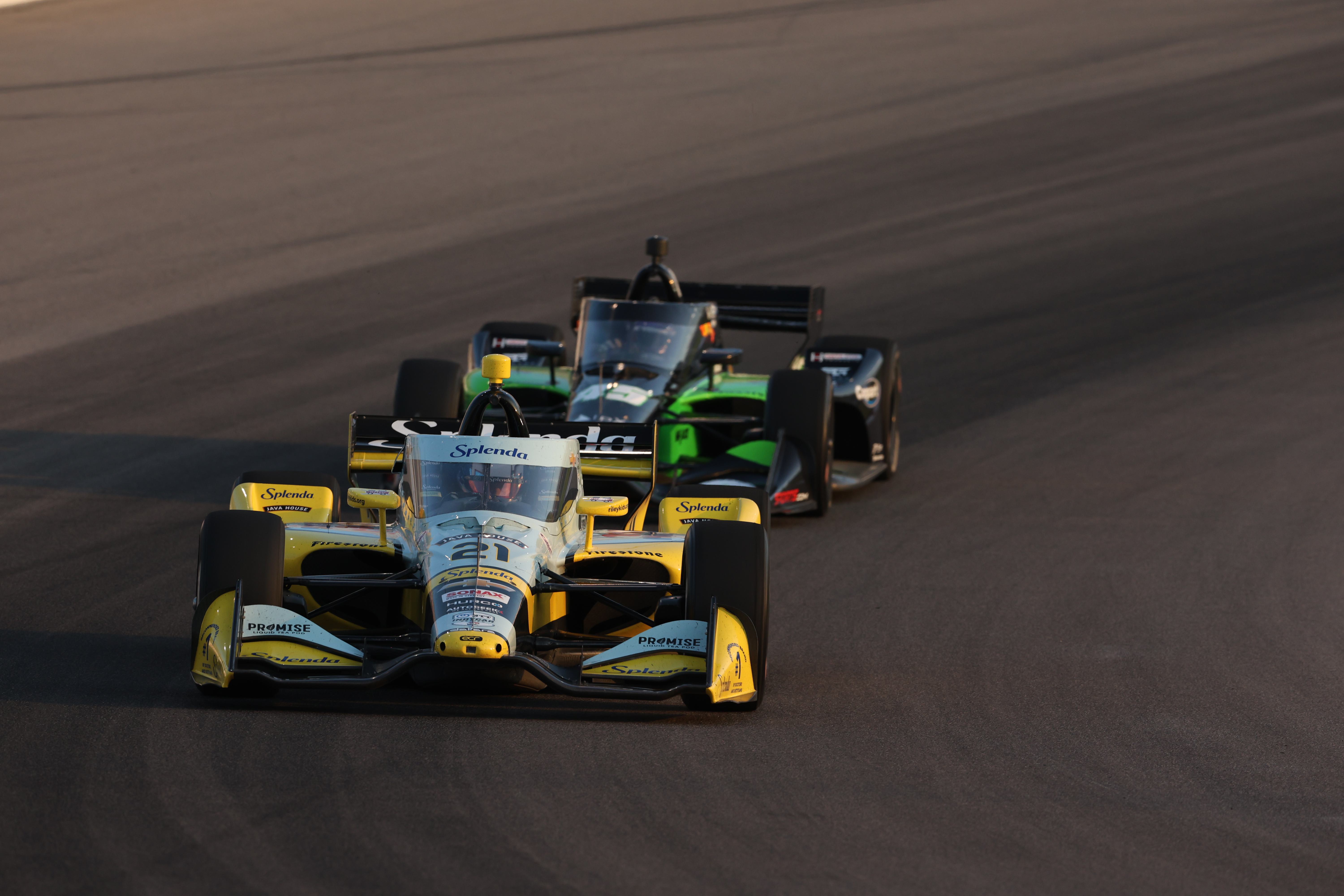


On August 31, 2019, JM Correa faced a life-altering crash at Spa-Francorchamps, a moment that seemed insurmountable. It's inspiring to see how he turned that tragedy into a story of resilience, fighting through 28 surgeries and a long recovery to return to racing. His journey makes me think about creating unique superhero names that could embody such strength, like those from a superhero name generator.
https://imagetranslateai.org/product-image-translator thanks for your share bro
This is a very helpful and informative article. playfy tv app
The shift from "critical" to "serious" after he woke feels like the first quiet exhale in a story that holds its breath for pages. I also ended up opening Presidente Supermarkets weekly ad afterward because it carries the same thread a little further.
This is a very helpful and informative article. Testing Methodologies