
McLaren Mid-Season Review: The rise and fall of champions


As we prepare to head into the second half of the 2026 Formula One season after a lengthy summer break, our F1 writers take you through the state of play with each team on the grid. After dominating the grid for the past two seasons, McLaren entered 2026 with a target on their backs. But with disaster striking early and continuing to rear its ugly head across rounds, it has become evident that things won’t be as simple for the Papaya outfit this year as it has been in the past.
McLaren went into the new era with a rather familiar lineup; the pairing of Lando Norris and Oscar Piastri a constant that has definitely delivered for them in the past. All eyes were on Norris early, as he won the Drivers’ title last year, and conversation around Piastri’s third-place finish left many wondering if the teammate battle would carry on into this year’s new regulatory era.
Unfortunately, with new regulations come new challenges, even for teams that have proven to be strong in the past. For McLaren, the biggest challenge has arguably been adapting to a regulation set that has completely shaken up the competitive order.
After spending two seasons developing a car that consistently extracted performance from the previous generation of regulations, the team entered 2026 having to start from scratch. The MCL40 may carry the expectations of a championship-winning operation, but the strengths that made its predecessors so competitive have not automatically transferred into the new era.
How has McLaren fared so far?
At the midway point in the 2026 season, McLaren find themselves sitting third in the Constructors’ Championship. To some, that may sound like a decent mark, but for back-to-back champions, this position is not ideal. They trail Mercedes and Ferrari, with the teams ahead recording multiple race wins, superior to McLaren’s single win on the season’s last round in Hungary.

In terms of the car, McLaren have significantly struggled to reach the performance level they have set in previous years. The highly anticipated MCL40 has had multiple technical issues so far, including a downforce deficit to other challengers, a disadvantage in tyres, and concerns with reliability. Piastri did not start the first two races of the season, and his teammate Norris has also suffered a DNS, as well as multiple DNFs and mechanical issues across almost every session so far. Norris has also used all of his allotted battery components for the season, and has already had to serve a 10-place grid penalty as a result.
Even with all the issues, though, not everything has been bad for the reigning champions. There have been a few notable performances sprinkled in the season: a few podiums, along with a sprint and Grand Prix win. On the few weekends that reliability has not been an impeding factor, both Norris and Piastri have respectively delivered performances that show signs of life and hope in the McLaren outfit.
In the last race before the summer break, Norris proved why he was the reigning world champion, snatching pole position from the Mercedes pairing and finishing on the top step in the Hungarian Grand Prix.
Drivers’ Head-to-Head Performance
Norris and Piastri enter their fourth consecutive season as teammates, the pairing clearly one that McLaren is satisfied with. Notably, Norris leads his teammate 7-4 in Grand Prix qualifying, and sits in fifth place in the Drivers’ Championship with 128 points. Piastri is currently seventh with 92 points.
An interesting aspect of the season has been how differently the two drivers have managed the tricky car. With McLaren no longer providing the fastest challenger, both Norris and Piastri have had to find ways to extract pace and performance in different ways. For Norris, it seems that he has been able to extract more from the MCL40 when the margins are particularly small. With a sprint victory in Miami and a first-place finish in Hungary, he has certainly shown why he’s the reigning world champion.

On Piastri’s side, the situation has been complicated by his early absence from the championship. Missing the opening two races immediately put him on the back foot, and reliability problems have only further interrupted his attempts to build momentum. Even still, when the car has been competitive, Piastri has delivered results that suggest the gap between him and his teammate may not be as large as it seems.
Despite not starting the first two Grands Prix of the season, Piastri achieved a second-place finish on his first completed race in Japan. Furthermore, the Australian has seen the podium on a handful of occasions, but reliability issues and bad luck have overshadowed those runs. Notably, last round in Hungary, Piastri was battling his teammate for the race win, only to have contact with Carlos Sainz’ Williams, and ultimately retire from a gearbox issue.
Best Moments
Without a doubt, McLaren will deem the Hungarian Grand Prix as one of their season highlights. Ahead of his win, Norris had a wonderful weekend from start to finish, with his pole-worthy qualifying lap making him the first driver outside of the Mercedes pairing to be on pole in 2026. Of course, the race win was the cherry on top, but it’s important to note how the pace of the MCL40 truly shone that Sunday. Both McLaren drivers showed the strongest pace they’ve had all season, and finally were back to the familiarity of battling each other at the front for a race win.
More significantly, Hungary provided McLaren with something they had been missing for much of the season: confirmation that the pace was not completely gone.
The team had spent much of 2026 trying to understand whether its struggles were a temporary consequence of the regulation changes or a fundamental issue with the MCL40. Norris’ performance suggested there may still be a competitive foundation underneath the reliability and performance problems.

Aside from Hungary, there were still other highlight-worthy moments for McLaren. Norris’ sprint win in Miami made him the first driver outside of the Mercedes duo to be in first position, and Piastri’s second-place finish in Suzuka showed the first signs of competitiveness in the MCL40. His strong pace was an early indication of what McLaren had been working on between this season and last, and additionally showed a car that could challenge the front-runners when allowed to do so.
Worst Moments
A DNF is bad enough, but not even getting to see the lights is another type of sting for any team. For McLaren, that sting was felt early in the season, when both Norris and Piastri were unable to start the Chinese Grand Prix.
The significance of the double DNS went beyond simply losing two cars from the starting grid. China became an early warning sign that reliability would become one of the defining narratives of McLaren’s campaign, and losing both cars meant that the team walked away with no opportunity to score points or collect valuable data.
The unreliability of the Mercedes power unit has proven to be a problem for multiple teams, including Mercedes itself. Aside from that, considering how early the Chinese Grand Prix is in the season (only the second race on the 2026 race calendar) it was striking to have such substantial issues so early on.
After China, the reliability issues continued rather than improving, with both drivers facing DNFs as a result of those technicalities. Even though Hungary was a step up, it is still important to note that Norris has already utilised his allotted battery components to remedy his race retirements, so he will be served grid penalties if reliability failures force him into using an additional component.

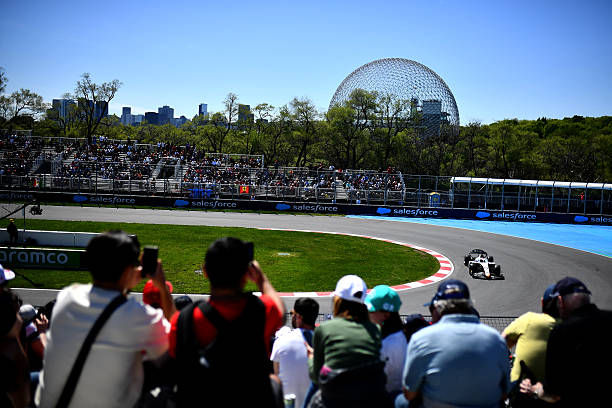
Another gut punch came in Canada, in the form of a troublesome tyre call. Ahead of the Canadian Grand Prix, McLaren opted to start Norris and Piastri on intermediate tyres, with the camp believing that the tyre selection would benefit their drivers in the slippery conditions.
Unfortunately, it ended up being a relatively dry race, and both drivers were quick to question the call as soon as they completed their first lap around the tragically dry circuit. The call would end up costing McLaren the race, with both drivers finding the tyre disadvantage too great to surpass.
The Canadian weekend also raised concerns over McLaren’s decision-making during different conditions. The intermediate tyre gamble was somewhat understandable given the weather uncertainty, but judging by the frustration of the drivers on the radio, the call had not been very popular amongst them.
Furthermore, it was an example of how McLaren’s difficult season stemmed from more than just a single weakness. When it comes to fighting for a championship title, mechanical problems are detrimental enough without bad strategy calls adding fuel to the flames.
Looking Ahead
As we head into the final half of the season, McLaren will be looking to play some serious catch-up. Moving up from third in the Constructors’ standings will prove to be difficult, especially with the large points deficit between them, Ferrari, and Mercedes ahead.
For now, McLaren will look to continue making steps towards that ultimate goal. Hungary was encouraging, but they will need to prove that a performance like that can be a pattern versus a one-and-done. Additionally, and most crucially, the team will be looking to master the Mercedes power unit that has caused them many issues lately.
McLaren’s championship defence may be slipping away, but the season is far from defined. Once they begin to iron out those technical issues, the reigning champions will look to reclaim their spot towards the top of the grid.
Edited by Meghana Sree







Comments