
Step-by-step: CLX Motorsport’s path from Le Mans Cup to LMP2

DIVEBOMB spoke to Théo Lopez Perez, the Le Mans Cup Team Manager at CLX Motorsport, where he shared insights into the team's operations and the CLX Motorsport pathway. This interview is the first of a five-part LMP3 series with the team.
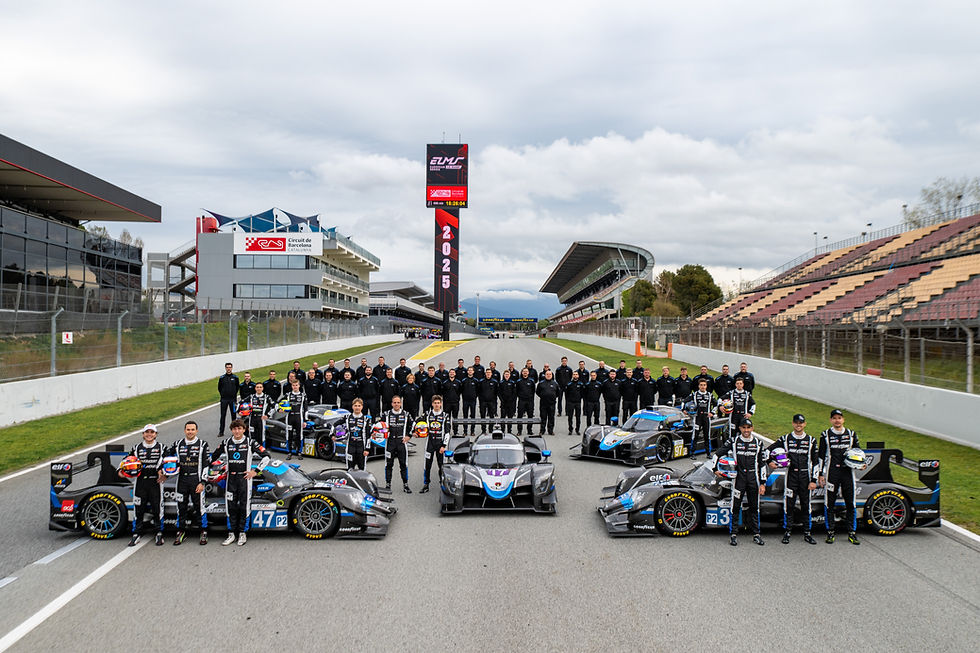
Behind-the-scenes before the next race
In his role overseeing the team’s Le Mans Cup efforts, Lopez Perez explained: "As soon as we come back from one event, the preparation for the next event starts immediately.
"So, from the engineer's point [of view], this is the time for debrief."
Following the initial debrief, engineers conduct data reviews and provide crucial driver feedback to finalise lessons from the previous event and prepare for the next. Simultaneously, the race strategy is refined while mechanics begin work to optimise the car.
In terms of logistics and coordination, Lopez Perez explained that the management team prepares hotels, transports, and activities at least two months in advance. He stressed the importance of having a calm and well-organised environment before each race.

The drivers work closely with Ghislain Boetti, a dedicated driver coach who brings a wealth of experience to the team as both a former single-seater driver and a former team owner in Formula Renault 2.0 and 3.5.
Drawing on his experience, Boetti helps the crew prepare for the specific demands of the track. Additionally, they also have a driving book to aid their preparations for the track and objectives.
"Our goal is clear: it's to support our young drivers as much as possible on every level.
"I won't go too much into details because we also keep work secrets: the CLX touch."
The synergy between the two LMP3 programmes
CLX engineers collaborate closely on the entire programme to ensure data and setup knowledge is shared across both series.
Utilising their three-car programme, CLX engineers regularly share insights from the earlier Le Mans Cup race with the No.17 ELMS entry. Lopez Perez emphasised that this collaborative environment is a key strength, as everyone is focused on achieving the same goal.
"This year, I really felt that the LMP3 project was going in the same direction.
"So, we are really proud of that. The ELMS guys came to help us several times when things were more difficult in the Le Mans Cup."

The CLX Motorsport pathway
Regarding the Le Mans Cup, Lopez Perez asserted that it is the first real step to comprehend endurance racing as a whole, from the technical side to the sporting format and the business side of the sport.
"You have to do this step before the ELMS or the LMP2 for young drivers.
"I think it's the first real step to understand endurance racing as a whole. So, the car, the regulation, the race formats, and also the sports business of this side of the motorsport. You have to understand the sports business, I think, for the parents and for the driver."
Lopez Perez expressed his gratitude for having a supportive promoter committed to young driver development. He highlighted that the new LMP3 Pro (LMP3) category introduced this season has been crucial in raising the level of competition for young crews.
"I think [LMP3] really pushed the level higher this year.
"So, for all the drivers, for all the young drivers on their own development, for example, this year with Pierre-Alexandre Provost or Alvise Rodella, I think the level is higher.
Lopez Perez stressed that the endurance racing hierarchy is designed to be approached step by step. He suggested that drivers graduating from Formula 4 should start in the LMP3 class in Le Mans Cup before progressing to the LMP3 class in ELMS, and finally, LMP2.

Adrien Closmenil is an example of this strategy: the LMP2-bound driver completed one season in the Le Mans Cup before moving to LMP3 in the ELMS. The team's ultimate goal for all young drivers is to follow a path similar to that of Malthe Jakobsen, who currently drives for Peugeot in the FIA World Endurance Championship (WEC).
The Danish driver spent a year competing in both the Le Mans Cup and the ELMS LMP3 category before spending two seasons in the team's LMP2 programme, first in Pro-Am in 2023, followed by a Pro campaign in 2024, before his eventual graduation to a Hypercar seat with Peugeot.
"It's very crucial not to skip the step and to build things properly. So, LMP3 first, then LMP2, and after that, if it's possible, Hypercar."
Helping the drivers achieve their potential
As CLX's lineup consists of young drivers eager to achieve their potential, the team approached their development holistically.
Driver coach Boetti holds a debrief with the drivers after each session. The drivers share their feedback from the runs and review the data they have gathered. Following this, he holds a subsequent debrief with the team's engineers to integrate the driver input with the technical findings.
Therefore, following each session, the team's technical experts must diagnose the root cause of the drivers' feedback: "Is it a minor setup change or a more significant driving issue that requires immediate attention?"
Lopez Perez said this strategy works because it is clearer and more efficient.
"It's a clearer and more efficient way for us to work in the same direction between Ghislain, the drivers and the engineers.
"So, during the season, we follow the driver on every side: human side, technical side, sporting side and driving side."
The highs and lows of the LMP3 programme in 2025
When asked about his favourite moments of 2025, Lopez Perez cited the two 1–2 finishes in Barcelona and Le Castellet for the Le Mans Cup entries. Equally memorable was the dominance of the No.17 car, which competes in ELMS, winning five out of six races.
"Winning the [LMP3 ELMS] title at Silverstone was the perfect reward for all this work and really defined the season.
"I think the young drivers we supported this year did a very good job overall. The team played a big role in that.
"There were very few mistakes during the season, on the No.17 car, where the group working on this car did an excellent job, both operationally and strategically. So, I think it's really important to notice that."

Lopez Perez did not shy away from discussing the contrast in challenges faced by the Le Mans Cup entries compared to the dominant ELMS entry. The Le Mans Cup cars notably faced a challenging mid-season, starting with the Road to Le Mans races and continuing through Spa-Francorchamps.
The team entered three cars for the Road to Le Mans races. They won the first race with the No.37 car, their ELMS entry. However, the Cup cars, No.87 and No.97, endured difficult weekends marred by poor qualifying, costly mistakes, and race incidents.
The challenging pattern continued at Spa, a result that ultimately cost the team the championship title. The No.87 car secured third place at Silverstone, leading to a fourth-place finish in the overall championship. Meanwhile, the No.97 car finished sixth, just a single point behind the No.16 Team Virage entry.
"So, it's really complicated for us to stay focused.
"But in Silverstone, we came back to the front. So, yeah, I'm really proud of the guys, drivers and staff for that."
The 2025 season confirmed CLX's two-pronged strategy with titles in the ELMS and nurturing talent through the demanding Le Mans Cup environment. The team is focused not just on today's podiums, but on developing tomorrow's star drivers.






Comments