
The 2026 Formula One engine: A secret weapon or Achilles' heel?


The new 2026 Formula One regulations have brought in a host of technical and mechanical advancements; these changes can be best seen in the new engine configuration. Utilising a ground-breaking 50/50 split between electrical energy and the Internal Combustion Engine [ICE], the 2026 engine has been the main source of performance in F1.
Yet, the engine has not been the source of success for all 11 teams on the grid. While some teams would regard their 2026 engine as a secret weapon that allows them to fight at the front, others cannot relate with this assessment.
The three new engine manufacturers — Ford, Honda and Audi — joining the grid in 2026, have experienced their own set of issues.
Often, at the start of a new regulatory era, the key concerns for engine manufacturers are related to two areas: performance and reliability. The performance and reliability of all five engine producers, who also supply engines to the rest of the grid, have varied so far this season.

For Mercedes and Ferrari, two of the longest-standing and experienced engine producers on the current grid, the 2026 engine has been an opportunity to demonstrate their ability to become winners once again.
For both teams, the ground-effect era was one of limited success with Mercedes failing to get close to any titles and Ferrari only finishing runners-up in the World Constructors' Championship in 2022 and 2024.
With these new regulations, both teams have found themselves at the front and, to a large extent, with only each other to keep company. For both Mercedes and Ferrari, the start of the season has seen them utilise their power units as secret weapons against the rest of the grid, including their customer teams.
For Mercedes, who have been by and large the fastest car on almost any given circuit so far this season, one of the big talking points about their engine was the loophole engine compression ratio they had implemented.
Although it has now been banned and the effect of this has yet to be seen, there were rumours that it was buying them up to three-tenths a lap on certain tracks such as Montreal where Antonelli crossed the line almost 11 seconds ahead of second-place.
There can be no doubt that the Mercedes is the outright best package on the grid as things currently stand. Even at the Miami Grand Prix where many of the front-running teams such as Ferrari and McLaren brought upgrades and Mercedes ran with their chassis from the start of the season, the teams were still not able to challenge Mercedes out in-front.

Although it seemed as though Ferrari had no answer to the pace of the Mercedes when going wheel-to-wheel, the secret weapon for the Scuderia came into play as soon as the lights went out.
Using a smaller turbocharger compared to their competitors, something that compromises their overall speed, has meant that the team have been having quicker starts than the rest of the grid, especially at the start of the season.
The eight upgrades brought to the Barcelona-Catalunya Grand Prix, where Lewis Hamilton took his first win in red and gave Ferrari their first race win since 2024, proved that the team are moving in the right direction to challenge for more regular race wins.
With Charles Leclerc following up the Barcelona victory with a win in Silverstone, there are plenty of indications that Ferrari are slowly beginning to gain on the pace-setters.
Even if recent race starts have suggested that Ferrari have perhaps lost their outright advantage when the five lights go out, there can be no doubt that developing their engine with the perspective that the race start is the best opportunity to capitalise set the team up in excellent form.
It is to be expected that more experienced engine creators will have a considerable advantage over their less experienced competitors however even experience cannot ward away reliability issues, particularly in a new regulatory era.
This has been clearest for the Silver Arrows who saw George Russell retire from the lead of the race in Montreal and Kimi Antonelli retire whilst challenging for the race win in Barcelona and Silverstone.
Mercedes customer teams have not been immune to reliability concerns either, with McLaren facing the brunt of these issues. Reigning world champion Lando Norris suffered consecutive mechanical DNFs in Montreal and Monaco and for the first time since 2005, McLaren recorded a double DNS [Did Not Start] after separate mechanical issues prohibited both cars taking to the grid in Shanghai.

A new team to join the list of names already building their own engines is Red Bull after having previously worked with Aston Martin, Honda and Renault to provide their engines.
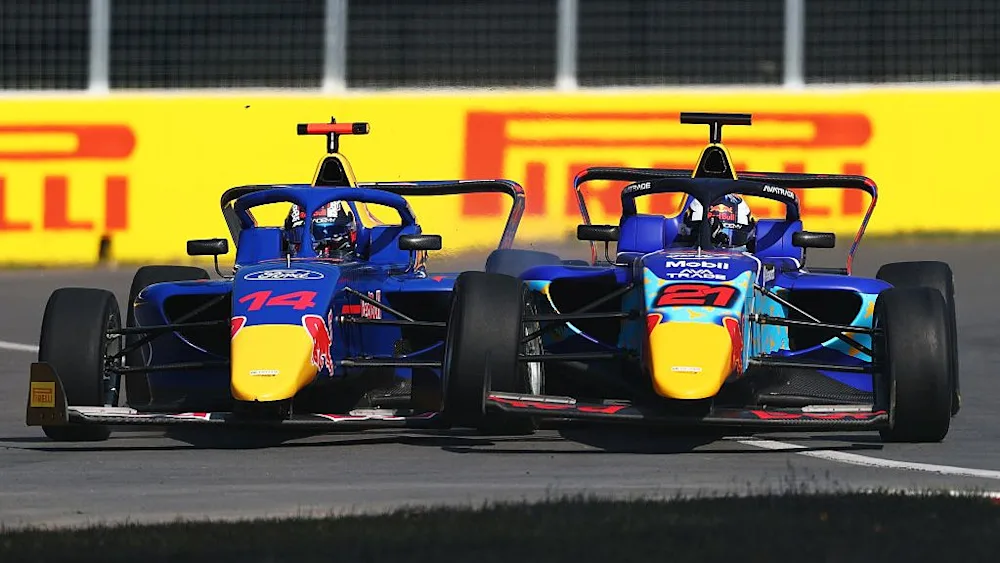
Partnering with the American manufacturer Ford for the first year of a multi-year agreement, Red Bull and their sister team Racing Bulls have both been utilising the jointly-made engine in 2026 to a varying degree of success.
Although Red Bull have not yet won a race, or demonstrated the consistent pace required for a front-running team, it is reported that the fault in the car’s lack of performance is more chassis-lead rather than the engine itself. As expected for a new manufacturer, the team has struggled on the reliability front.
On three separate occasions in China, Monaco and Silverstone, Max Verstappen has recorded a Did Not Finish [DNF]. On the other side of the Red Bull garage, Verstappen’s new teammate for 2026 Isack Hadjar has also endured reliability related issues after he failed to reach the chequered flag in the season opener in Melbourne.
However, in spite of major chassis and engine related issues, the team have managed to secure two podiums so far this season with Verstappen’s second-place finish in Austria and his third-place finish in Canada.
Partnered with Isack Hadjar, both drivers have demonstrated that they are capable of performing however, ensuring that their engine is paired with a well-designed chassis as well as being confident in said engine’s reliability must be their priorities before they consider how to join the battle at the front.

At the other end of the grid, Aston Martin and Audi are some of the most inexperienced engine producers on the grid with Audi producing their own engine for the first time. As a result, the evidence of their engine proving to be their Achilles’ heel can be seen in their lack of on-track performance.
Even more so, it can be seen in the sheer number of power unit and engine related issues that the teams have suffered so far.
Rejoining the grid in 2021 and enjoying brief periods of success, it seems as though Aston Martin have been suffering in spite of their experience. The situation at the team was so dire that it took until the fourth round of the season, the Miami Grand Prix, for both Fernando Alonso and Lance Stroll to finish a Grand Prix.
Throughout 2026 so far, the biggest issue that the team have had to face on the engine front has been the vibrations which have in-turn damaged other components in the car. Shintaro Orihara, Honda’s Trackside General Manager and Chief Engineer confirmed that despite the small glimmers of hope, including a point in Monaco, “there is still a lot of room to improve on our power unit. That’s the next step for us.”

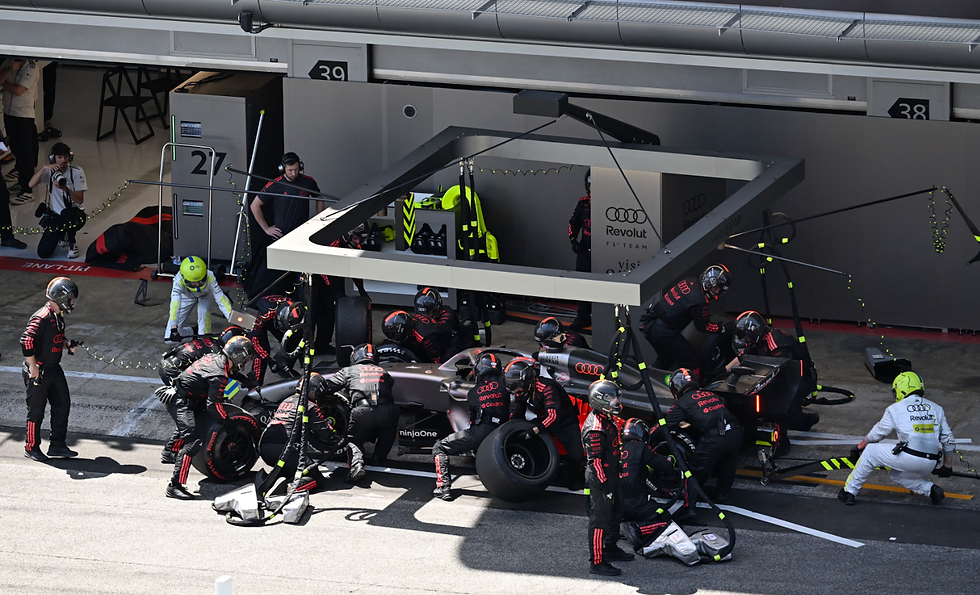
Audi, as a new name and engine provider, had perhaps the dream start to their season after scoring points in their first Grand Prix but since then, things have gone quickly downhill. A handful of issues which have resulted in the team being unable to start races and mechanical retirements have hindered their progress further forward.
With Gabriel Bortoleto and Nico Hülkenberg constantly hovering on the fringes of points in 11th and 12th, there can be no doubt that the R26 has potential especially with the upgrades introduced in Austria.
However, the difference in pace between Audi and the other teams, estimated to be “more than a second — depending on the track — per lap” will be their main challenge to overcome for the rest of 2026 and beyond.
The 2026 engine will no doubt undergo a series of changes as these current regulations continue to be used. Although the results from the first period of ADUO are yet to be revealed, teams such as Ferrari and Audi have already begun to bring upgrades to boost their performance and regulate their reliability.
With the teams constantly learning more about their power units and the relationship in performance between their PUs and the chassis, the development of this generation of cars promises to be one like never seen before.
Edited by Benjamin Crundwell




Comments