
The five youngest championship leaders in Formula One history

Written by Kavi Khandelwal, Edited by Marit Everett
A driver who has only recently been able to legally drive on public roads, who isn’t even allowed to drink the champagne of the podium in most countries now sits at the very top of Formula One’s most unforgiving table: the World Drivers’ Championship.

Kimi Antonelli of Mercedes took the lead of the Drivers’ Championship after his win at the 2026 Japanese Grand Prix. He sits nine points ahead of his veteran teammate, George Russell, who won the season opener at the Australian Grand Prix.
Leading the championship is a profound declaration. It signals a shift, a new paradigm where age is no longer a barrier but a marker of readiness and immediate expectation. In recent years, the age of F1 drivers has been steadily collapsing, and the newest, most extreme example of this trend is Antonelli.
Antonelli has broken records by incorporating himself in the youngest ever pole sitters and grand prix winners of F1. These moments where young drivers take the championship lead, mark crucial inflection points in the sport, signifying when teams trust their talent earlier. This results in drivers arriving more prepared, and the label of “potential” transforms into an immediate demand for results.
Kimi Antonelli (2026, Mercedes)

In 2026, the sport witnessed a teenager leading the world championship for the first time in history. At 19 years, 7 months and 4 days old, Antonelli ascended to the top of the standings. It was a result of a second consecutive win, following his maiden victory in China just a fortnight earlier.
The move by Mercedes to place such a young driver directly into a championship-capable seat sent shockwaves across the grid in 2024. However, the true surprise came with the quick adaptation of the grid to this new reality.
Antonelli leading the table signals that the transition from junior categories to F1 dominance has been fully streamlined. While he remains cautious, noting it is “early days to think about the championship,” his nine-point lead over teammate Russell heading into the unexpected month-long break after the cancellation of the Middle Eastern races confirms he is completely focused.
Lewis Hamilton (2007, McLaren)
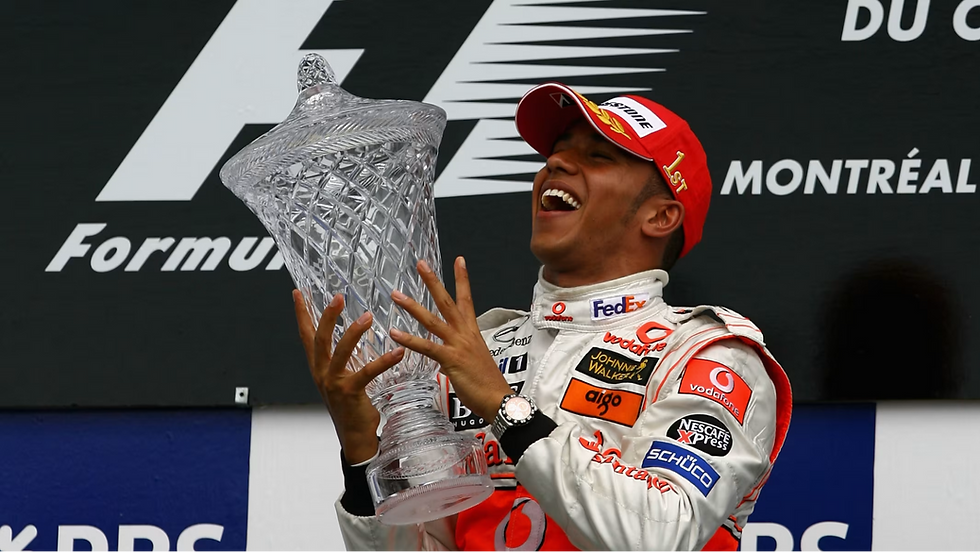
Before the 2026 reshuffle, the benchmark was set by Lewis Hamilton. In 2007, aged 22 years, 4 months and 6 days, Hamilton took the championship lead after finishing second in the Spanish Grand Prix.
It was a season where the traditional “adaptation phase” for rookies simply didn’t exist, especially not for the now seven-time world champion.
Hamilton’s rise was defined by staggering consistency – podiums in every one of his first nine races. This allowed him to seize control of the standings over his two-time world champion teammate, Fernando Alonso.
His leadership signaled that modern preparation could entirely replace veteran experience. Though the internal battle at McLaren led to both drivers losing the title to Kimi Räikkönen by a single point, Hamilton’s debut remains the gold standard for the pinnacle of motorsport.
Bruce McLaren (1960, Cooper)

The very man who founded the team that Hamilton would later drive for held the record for 47 years as the youngest championship leader. In 1960, Bruce McLaren became the youngest championship leader at the time at 22 years, 5 months and 8 days old.
After winning the 1959 season finale, he opened the 1960 season with a victory in Argentina, catapulting him to the top of the table.
McLaren’s lead was a signal of a technical revolution; the rear-engined Coopers were systematically dismantling the once-dominant front-engined Italian teams. He proved that a young, technically-minded driver could lead a generational shift in car design and performance.
His record remained the untouchable ceiling for nearly half a century despite finishing the season as a runner-up to his teammate Jack Brabham.
Kimi Räikkönen (2003, McLaren)

Räikkönen’s path to the top was perhaps the most improbable. Having competed in only car races before his F1 debut, the “Iceman” took the championship lead in 2003 at the age of 23 years, 5 months and 6 days.
His victory at the Malaysian Grand Prix—the second round of the season—moved him into P1.
Räikkönen’s stint at the top signaled that raw, instinctive speed could overcome a lack of traditional seasoning. He was the young disruptor in a field still dominated by the Schumacher-Ferrari era. He held the lead for much of the season, eventually finishing just two points shy of Michael Schumacher in the final standings, though he would later claim his own title in 2007.
Robert Kubica (2008, BMW Sauber)

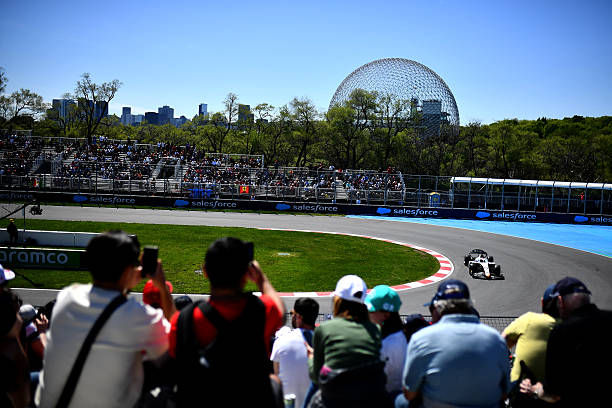
The final name in this elite group is Robert Kubica, who took the lead of the 2008 World Championship at 23 years, 6 months and 1 day old. His historic victory at the Canadian Grand Prix—a year after a horrific crash on the same track—put him and BMW Sauber at the summit of the sport.
Kubica’s lead signaled a temporary break in the McLaren-Ferrari duopoly. He was the clinical, precise outlier who proved that a driver could lead the championship through sheer grit and tactical intelligence, even without the fastest car on the grid.
BMW Sauber cost Kubica his momentum by famously shifting focus to the following year’s regulations. However, his time at the top remains a testament to one of the sport’s greatest “what if” careers.
These five drivers were not just young. They were the signals of the evolution of F1. From the technical revolution of McLaren to the system-accelerated dominance of Antonelli, the sport has moved forward rapidly.







Comments