
Forza, Italia: The five greatest Italian drivers in F1 history
- Kavi Khandelwal

- May 14
- 5 min read

Formula One is made of many things. Different teams, drivers, and circuits coming together from all over the world. Yet, the soul of F1 has always remained Italy. The rosso corsa cars, the cathedral of Monza and the tifosi who treat a race weekend like a national holiday.
It is the drivers, the men who carried the flag in the cockpit, whose stories are more complicated, more heartbreaking and more worth telling than most people realise.
Only two Italians have been crowned World Drivers Champion, winning in the same three-year window driving for Ferrari. After 1953, the title never came home again.
However, the story does not end here. It never could. Here are the top five drivers who defined what it meant to be Italian in F1.
5. Giancarlo Fisichella
Giancarlo Fisichella spent fourteen years in the pinnacle of motorsport. Fourteen seasons of turning up, getting the most out of whatever machinery he had, and rarely getting the credit he deserved.

He won three races: Brazil 2003, Australia 2005 and Malaysia 2006. Brazil: a chaotic, rain-soaked afternoon that he led when it mattered, with only a timing dispute to delay the official confirmation of what everyone in the paddock already knew in Brazil.
Fisichella took pole in Australia, led from the lights to the flag in the Renault and crossed the line five seconds clear of Rubens Barrichello in second. Finally, in Malaysia, he drove a controlled and dominant race. It was the kind that made one wonder what Fisichella was capable of with better equipment across his career.
Well, the answer came in Belgium 2009 with Force India. A midfield team running solely on ambition and aerodynamic ingenuity, yet Fisichella put it on pole. For one shining Saturday afternoon, a midfield car and the driver were the fastest on the grid.
Then he chose to leave for Ferrari as a stand-in for the injured Felipe Massa, and finished sixth. Perhaps the most Italian decision he could have made; choosing the prancing horse over everything else.
For almost twenty years after Malaysia, Fisichella held a record no one celebrated: the last Italian driver to win an F1 Grand Prix. It was a record that stood until China 2026, when a teenager from Bologna finally ended the drought.
4. Riccardo Patrese
For a long time, Riccardo Patrese’s legacy was defined by a number. 256 race starts — a record that stood for the better part of two decades. It sounds like a tribute to longevity, but in reality, it was a tribute to quality that took too long to be properly realised.
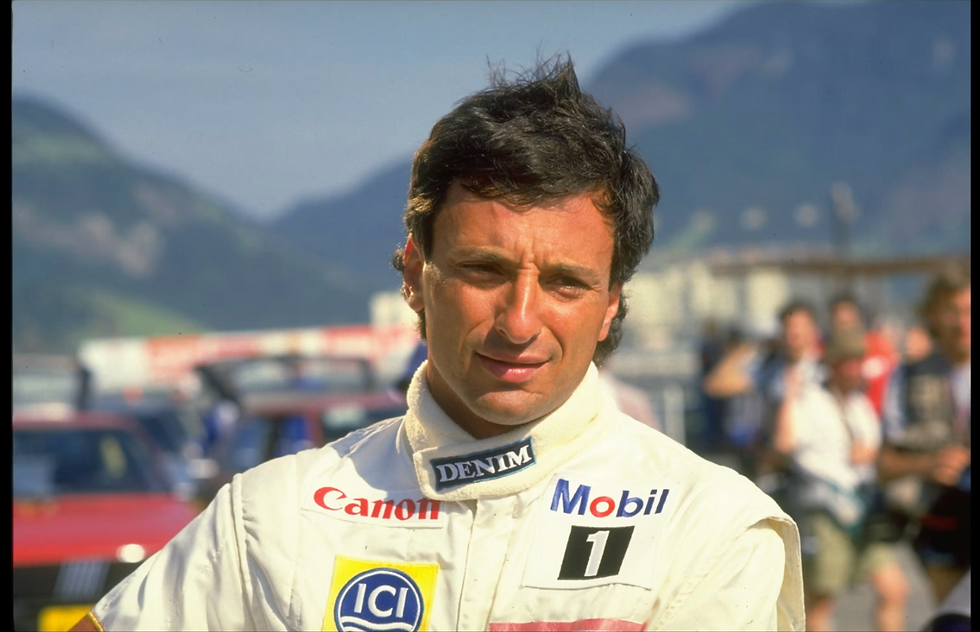
Patrese arrived in F1 with Shadow in 1977. The early years were spent at midfield teams, collecting points where he could and flashing brilliance that the machinery could not sustain.
Then came Brabham in 1982, and Monaco with one of the most chaotic finishes in the race’s history. Patrese took the win.
However, his finest chapter came at Williams. Partnered with Nigel Mansell in the FW14B in 1992, he won in Japan and Germany, finishing the season as runner-up to his dominant teammate.
Six race victories across those Williams years. Third in the championship in 1989 and 1991. Second in 1992.
He was never the World Champion. Perhaps, in another era, paired differently, he might have been. What he was, at his peak, was one of the finest drivers in the world.
3. Michele Alboreto
The Italian driver arrived at Ferrari in 1984 having already won twice with Tyrrell — a team running on nostalgia and not much else by that point. His performances there were the kind people remember for decades. Fast in cars that had no business being fast. Alboreto was disciplined and precise.

At Ferrari, he finally had the equipment. In 1985, after the Belgian Grand Prix, he led the World Championship. Alboreto won in Canada and Germany, and for a few electric months, he looked like the man who would finally bring the title back to Italy.
Then the engines failed. Repeatedly. The McLaren of Alain Prost grounded forward relentlessly, and Alboreto, through no fault of his own, watched a championship slip away through mechanical attrition. Prost became World Champion by 21 points.
After five race wins, 23 podiums and a runner up finish, Alboreto was the last Italian driver to genuinely threaten for the title. More than forty years later, that remains his alone.
2. Nino Farina
Before anyone else, there was Nino Farina. And before Farina, there was nothing — because F1 didn’t exist yet.

On 13th May 1950, the World Championship began. Farina won that race. And then he won Monaco and Monza. By the end of that inaugural season, he was the sport’s first-ever World Champion. His name is permanently written into the opening line of F1 history.
This was a different era of racing, with stone walls instead of barriers and straw bales instead of gravel traps. Fire that came without warning and left scars that never fully healed. Farina raced through all of it with a high, upright driving style that was unlike anything before and after him. It was fast and aggressive and entirely without fear.
He finished second in the championship in 1952 and his final victory came in 1953. Gradually, he faded the way all drivers eventually do. Eventually, he died in a road accident in 1966 while on his way to watch the French Grand Prix.
Nevertheless, Farina was the first F1 World Champion who ever lived.
1. Alberto Ascari
Thirteen wins in thirty two starts and a winning percentage above forty percent. Ascari also holds seven consecutive race victories — a record that has survived the dominance of Schumacher and Hamilton.

Alberto Ascari is the greatest Italian driver in F1 history. In the 1952 season, he won six races from seven. The rest of the field was left behind, watching. He did it again the year after with five more wins. Back-to-back titles. back-to-back dominance.
In those two seasons, he won eleven of seventeen races entered, and there were two he didn’t even start.
He was thirty-six years old when he died at Monza in May 1955, testing a Ferrari sports car under circumstances that were never fully explained, on a track that had already taken so much from the sport he loved. The circumstances and the timing was cruel. Had he lived, the records might have become unreachable.
Instead, he left the pinnacle of motorsports with the numbers, legacy and weight of everything that came after. Every Italian driver who followed stepped onto a grid that Ascari had already defined. Every near-miss, every runner-up finish and every title that slipped away. It all traces back to the moment Italy stopped producing drivers who could match him.
In China 2026, Kimi Antonelli became the first Italian in twenty years to win an F1 race. A new chapter as a new name carries the flag forward. The line from Ascari to the present day never broke. It just needed time.
The greatest Italian driver who ever lived set a standard so extraordinary that it took seventy years for the sport to even begin answering it. That’s a legacy worth inheriting.






Interesting article. Some time ago I also started reading more about topics that have become more visible in Ireland lately. At first I did not understand everything straight away, but after reading a few explanations the idea became clearer. I liked that different areas were mentioned instead of focusing only on one thing. The simple style also made it easier to follow. One thing that caught my attention was how different factors can influence outcomes and opinions. I had not really thought about that before. Overall, it helped me better understand prediction markets.