
Overtakes, the full picture and a decade of racing: How the Monaco E-Prix has evolved over the years

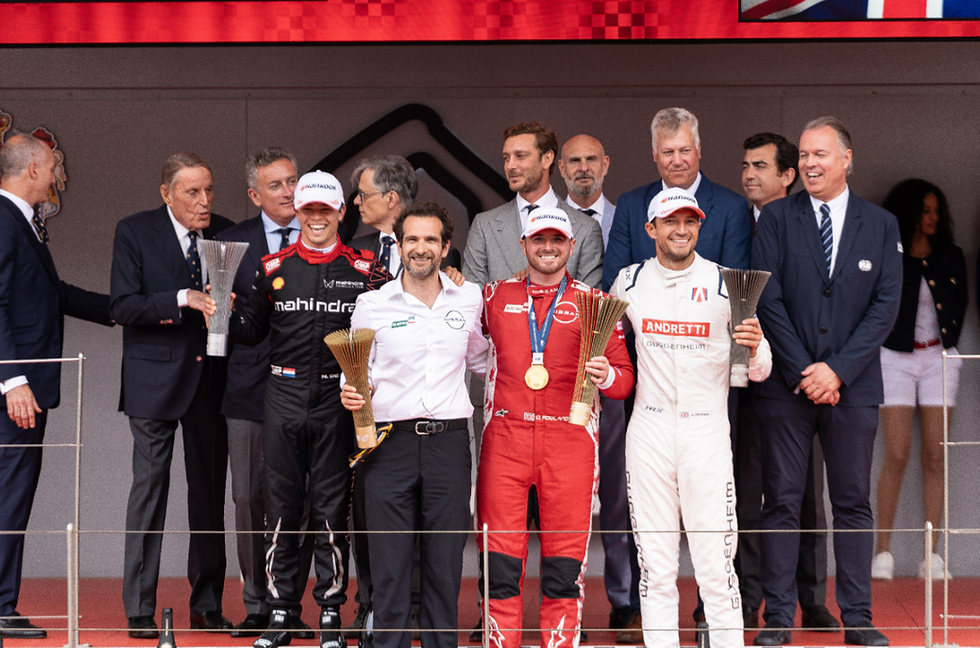
The Monaco E-Prix is arguably the crown jewel of the Formula E calendar, bringing high-voltage racing action from the future to the historic, sun-drenched streets of the Principality.
While Formula 1 has raced here since 1929, Formula E’s arrival in 2015 proved that the “unpassable” streets of Monte Carlo could even play host to strategic, overtake-heavy races, rewarding drivers who managed to eke out an advantage in a close-knit field.
Over the years, the race has evolved from a shortened loop to the full legendary Grand Prix circuit, producing some of the most dramatic storylines in electric racing history.
The inaugural spark and the Buemi era

The story of Monaco in Formula E began in 2015, during the series’ infancy. In those days, the cars utilised a truncated version of the track, turning right at Saint-Dévote and heading straight for the harbour, rather than the traditional run up Beau Rivage.
Sébastien Buemi, driving for Renault-E.dams, claimed the first-ever pole position and win, marking the start of a period of dominance. The Swiss racer would go on to win again in 2017, becoming the first “King of Monaco” in the electric era.
These early races were defined by the unique challenge of the “car swap”. With Formula E cars and the battery technology still developing, drivers would have to pit mid-race and jump into a second, fully charged car.
This often determined the podium, and Buemi’s clinical execution during these transitions set the gold standard for the Gen1 era.
Gen2, and the shift to the full Monaco Street Circuit

For years, sceptics argued that Formula E cars weren’t suited for the steep climb up to Beau Rivage or the high-speed blast through the tunnel. However, in 2021, the series finally transitioned to the full 3.337 km (2.074-mi) layout.
The 2021 race is widely regarded as one of the greatest street races in history. In a single afternoon, fans witnessed more lead changes and overtakes than decades of traditional racing at the same venue.
The storyline shifted from “Can they race here?” to “How can they race here so well?” as the Gen2 cars proved that the absence of a massive internal combustion engine allowed for closer wheel-to-wheel combat without drivers being hindered by the problem of dirty air and inability to follow closely.
Da Costa’s last-lap heroics

The 2021 E-Prix also provided arguably the most iconic finish in the sport’s history. Antonio Felix da Costa, Mitch Evand and Robin Frijns engaged in a three-way tactical war that lasted until the final seconds.
Evans had managed to take the lead with a daring move at Beau Rivage earlier in the race, although he was running dangerously low on energy as the drivers entered the final lap of racing.
Coming into the final lap, da Costa stayed glued to the New Zealander’s gearbox. In a breathtaking display of bravery, he lunged down the inside at the exit of the tunnel, snatching the lead just before the chicane.
He crossed the line to take the win, celebrating by jumping into the harbour later that evening. This race solidified the Monaco E-Prix as an event where the leaderboard is never settled until the chequered flag drops.
The Gen3 evolution and efficiency wars

With the introduction of the lighter, faster and more efficient Gen3 cars, the narrative at Monaco shifted towards “extreme energy management”. In 2023 and 2024, the races became a high-speed game of chess.
Drivers began intentionally “giving away” the lead to sit in the slipstream of the car ahead, saving precious percentage points of battery for a late-race sprint.
This created a “peloton” style of racing, where the pack stayed bunched together, often three-wide through the fastest sections of the track. Nick Cassidy’s win in 2023 was a masterclass in this strategy, starting ninth on the grid and slicing through the field using calculated moves. This would also include a double overtake at the famous Monaco Hairpin earlier in the race.
Similarly, Evans would make up three positions and play his attack modes to perfection, ensuring Jaguar brought home a 1-2 with himself and Cassidy leading the way.
The success of the Monaco E-Prix in the subsequent years of expansion to the full Grand Prix layout would be evident, as the Principality earned a second race, marking the first time the venue hosted a double-header in Season 11.
Rain would also hit the Monaco E-Prix in 2025, with the likes of Buemi and Cassidy showcasing their smarts to come through the field, the former even taking his first Formula E victory in six years.
A tradition of innovation

The overarching storyline of the Monaco E-Prix is one of rapid technological progression. In less than a decade, the event went from cars that couldn’t complete a full race distance on a single charge to those reaching speeds over 200 km/h (124 mph) while regenerating nearly half the energy used.
Moreover, the Gen3 era has seen record-breaking lap times set, with Taylor Barnard’s 2025 pole lap for McLaren being the quickest ever recorded in the circuit’s history, at 1:26.300. And there is no doubt this record is expected to be broken once the next generation of Formula E cars comes into effect from the following season.
The Principality serves as the ultimate test for the series. Every year, the backdrop of the Casino de Monte-Carlo and the luxury yachts provides a stark contrast to the silent, humming power of the grid.
Edited by Vyas Ponnuri



Comments