
Why you should watch the Kyojo Cup season in 2026

Miki Koyama recently made Japanese motorsport history at the Super GT’s Fuji GT 3 Hours by becoming the first woman in Super GT to score consecutive podiums.
She also scored her maiden podium finish in the season opener at Okayama, only a race prior to that. Koyama became only the third woman to do so, with only June Okanoya (1995) and Lilou Wadoux (2024) doing so before her.
That is not the only impressive record that belongs to the Kanagawa native. In 2022, Koyama became the first woman to win an FIA-sanctioned, mixed gender, single-seater championship, the Formula Regional Japan Championship (FRJC).
Koyama’s racing career commenced when she attended the Formula Toyota Racing School and then participated in the F4 Regional Japan Championship. Koyama’s big break, however, came with the two inaugural seasons of the Kyojo Cup.
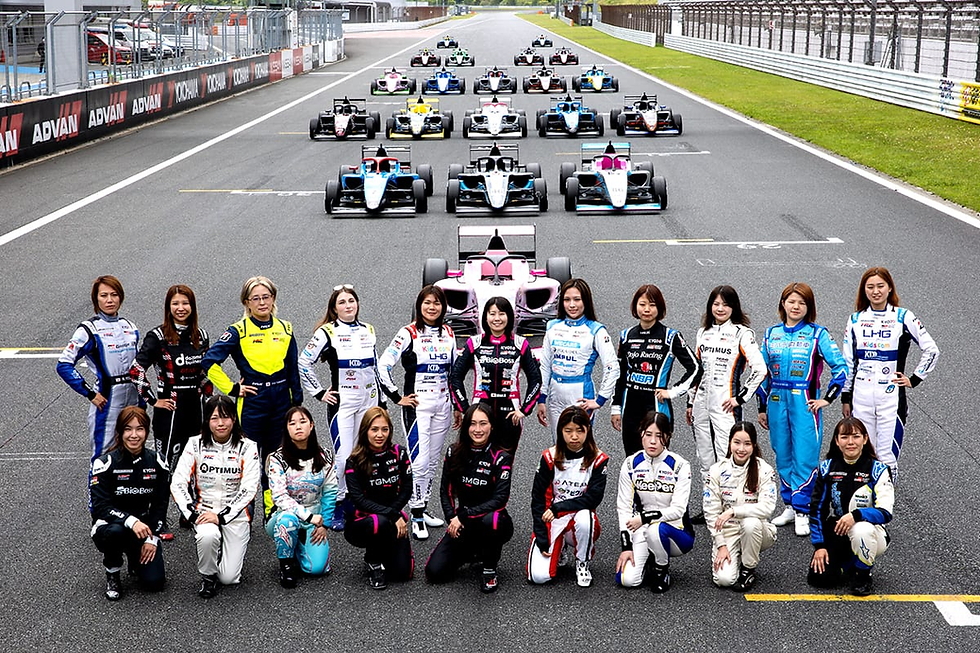
The Kyojo Cup is an all-woman Japanese single-seater championship created in 2017 as a support series for the Japanese sports car spec series, Inter Proto Series. The championship has since supported Super Formula and Porsche Carrera Cup Japan.
The main focus of the Kyojo Cup is to create a stage where women from diverse backgrounds can participate and hone their skills in motorsport.
There are no constraints in terms of age or background, meaning women who could not pursue motorsports from a younger age due to societal constraints still have a chance to do so, and young girls who are looking to hone their skills in single-seaters have a platform to do so.

Most Kyojo Cup teams are run by Super Formula outfits from the Toyota Gazoo Racing camp, like Team TOM’S, Inging, Cerumo, Kondo Racing, ROOKIE Racing, and the chassis manufacturers themselves, KCMG. These teams bring their valuable motorsport experience to the table to aid the drivers’ development.
Until 2024, the Kyojo Cup used the FCR-Vita sports car chassis, but since last year has switched to a proper single-seater chassis provided by KCMG, the KC MG-01. With the transition to single-seaters, drivers are even more integrated into the traditional Japanese motorsport ladder.
When Koyama participated in the series’ first two seasons, she won the drivers’ title both seasons. She then went on to make her historic Formula Regional Japan title charge, before going on to participate in Super GT, NLS, and finished second in Lamborghini Super Trofeo Asia in 2024. In the background, she has also been testing Super Formula cars for Toyota.
Koyama’s success isn’t an isolated case; the Kyojo Cup has proven to be a stepping stone for women in Japanese motorsport. Reigning champion Rio Shimono is a points scorer in the F4 Japanese Championship, and has now stepped up to the Formula Regional Japan Championship for this year. She is also the only driver to win the Kyojo Cup title before the final round of the season.
Most recently, 2025 Vice Champion, Miki Onaga, tied Koyama’s (2018) and Shimono’s (2023) record for the highest finish for a woman driver in the F4 Japanese Championship with seventh, having started in 11th.
Onaga is also notable for finishing in the top two in the Kyojo Cup standings since 2019, the year of her debut in the championship, although she has only won the title once, in 2022.

Another unique record held by a Kyojo Cup driver belongs to 2024 champion Aimi Saito. Saito and her husband, Super GT maestro Sho Tsuboi, in 2024, became the first couple in motorsport where both partners won their respective championships in the same year.
Super Formula’s Fuji round allowed the couple to win races on the same day, with the Kyojo Cup being a support series that weekend. Saito won the race from pole on Sunday, and just a few hours later, Tsuboi won his from fourth. The couple shared a tear-filled moment after the race in one of the rare instances where Tsuboi’s cool composure melted away. “I never expected my husband to cry, so I ended up crying too,” Saito exclaimed later on.
Toyota’s support for the Kyojo Cup drivers has started taking them abroad as well. In January this year, the top five finishers in the 2025 Kyojo Cup season, Shimono, Onaga, Saito, Kokoro Sato, and Rami Sasaki participated in the 24 Hours of Dubai, with the support of Toyota and ROOKIE Racing and under Koyama’s mentorship.
They started from pole in the TC class and from second in the broader TCE category, but early mechanical issues hampered their progress. While the issues robbed them of any chance at a class win, they still pushed hard to finish the gruelling 24-hour race.
The upcoming 2026 season of the Kyojo Cup is only going to further cement the series in the Japanese motorsport ladder and give these talented women more opportunities.
This season sees big names like Shimono, Onaga and Saito continuing, and new faces like F1 Academy graduate Joanne Ciconte and Williams F1 Team-supported Sara Matsui join the field.
On top of providing chances and visibility to the drivers, the series also produces some top-notch racing. Kyojo Cup, like its parent championship, the Inter Proto Series, races only at the Fuji Speedway, a circuit that is as entertaining as it is picturesque.

The 2026 season starts on Saturday, 9th May and is free to watch on YouTube. Unlike many other Japanese motorsport series, they also offer English commentary to welcome international viewers, making them one of the most accessible racing series from Japan.
Series like the Kyojo Cup are actively opening avenues for women and young girls to enter the world of motorsport when they otherwise would be unable to. Kyojo Cup run two other series, Kyojo Vita and Kyojo Kart, where the top finishers get a shot at the Kyojo Cup tryouts.
Series like these are really important to bridge the societal gap between men and women in motorsport, and we most probably would not have the likes of Koyama, Shimono or Onaga participating in the championships that they are if it weren’t for it.
It is really vital to keep supporting series like these to provide talented women more opportunities in the future and help younger talent make their way up the ladder.
There are probably many Koyamas over the past half a century who couldn’t even dream of participating in motorsports, let alone having a successful career in the field. Supporting the Kyojo Cup is a simple but effective way to make sure that we have, at least, a few more Koyamas in the growing field of motorsports.
Edited by Vyas Ponnuri





Comments