
Buddh’s second lap: Adani’s revival bid

Written by Kavi Khandelwal, Edited by Vyas Ponnuri
The silence at the Buddh International Circuit has a physical weight to it. For over a decade, the only things moving across the main straight of the Greater Noida track have been the shifting shadows of the grandstands and the fine dust of the Uttar Pradesh plains.

Since 2013, when the high-frequency scream of V8 engines last echoed off the pit wall, the circuit has stood as a magnificent, $400 million monument to a dream deferred.
The Buddh International Circuit turned into a cathedral of speed, albeit with the doors abruptly bolted shut, leaving a generation of Indian fans to watch the sport they love through a digital window, looking toward the floodlights of Singapore or the desert sparkle of Abu Dhabi.
But recent talks may have sparked a revival of the sport on Indian shores again. It may not be the sound of an engine yet, but the steady, calculated pulse of a revival. Speaking at the 70th Foundation Day of the All India Management Association (AIMA), Karan Adani, Managing Director of Adani Ports and SEZ, did more than just talk business. He spoke of a potential homecoming.
For a sport that has spent years treating India as a closed chapter, Adani’s words have acted as a sudden, sharp intake of breath. The vision is no longer just about nostalgia; it is about a poised, high-stakes intersection of national pride and commercial possibility.
Adani’s return plan
Karan Adani does not approach the Buddh International Circuit with the cold detachment of a typical liquidator. His move toward the circuit via the acquisition of Jaiprakash Associates Ltd (JAL) assets is a strategic play, but the motivation runs deeper, into the marrow of a long-term enthusiast who has followed the sport since the year 2000.
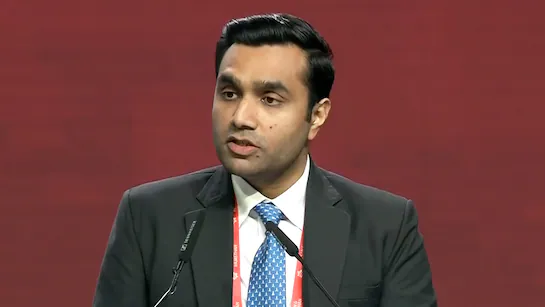
The acquisition effort isn’t just about land or concrete, and instead focuses more on reclaiming a lost legacy. When Adani spoke about the project, his boardroom language softened into something more evocative.
“I’m very excited… obviously, the Buddh circuit comes as part of the deal,” Adani shared during his session at the AIMA event. “I’m very personally engaged in terms of bringing Formula 1 back into India. I think India has a lot of potential. There’s a lot of following in Formula 1 from India.”
It is this personal engagement, this sense of being a stakeholder in the sport’s soul, that gives the current bid a momentum the circuit hasn’t seen in over a decade.
F1 as a soft power
For the Adani Group, bringing F1 back to India is a meticulously designed showcase of soft power. In the modern era, a Grand Prix is a three-hour commercial for a nation’s infrastructure and cultural hospitality. In contrast, a Grand Prix weekend serves as a three-day spectacle for the world to come and witness.
Adani positions the return as a benchmark for a global event, proving the nation can manage the most technologically demanding circus on the planet.
There is a human element to this vision that goes beyond the branding. Adani pointed out that current exposure is limited, with fans often forced to travel to the Middle East or Southeast Asia just to experience the sport.
“Bringing global events and global sports to India, giving them an exposure to India and also giving an exposure to our people to these kinds of sports… because, unfortunately, the exposure is limited to very few people right now,” he explained.
“Most of the time, people end up going to Abu Dhabi or Singapore or Doha to experience a sport.” His goal is to showcase the heritage of India on a world stage rather than just hosting a single race.
Vettel’s farewell
The weight of this return can only be understood if one remembers the way it ended.
On October 27, 2013, the circuit witnessed one of the most iconic moments in modern sporting history. Sebastian Vettel didn’t just win the race; he secured his fourth consecutive World Championship.

The image remains etched in the minds of those present: the blue-and-purple Red Bull performing donuts on the main straight, smoke billowing into the hazy afternoon air, before Vettel climbed out and knelt in front of his car in a gesture of pure reverence to the machine and the track.
It was a day of absolute sporting perfection, yet it was shadowed by the knowledge that the race was leaving the calendar. The tax disputes and entertainment tax rulings were already closing in, turning a celebration of a legend into a premature eulogy for the event itself.
Policy shift
The Buddh International Circuit itself remains a centrepiece, a track widely considered by drivers to be one of the finest modern layouts in the world. Its technical flow, punctuated by the daunting, blind uphill climb into Turn 3, has sat largely dormant due to the choking grip of policy inconsistencies.
The path back is being paved through complex commercial negotiations, where the Adani Group’s acquisition of the site acts as the unlocked door allowing for serious dialogue with Liberty Media. Perhaps more significantly, the weather in the institutions has changed.
The recent visit of the Union Sports Minister, Mr Mansukh Mandaviya, to the circuit marks the end of the era when the sport had been belittled by the authorities, providing a safety net of regulation that was absent before.
The cost question
While the optimism is swelling, the journey to the green light is not without its twists and turns. The vision has to face the reality of the new F1 world, where a record 24-race calendar leaves India competing with bids from every nook and corner of the world for a limited number of slots.
Moreover, the hosting costs are now in the multi-million dollar category, and a healthy and viable economic model is the only way to survive in the long run. Finally, a decade of inactivity means that the circuit needs serious work in terms of infrastructural and regulatory development to meet the Grade 1 standards of the current breed of cars.
A matter of when, not if
As the sun sets over the grandstands at Buddh, the long-standing silence no longer feels like an ending; it feels like a breath held in anticipation. The return of F1 to India is no longer a matter of if, but a complex and fascinating when.

“The reputation of India and Indians has improved very, very significantly,” Adani noted. “I do believe that India can really showcase Formula 1… and can be a benchmark for a global event.”
The convergence of Karan Adani’s personal passion, the Adani Group’s industrial scale, and a more favourable political climate has created a moment poised at the edge of reality.


Comments