
Details: Chevrolet and Honda recommit long-term futures to IndyCar


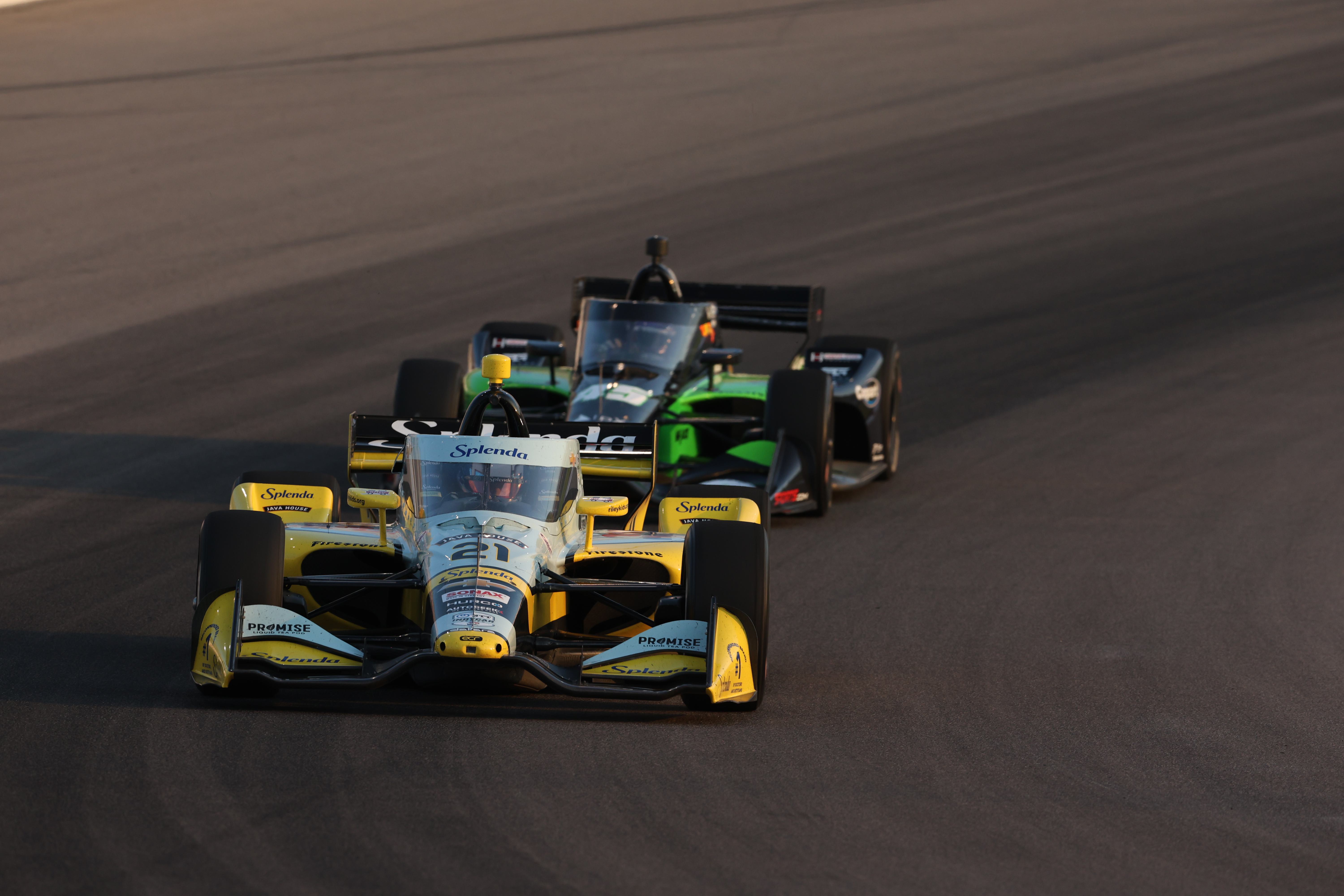
Chevrolet and Honda have agreed to new multi-year deals to serve as IndyCar’s engine manufacturers for the long-term, commencing in 2027.
This major piece of news comes after uncertainty surrounding the future of IndyCar’s engine suppliers, particularly Honda, and “represents a significant financial investment in North America’s premier open-wheel series” from both Original Equipment Manufacturers (OEMs).
“This is a monumental day for IndyCar, fueled by a massive and historic commitment from two of our best and most trusted partners,” said IndyCar president Doug Boles. “Chevrolet and Honda have worked tirelessly with us over the last 12 months to get to this point.
“Both have made it very clear that they are fully committed to this sport and invested in continuing the positive momentum the series generated in 2025.”
Both manufacturers serve significant involvement in the process of developing a new car for the series, intended for 2028, on both the development of the engine and competition rules. The current 2.2-liter, twin-turbocharged V6 engine formula is to be replaced by a 2.4-liter, twin-turbo V6 power unit following the conclusion of the 2027 season.
Upon the regulation change, both Chevrolet and Honda will be entitled to one charter, effective for the 2028 season.
“As charter entrants in 2028, Chevrolet and Honda now have a new and exciting opportunity to build on their incredible legacies across IndyCar racing,” Boles added, “while continuing their strong relationships with our current roster of teams and helping deliver an innovative and industry-leading new car in 2028.”

The series’ first charter system was formalised in September 2024, with charters awarded to full-time entries from the previous two seasons, at a maximum of three per team.
Those teams with three charters - Team Penske and Arrow McLaren on the Chevrolet side, plus Chip Ganassi Racing (CGR), Andretti Global and Rahal Letterman Lanigan Racing (RLL) for Honda - will not be eligible to run a fourth chartered car via the OEM’s entry.
In its own statement, Honda Racing Corporation (HRC)’s United States branch confirmed its commitment to running a full-season Honda entry for the 2028 campaign “as a way to further develop its associates and technology”.
“To our esteemed Honda fans, customers and associates, we are thrilled to announce our ongoing participation in IndyCar,” said HRC USA president David Salters. “With a deep respect for the history and competitive spirit of IndyCar racing, we are proud to continue our involvement after more than 30 years.
“This long-standing commitment strengthens our ability to allow us to further develop our people and technology at the pinnacle of open-wheel racing in North America. The partnership between IndyCar and FOX continues to grow, bringing outstanding race coverage and elevating the experience for fans everywhere.
“The future of IndyCar looks incredibly bright and we at Honda are honored to play a critical role in its continued success.”

Honda debuted in IndyCar in 1994 and has remained with the series as an engine supplier for over 30 years, including six seasons as IndyCar’s only OEM. Honda won its 11th manufacturers’ title - and fifth in the last eight years - in 2025, alongside Álex Palou winning the last three series championships and four of the last five for Honda-powered CGR.
Chevrolet, meanwhile, has a total 16 manufacturer titles, including from 1988-1993 and in 2002, and has won nine championships since its return to the sport in 2012.
“Chevrolet has enjoyed a long, successful relationship with IndyCar as an engine manufacturer,” said General Motors president Mark Reuss, “and this extension paves the way for IndyCar to continue to grow and for us to further maximise technology transfer from race to road.
“The addition of a charter allows Chevrolet to join with other stakeholders to continue to make the series even stronger. IndyCar produces consistently exciting racing on road and street courses, as well as ovals, and we look forward to building on our IndyCar legacy and put on a great show for our loyal Chevrolet fans.”
This announcement serves as an extremely significant moment for IndyCar’s long-term stability and growth prospects.





Landed here via a link in a Nuneaton gambling thread around twenty past twelve. What kept my attention was a sensible piece on luckycarnivalcasino.uk together with genuine feedback on search form landmark and query container region semantics in the UK interface. Nothing inflated about form semantics perfection or landmark strategy design awards. The grounded tone was appreciated. After finishing, I felt comfortable, came across as real community discussion.