
Policand: "We are 25 people full-time" — An exclusive look inside ASP Lexus' Le Mans masterclass

Auto Sport Promotion (ASP) arrived at the 2026 24 Hours of Le Mans with the oldest GT3 cars on the grid. Yet the French team's Lexus RC F GT3 finished second and fourth in its only third FIA World Endurance Championship campaign. Speaking exclusively to DIVEBOMB, team principal Jérôme Policand explained how a 25-person operation achieved one of the race's standout results.
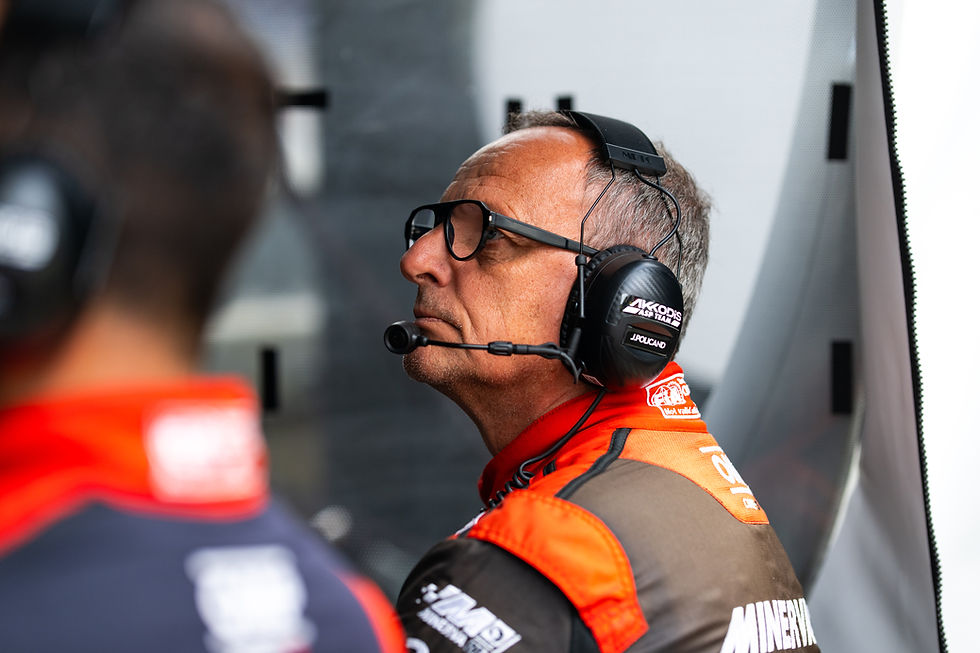
The 'ex-DTM' silhouette and the hidden aero battle
When the Lexus RC F GT3 first took on Le Mans in its maiden season back in 2024, the car immediately suited well to the nature of Circuit de la Sarthe. While ASP spent most of the season struggling, they concluded that the car had what it took to challenge its newer rivals in the world's most prestigious endurance race.
Unlike the contemporary Porsche 911 GT3 R (992), Ferrari 296 GT3 and Chevrolet Corvette Z06 GT3.R, which featured sleek, aggressive, prototype-like designs, the RC F sported a rather unorthodox, boxier design that earned Policand's special praise.
"The Lexus, which is a bit of an old-fashioned car, not in terms of conception, looks much more like a GT500 or an ex-DTM car rather than a GT3", Policand said. "This car has been so well designed in Japan, and everything was done for the performance."
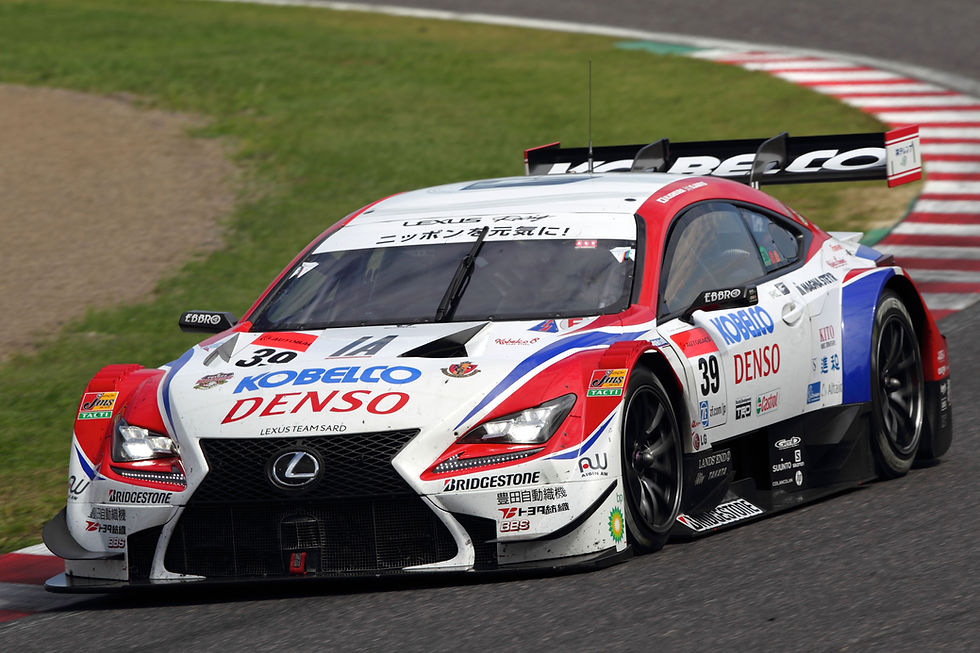
Policand was not far from the truth. The RC F GT500 debuted three years before the GT3 version. Since then, it has competed in the Blancpain GT Series and the IMSA SportsCar Championship, where it swept the GTD Pro championships in 2023.
When ASP first contested their first full WEC season, the Lexus was already a fierce competitor with a title in its belt. They were running with a machine that had essentially been battle-tested in various high-stakes competitions.
However, running the RC F at Le Mans comes with its specific set of challenges. Aside from abiding by the strict mandatory tyre pressure and parc fermé regulations, the team needed to pay close attention to the Lexus' splitter, which was quite low because they had to respect the 50 millimetres threshold. All while ensuring the car had the pace to compete.
"To have the best aero, we have to run quite low [ride height].
"It's easy when it's a six-hour race because the wear is okay. But after 24, that can affect the aero. And that was a key point for us [which was] to try not to destroy the aero bodywork of the car. So, pay attention to the curb, on the 'banana', especially the Dunlop chicane."
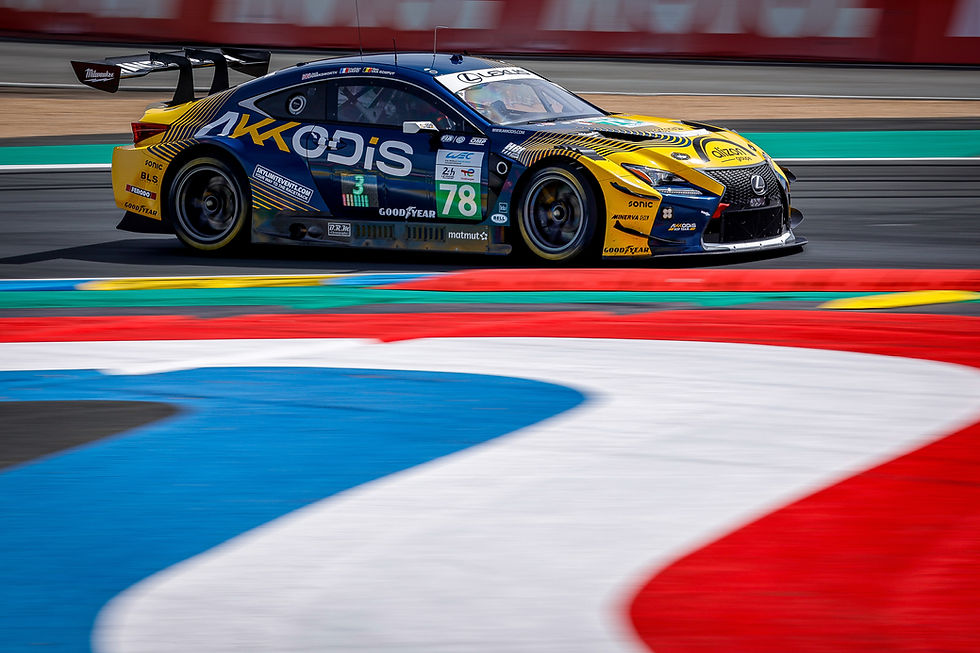
This intense physical margin for error requires total compliance. No.87's Petru Umbrărescu backed up this reality, noting that managing the classic Japanese platform leaves no room for operational complacency.
"We are aware that our car is a bit more 'pretentious' than others, so it is even more important to be very precise with how we utilise our tyres", Umbrărescu explained. "Seeing the cars run at the front for so long was a testimony of all the hard work and relentless dedication that drives this team in the pursuit of finding any bit of optimisation. Indeed, a big part of the performance is down to strategy and precise execution."
After securing a fifth-place finish in the previous Le Mans edition and demonstrating strong pace in the earlier rounds this year, Policand recalled how the team believed that the RC F would be competitive, and it did not surprise them much when they took home an incredible 2–4 finish.
"At the end, we managed it.
"I have to thank the drivers because they took care of both cars, which were in quite good condition after the race. And now, with all the sensors we have, we can see if we lost top speed or front aero because of the wear on the splitter.
"We lost a bit [of speed], but not that much. So, rather than being super fast over one lap, the goal was to remain consistent. And that was what happened."
Lexus' tactical Le Mans traffic management and overcoming the penalty
Reliability alone was not enough. Managing Le Mans traffic became equally decisive to stand on the podium the following day.
A predictable, dependable car gave ASP total peace of mind at the multi-class 24 Hours of Le Mans. The team’s confidence was on full display as the No.78 and 87 cars comfortably controlled the pace at the front of the highly competitive LMGT3 pack.
Policand mentioned how much easier it was managing the traffic compared to the other tracks: "It's much easier to manage the traffic at Le Mans than at Imola.
"You have a seven-km-long straight. The Hypercar and even the LMP2 are almost 50 km faster than us. They have plenty of time to overtake us down the straight, which is not the case on a normal track."
While the team did not lose a considerable chunk of time in traffic, he mentioned how they could not afford to slow down at the Porsche Curves, as they could lose up to two seconds immediately. To counter this, they let the prototypes through after Arnage first to ensure they had the optimum line at the Porsche Curves.
When asked how both cars were able to pace so closely together, the 61-year-old explained that while they shared a similar baseline setup, subtle tweaks were made to match each driver's individual preferences.
Unfortunately, the team's hopes of having both cars on the podium were dashed in the morning. The stewards deemed the No.87 car at fault for the collision with the No.57 Kessel Racing Ferrari. Clemens Schmid emerged seven places down after serving his penalty.
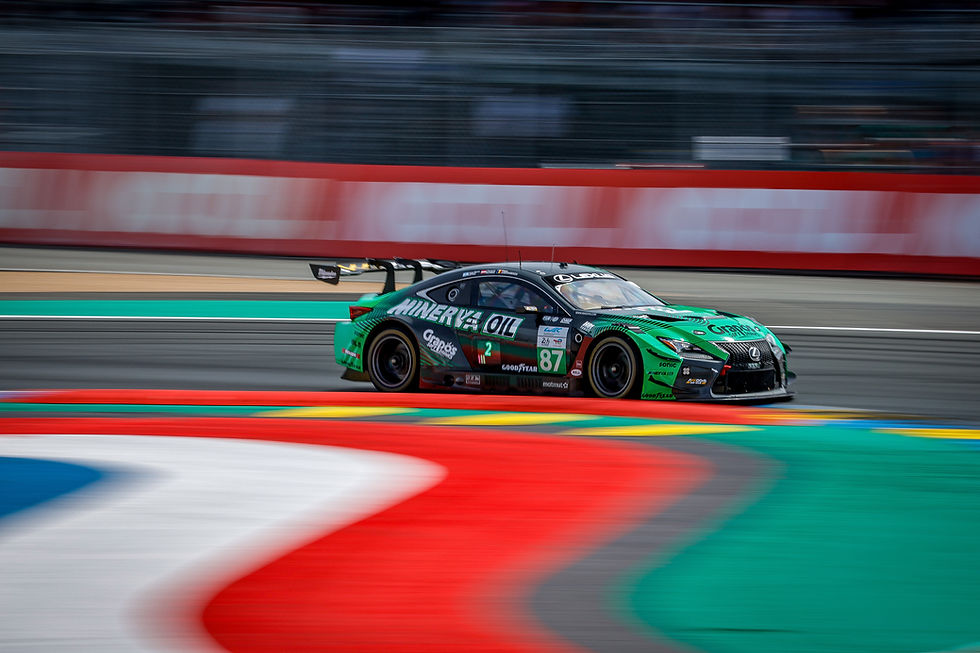
Despite doing everything in his power to defend his squad, Policand couldn't prevent the race directors from handing down a penalty. He laughed off the strict modern ruling by comparing it to the officiating of a decade ago, joking that back then, he could have easily talked the stewards into calling it a harmless, 50-50 racing incident.
"There is no grey zone in motor racing, it's either white or black.
"You need to have someone guilty. The video didn't lie, and we were more guilty than Ferrari. I would say the penalty was harsh, but in one way, we cannot contest it. So I tried [contesting], because I didn't see the video, but after seeing the video, we have to accept it."
"I think it's more a racing incident than a penalty", Schmid admitted. "But as soon as we faced it, everybody knew immediately how to work around it to receive the best result again."
A lifeline arrived around 11:00 under the safety car when a pass-around allowed the No.87 to claw its way back into contention. From there, the shackles were completely thrown off.
"Our engineer Victor was telling us that we need to go from there on flat out till the end without taking care of the car", Schmid revealed. "José and I knew exactly what was demanded from us, and I think we could deliver it, even though at the end, the 1.5 seconds to the podium was a tough pill to swallow, but after one week apart, I think we did an incredible job for the team."
The agonisingly small margin stood between ASP and a historic double-Lexus podium. Nonetheless, Policand praised the crew for having a well-deserved result.
For a veteran like López, that mechanical predictability was the ultimate weapon when hunting down a podium finish in the closing stages:
"A good GT3 car is generally more forgiving and consistent.
"That allows the driver to focus more on racecraft, tyre management and extracting performance lap after lap, rather than constantly adapting to an unpredictable balance.
"When you’re chasing a podium, and the gap is only a few seconds, having confidence that the car will react the same way every lap is a huge advantage. It doesn’t make the job easy, but it frees up mental capacity to concentrate on the battle itself."
The human architecture of the No.78: A proven platform champion with stellar co-drivers
Policand believes the No.78's success started long before the green flag, with a driver lineup whose strengths complemented each other.
The trio of Hadrien David, Jack Hawksworth and Tom Van Rompuy stood proudly on the second step of the podium after the chequered flag, despite the team being without the services of regular driver Esteban Masson, who competed with the LMP2 outfit, Forestier Racing.
While he is technically a WEC rookie, Policand refuses to label David as a 'junior' despite initially considering him inexperienced. The 22-year-old previously faced the likes of current Formula One drivers Gabriel Bortoleto and Isack Hadjar in the Formula Regional European Championship (FRECA).
"He was super quick if you check his record", Policand admitted. "I consider him not as a junior, but more like a real racing driver with strong knowledge. So I was not surprised by his performance."
Backed by prototype experience from his 2025 Le Mans Cup LMP3 championship win with R-ace GP, David adjusted effortlessly to LMGT3. His input helped the team maximise the Lexus platform, yielding a lightning-fast 3:53.802 lap throughout the Le Mans weekend.
"The Lexus gave me a lot of confidence, especially at night to perform", David stated. "We knew we had the pace, and we knew that we had to stay on track and everything would go well. Especially in the morning, I felt quicker compared to the guys around, and we had a lot less degradation than expected.
Finishing a mere 20 seconds back from the class victory after 24 hours of flat-out sprinting was a massive statement for the French rookie. "[While], it is [officially] considered almost a victory, it's a victory for the team as we have the oldest GT3 car, and I'm sure we'll be back for more."
Rather than focusing on David's headline-grabbing fast laps, Policand lauded the Frenchman's high average pace, highlighting the countless hours in Toyota’s Cologne factory simulator as the key to his seamless preparation.
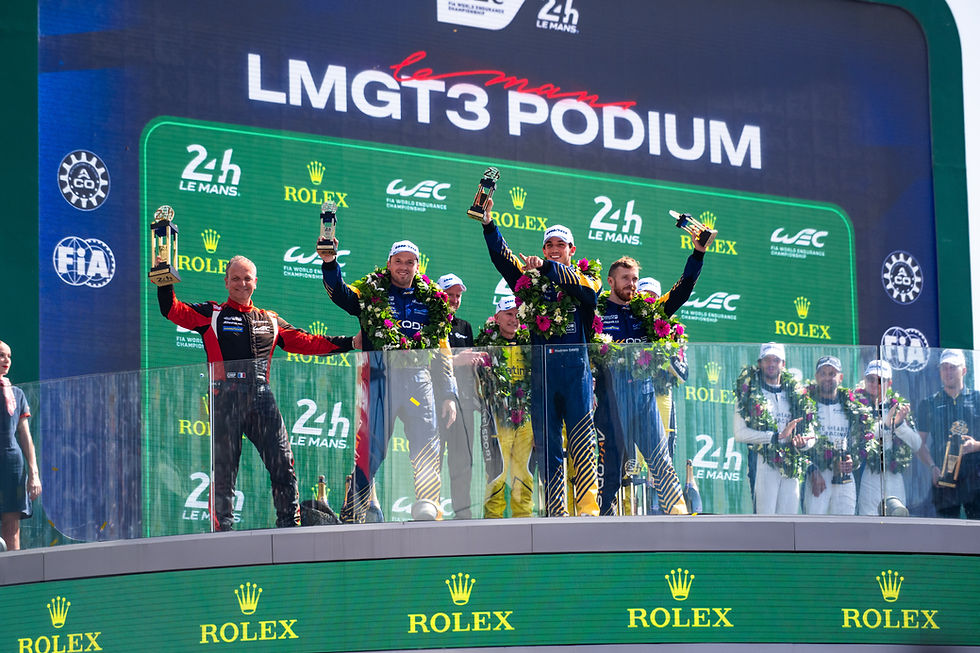
If David brought prototype pedigree, his co-driver, Jack Hawksworth, brought ultimate mastery of the platform, having driven the Lexus to the 2023 IMSA GTD Pro title. As a mainstay of the program since its initial IMSA debut in 2017, it is fair to say that nobody in the paddock knew the car better than the British ace.
"Jack is an amazing driver", Policand said. "He's [been] racing with the RC F in IMSA for a long time. He knows the car like his pocket."
As a full-time IMSA competitor, Hawksworth’s WEC appearances have primarily been one-offs, stepping in as a high-profile super-sub for ASP. To date, this arrangement has seen him contest the 24 Hours of Le Mans with the squad for three consecutive years.
Policand particularly admired Hawksworth’s adaptability and how quickly he gets in sync with the operation. While most drivers would struggle to adjust to a new team for a standalone appearance, Hawksworth seamlessly defied that trend. Unsurprisingly, David and Van Rompuy held the Briton in high regard, viewing him as a crucial mentor within the garage.
"All of us three drivers were able to feel really comfortable with the car and push really hard the whole way through", Hawksworth stated. "Experience racing the car in America certainly helps me, and hopefully some of the stuff which I've experienced in the US helped the team.
"Anytime you can go for 24 hours and race at the front and have really good reliability, consistency, and pace, it's really special. It was really a pleasure for me to drive alongside Tom and Hadrien; they were both absolutely fantastic."
The unsung heroes behind the flashy curtains
Because of their backing from Toyota, it is easy to mistake ASP for a corporate powerhouse. Policand joked that people often forget the reality — they are still very much an independent, privateer operation.
In reality, ASP operates much the same way it did three decades ago. The core team relies on just 25 full-time personnel, a remarkably lean roster considering the immense logistical challenge of simultaneously contesting multiple high-profile championships.
Just before the interview, ASP claimed a 1–3 finish in the French GT4 Cup at Spa-Francorchamps. Reflecting on the non-stop calendar, Policand confessed that properly decompressing after the intense Le Mans rollercoaster felt near impossible.
"To take a breath after Le Mans, it's impossible.
"We were back from Le Mans on Tuesday evening. Then a part of the team goes directly to Spa because we have a race in GT4, which we won this weekend. But you need people involved in WEC, [which is] not that many to run both cars, and also to prepare the car for Brazil.
"So when you finish a 24-hour race, the car has to be completely stripped and rebuilt again, as you did before the race. And today we are travelling to Belgium to send the car by air freight. And the car will be sent on Friday, which is a very, very tight schedule."
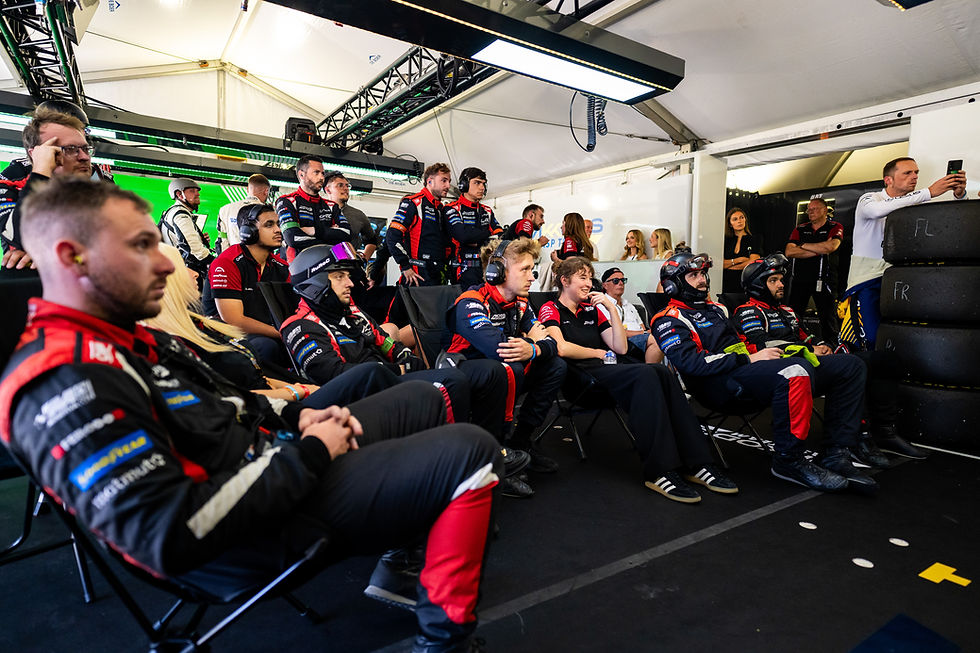
Based in Rabastens, in South-East France, the trek to Belgium was already a significant journey. Simultaneously, the workshop was busy preparing sea freight containers bound for Fuji in September, all while the team readied themselves to tackle the 6 Hours of São Paulo next month. It is no surprise that Policand lauded his logistics crew as the absolute 'heroes' of the operation.
For Policand, however, none of it would have been possible without Toyota's support.
"You have only one chance.
"When the train got past, it passed only once. And you have to take it, otherwise you will not race at Le Mans in WEC. Having the support of Toyota Racing in Japan and Toyota Motor Corporation in Germany and Japan is very good. In engineering, they are very strong, and the results speak for themselves.
"We get the experience and the knowledge from them, and it helps us a lot to improve the RC F in such a short time. And it's a well-deserved [result] for us, but it's a well-deserved result for Toyota too."





Comments