
Who are Fortescue Zero: The lowdown on Formula E’s first Australian-owned team


In a major development for Formula E’s upcoming Gen4 era, Fortescue Zero, Jaguar’s technical partner, has purchased the assets of the erstwhile Penske Autosport outfit. They will rebrand into a unique set-up, running Jaguar powertrains from Season 13 and beyond.
This acquisition has been a race against time. First reported by Italian newspaper Il Messaggero during the London E-Prix weekend, the rumours surrounded the future of the Penske outfit, which had failed to find a power supplier for the Gen4 entry, despite intentions to keep the entry on the grid.
With Porsche powering six cars, Stellantis parting ways with Penske, and the likes of Mahindra and Lola going solo into the Gen4 era, Penske’s search for a powertrain supplier prolonged into the off-season, at a time when teams had begun finalising their entries and testing extensively in their Gen4 concept prototypes.
This presented an opportunity for Fortescue Zero to come into a sport, and fulfill long-standing opportunities of running a Formula E entry of their own in the Gen4 era.
Formula E’s previous Gen3 era has seen automotive companies come into the sport, but this marks a unique scenario, as a company with a background in making technical parts comes into the sport.
Who are Fortescue Zero?

Despite their recent announcement to run two Formula E cars, the Fortescue Zero nameplate isn’t new to the world of Formula E.
Fortescue is a mining and energy company with its roots in Australia. The company has been heavily involved in the mining industry for over two decades, with CEO Andrew Forrest once known as Australia’s richest man.
The company has its main iron ore mines in the Pilbara region of Western Australia, while it is headquartered in Perth. However, while the company’s ventures have been heavily focused on minerals, Fortescue has rapidly evolved in its quest to achieve an ambitious goal of “Real Zero” by 2030 and eliminate fossil fuels in its activities.
This goal has seen the Australian company diversify into alternative energy, building solar farms and hydrogen manufacturing equipment across the country. But one of the more significant acquisitions was Williams Advanced Engineering (WAE) for £164 million ($219.57 million) in 2022.
Ultimately, while Fortescue’s goals are to compete and supply motorsport with batteries and other electrical components, the company aims to utilise the technology to power freight trains, trucks and other industrial equipment, pushing its long-term vision further.
The battery and technology arm of Williams’ F1 outfit, WAE was also responsible for supplying the batteries to Formula E’s cars during the Gen1 era, from 2014 to 2018, before returning during the Gen3 era.
They rebranded as Fortescue Zero in 2024, as part of the larger conglomerate’s aforementioned Real Zero goal, and are responsible for supplying Pit Boost chargers to Formula E since Season 11. Fortescue Zero also serves as Jaguar’s technical partner, operating out of the same Kidlington facility as the works squad.
The erstwhile Williams Advanced Engineering had worked in tandem with several racing series, including supplying powertrains to the now-defunct Extreme E series, batteries to LMDh entries in the IMSA and World Endurance Championships, as well as the Electric Touring Car Championship.
The biggest desire was still to set up and run a team of their own across championships. And Formula E opened up the biggest opportunity to graduate from technical supplier to a full-time entry on the grid.
“For more than a decade, Fortescue Zero has been the brains behind some of the groundbreaking technologies powering and transforming electric racing.
“Now, we’re going to show the world how we can compete on the track as well,” Gus Pichot, CEO of Fortescue Growth and Energy, expressed, highlighting the outfit’s ambitions to punch well above their weight, and compete with motorsport’s top names.
How Fortescue Zero took over Penske’s entry on the grid

“Progressing from the pit lane to the grid is the next chapter in our motorsports story. We’re here to race, to win and to innovate.”
It’s a bold statement, but a deep desire coming from Fortescue’s end to strengthen their involvement within motorsport. But it was a signal of intent.
On one side was a hungry desire to break onto one of motorsport’s most competitive grids. On the other, a team desperately looking for a way to maintain their space on the Formula E grid for years to come.
However, making a statement was one thing, but securing a spot on the grid proved a more difficult aspect. Getting onto the Formula E grid was their aim, as it aligned with the larger business interests of those at Fortescue.
“Formula E is pushing electric racing to another level, creating completely new engineering challenges. That is exactly where we want to be, at the front of the grid, solving difficult problems and finding the next competitive advantage,” Pichot said, eager to make his way onto the grid at the next available opportunity.
But the only way to do so would be to either acquire an existing team on the grid, or start an independent team. Formula E’s licences, though, had already been purchased by Stellantis and Porsche, with Opel making their debut in the coming season. The German manufacturer, on the other hand, was eyeing up a second factory entry for the Gen4 era, broadening their plans in the championship.
As such, their only way onto the grid was to buy out an existing outfit. And with time, the tale of the Penske outfit on the grid began to provide a hint of a potential acquisition.

For several months, Penske Autosport’s Formula E future had emerged as a talking point. With DS Automobiles leaving Formula E after 12 years, the onus was on CEO Jay Penske to find a new direction for the Gen4 era.
The team that had commenced its journey as Dragon Racing, and then transitioned into GEOX Dragon, and later Dragon Penske and DS Penske was now looking for a buyer to continue the journey. And Fortescue’s desires to be on the grid for the much-hyped Gen4 era were met in this fashion.
The deal was eventually confirmed in mid-September, with Penske holding a minority stake in Fortescue’s Formula E entry.
“We are proud of what we have built with this team, and the people who have competed at the
highest levels of elite racing,” Penske said, speaking on the deal.
“Fortescue Zero has a clear ambition for electric technology and motorsport and we know it will build upon the great foundations we have laid, and lead to future success.”
There is no doubt Penske is optimistic, looking to depend on the technical prowess and expertise
Fortescue and WAE have developed over the years, as they enter Formula E with optimism and a yearning desire to do well. Fortescue are expected to take over DS Penske’s current facility in Witney, UK, for the Gen4 era.
Deputy team principal Phil Charles has departed the team, with a new principal expected to take over the reins. This figure is expected to be someone with prior experience in F1 and Formula E, as reported by Formula E Notebook.
While the takeover marks big news, expect the team to announce their drivers only closer to the official Gen4 pre-season test in mid-November, as they race against time to get their entry ontothe Formula E grid.
What Fortescue will get from a Formula E entry

While most automotive companies on the grid use Formula E as a test bed for their future road car line-ups, Fortescue’s goals are broader and stand out on their own.
But for a mining company heavily diversifying into alternative energy and seeking to fulfil its environmental goals, Formula E offers a prime opportunity to test new ways to reinvent how Fortescue operates and cut emissions across the board.
“In racing, every second counts, and innovations can be the difference between winning and losing. The same goes for decarbonising our mining operations,” Pichot said, on the company’s unique approach to Formula E.
“We need technology that can operate at extremes and push the limits. Without motorsports as an incubator and proving ground, we would not be as advanced in our decarbonisation journey as we are today.”
Pichot isn’t wrong. With Formula E utilising Pit Boost, it opens up avenues for fast-charging software to be explored, and a way to improve emission levels amongst the company’s fleet of haulage trucks and other transportation equipment.
Fortescue Zero had also pioneering an Infinity Train concept in collaboration with Williams Advanced Engineering. The aim was to utilise the power of regenerative braking and gravity to transport industrial cargo from the mines up in Pilbara to the coasts downhill.
The train recharges energy using the downhill slope, and utilises this energy to power back up the hill to the mines, in a unique concept. Sadly, the company axed this concept in September 2025, due to energy deficits and difficulties in harnessing the regenerated energy for the uphill climb.
“Motor racing allows Fortescue Zero engineers to design & develop technologies at the cutting edge of performance and efficiency,” said Travis Hester, Chief Technology Officer, Fortescue Zero Electromobility.
“Battery, software and hardware technology is proven in the harsh environment of racing, then efficiency applications applied throughout Fortescue’s mining and energy portfolio, as well as Fortescue Zero’s automotive and defence customers,” Hester continued.
With regenerative braking at the core of Formula E, it presents a massive opportunity for Fortescue to leverage and apply to its own ventures and projects, and continue to evolve in the dynamic electric vehicle sector.
All this is even before taking into account Fortescue’s role in supplying batteries to several teams in endurance racing, and being able to build on their battery and energy management in this arena.
Being on the Formula E grid also brings in eyeballs, with more eyeballs always drawn to a new team. Having served as a technical partner and supplier, a layer of intrigue will always exist to see how Fortescue get on in their first season of the championship.
Fortescue will also become the first Australian-owned team to compete in Formula E, opening up the championship to a new market. The championship hasn’t hosted a race down under, with no Australian driver having raced in Formula E either.
Ahead of Formula E’s Gen4 era, which the championship expects to be a massive transition in its fortunes, this opens up a massive opportunity to tap into an unknown audience and widen Formula E’s reach even further.
Who is in the fray to drive for Fortescue in the Gen4 era?

With the Fortescue entry only just coming into effect, expect it to be a while before the team makes a confirmation of its drivers for the Gen4 era.
But according to early rumours, Taylor Barnard is expected to retain his seat at the outfit, transitioning from Penske to Fortescue for the Gen4 era.
The young Briton is a talent any team will chase after, given his rookie season prowess and flashes of brilliance for DS Penske in Season 12. Barnard took home a maiden victory at the finale in London, capping it off with a special overtake on Nyck de Vries into Turn 20.
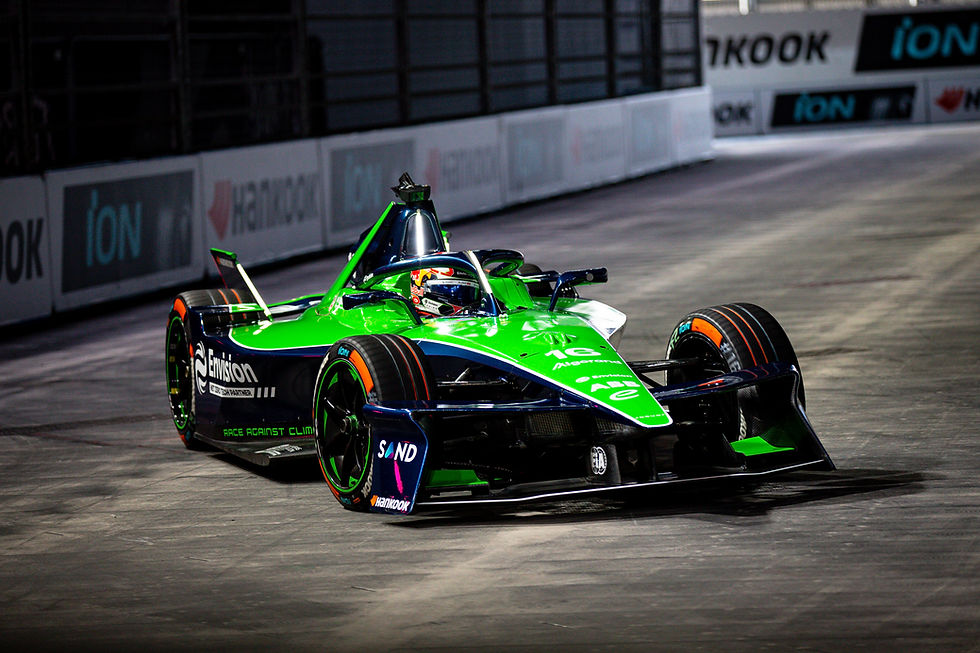
Staying at the Fortescue Zero outfit with Jaguar powertrains also presents a massive opportunity for Barnard to capitalise on. The British outfit has emerged as one of the stronger powertrains on the grid, having clinched two constructors’ titles, with customer team Envision also taking the title in 2023.

On the other side of the garage, it definitely remains a tussle. Joel Eriksson, who departed Envision and was replaced by Zak O’Sullivan, certainly finds himself in the mix, given his ties to a Jaguar powertrain during the Gen3 era.
However, Dan Ticktum is also a contender to take the other seat. The Briton is currently evaluating his options to proceed for the Gen4 era, having recently tested for Lola at Guadix. However, Fortescue Zero remains on his list of options for Season 13 too, as the team chases the best possible line-up for the coming season.





Comments