
The Curious Case of the No.37 Team TOM’S car

Written by Tarun Suresh, Edited by Liam Ploetner

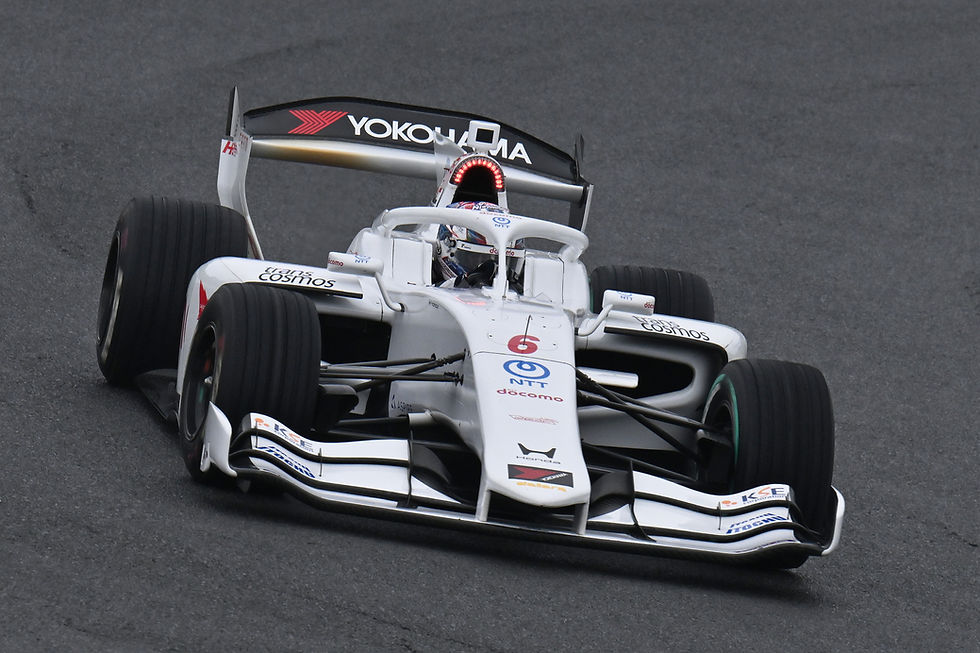
From the 2022 to 2024 seasons of Super Formula, the leading drivers of Team TOM’S (Ritomo Miyata and Sho Tsuboi) had scored a total of 296 points, five wins, 15 podiums, two poles and two drivers’ titles.
On the other side of the garage, the second drivers (Giuliano Alesi and Ukyo Sasahara) have scored a grand total of six points, and nothing else in the same timeframe.
It’s quite unclear what the exact reason behind the lack of performance from the second drivers is. The drivers themselves often get flak for poor results, but they are no slouches either.
Let's take a look at the drivers. Alesi is a solid driver in his own right. He finished second in his debut Super Formula Lights season with four wins and 14 podiums to his name.
The same year, he made his Super Formula debut, filling in for Kazuki Nakajima at Team TOM’S. He won his second-ever race in the series (the race ended early due to rain, impressive nonetheless) and finished the season just two points behind his teammate, Ritomo Miyata. In the following season, things took a turn for the worse, and he scored only three points and was dropped for Sasahara mid-season in 2023.
Sasahara had an impressive junior career before heading to Super Formula. He finished second behind Miyata by only seven points in the 2017 F4 Japanese Championship, beating the likes of Yuki Tsunoda and Toshiki Oyu. The following year, he finished third in Super Formula Lights in 2018 (then known as the Japanese Formula 3 Championship), behind his future teammates Tsuboi and Miyata. In 2019, he won the Formula Regional Middle East Trophy (then the F3 Asian Championship) ahead of teammate Jack Doohan.
Sasahara debuted in Super Formula in 2020, initially as a temporary replacement for Jüri Vips at Team Mugen, and eventually got the drive for the entire season. For 2021, Team Mugen ran only one car, with the second car being taken over by Red Bull and Team Goh, meaning he was left without a seat. For the two opening rounds of that season, he substituted for the meningitis-ridden Tadasuke Makino and scored his maiden podium. He returned to Team Mugen the next year, where he scored two wins. He was then pushed to the sidelines to make room for Red Bull juniors at Team Mugen.
Then, as mentioned earlier, he was brought in as a replacement for Alesi in 2023. However, his performance did not live up to expectations for the rest of the 2023 season and the following season as well, scoring no points while his teammates went on to win the championship. He was then dropped for 2025, with Sacha Fenestraz taking his place.

Alesi and Sasahara have been teammates since the 2023 season of Super GT. In the 2024 season, they won two races and finished fifth in the standings. In the 2025 season, they won a race and finished sixth in the standings, staying in the title fight until the season finale. Alesi also won the title in the premier Japanese endurance racing series Super Taikyu in 2024, including a win at the Fuji 24 Hours.
Looking at how team dynamics work, it isn’t uncommon to see teams prioritise one driver over the other. Team TOM’S does have a history of one driver comfortably out-scoring the other, except for their Kazuki Nakajima - André Lotterer lineup.
At the same time, a team prioritising their first drivers to the point where the second driver only scores less than 2% of the total points is completely unheard of in modern motorsport.
A chassis problem endemic to Alesi’s and Sasahara’s car could be another possible explanation. That does explain the lack of performance, but at the same time, a chassis issue going unnoticed for multiple seasons also seems unlikely.
Unfortunately, we don’t really know why Alesi and Sasahara struggled. Alesi and Sasahara will continue to race the Number 37 car in Super GT. Hopefully, they can keep the momentum going and have another strong season.

The runner-up of the 2022 Super Formula season, Fenestraz, returned to the series after a stint in Formula E, replacing Sasahara at Team TOM’S. He topped the first test session of 2025 but went on to struggle in the opening two rounds of the season, finishing outside the points.
At round three, he got his first points finish, and the second Team TOM’S car’s first in 17 races, with an eighth-place finish at the first of two races at Motegi. He kept the ball rolling with an impressive fourth-place finish in the following race. He qualified fifth in both races.
Autopolis was a weekend to forget for Fenestraz, being off the pace the whole weekend and finishing a lowly 17th while Tsuboi took his first victory of the campaign.
The Fuji double header looked to continue the same story as Fenestraz qualified 14th and finished 13th in round six. He qualified eighth for the final race of the weekend and finished fifth after a solid performance with a comeback drive that was quite the sight to watch.

Round eight, held at Sportsland SUGO, was a wet race, filled to the brim with the chaos that usually occurs in such races. In a qualifying session where drivers made errors left, right and centre, Fenestraz managed to set clean laps, which got him a front row start, earning the second Team TOM’S car’s best starting position in three years.
The race that followed saw drivers making error-after-error as the rain kept pouring down on the circuit. Fenestraz’s attempts at getting past Ayumu Iwasa bore no fruit, but he was in the fight until the end of the race, finishing second by just six-tenths. This was the first podium for this side of the garage in four years.
Round nine was a peculiar one. Qualifying was held on a wet track, and like in SUGO, Fenestraz pulled a clean lap out of his bag. This time, it got him pole position. Like the podium in the previous race, this pole was the first in four years. Tsuboi qualified second, making it Team TOM’S’ first front row lockout, also, in four years.
The race, however, was run entirely under Safety Car and ended prematurely, meaning Fenestraz was declared the winner. Since the race ended before the 75% mark, only half points were awarded. Putting the questions about the legitimacy of his win aside, he won a race in Super Formula despite being away from the series for two years and in a car that only scored six points in the three seasons that preceded this one.

In stark contrast to round nine, Fenestraz qualified 18th for round 10. Round 10, supposed to be held at Fuji, was then cancelled due to low visibility due to fog and rescheduled to the season finale weekend at Suzuka as the penultimate race of the season.
Round 11 was another decent point-scoring race for Fenestraz, starting sixth and finishing eighth as the Toyota-powered teams really struggled around Suzuka, especially in the colder weather, with Honda finishing 1-2-3.
The round 10 race that followed was one to forget, as he finished only 17th after struggling in the rear of the field for the entirety of the race.
For round 12, the season finale, Fenestraz managed to qualify ninth. Unfortunately, lacklustre pace was the story of the season finale weekend for the Toyota-powered teams, with Honda making up the first five positions. He dropped down to 12th by the time he crossed the chequered flag.
As disappointing as the last few races were, there’s no denying that Fenestraz had a solid comeback season, especially after driving in a completely different series for the past two years and coming back for a garage that has had an abysmal past few seasons.

It would be remiss to cover Fenestraz’s story without mentioning the involvement of Michael Krumm. Krumm has been a mainstay in Japanese motorsports since the 1990s. He’s got two Super GT titles, including six wins. He also had a stint in Super Formula (then called Formula Nippon) that peaked in the 2000 season, which saw him finish second to Toranosuke Takagi, who took a record-breaking eight wins in 10 races.
Since his retirement in 2015, he has taken up managerial roles and is currently the Team Manager for Team TOM’S’ Super GT campaign. His management, guidance and advice are often credited as some of the reasons behind the resurgence of Sasahara’s and Alesi’s careers.
The 2025 season wasn’t the first time Krumm collaborated with Fensestraz. The Japanese motorsport legend was brought in by Kondo Racing to help out with translation and radio communications, among other things, to ease Fenestraz’s first full season in Super Formula back in 2022.
Krumm was, from time-to-time, on Fenestraz’s side of the garage to help him out and make his first full campaign go much smoother. Krumm was, most notably, present in the Fuji and SUGO rounds, the ones that resulted in his best finishes of the season. Krumm was certainly not the only reason why he performed well in those rounds, but it would be foolish not to give him at least some of the credit.

Fenestraz will continue with Team TOM’S for the 2026 season, making them one of only two Toyota-powered teams to retain their driver lineups. He has also already been connected to Toyota’s WEC Hypercar campaign.
The Super Formula chapter for Sasahara hasn’t ended either as he will be making a return to Super Formula, this time with Kondo Racing. Sasahara has been given a rare second chance with a team that is also trying to make their way back to the top step of the podium.








Comments